Soap Making Temperature Guide: When to Soap Hot, Cool, or Room Temp
Learn the best temperatures for cold process soap making. Covers lye and oil temps, gel phase, milk soaps, and how to fix temperature-related problems.
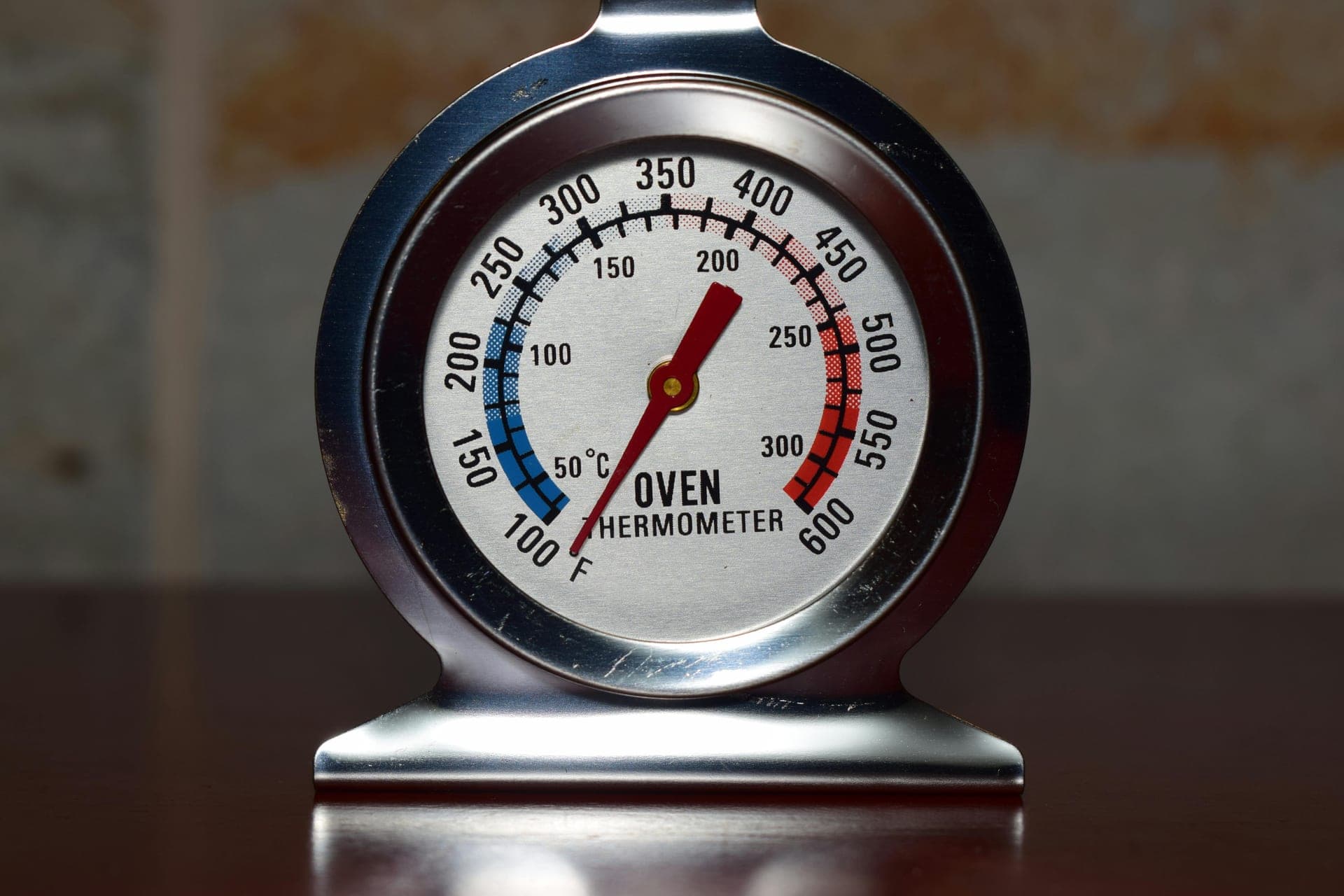
Temperature controls almost everything in cold process soap making. It affects how fast your batter thickens, whether your colors pop or stay muted, and whether you end up with a smooth bar or a cracked, separated mess. Getting it right isn't hard once you know what's happening and why.
- Why Temperature Matters in Soap Making
- What Temperature Should Your Lye Solution Be?
- What Temperature Should Your Oils Be?
- Do Lye and Oil Temperatures Need to Match?
- What Is Gel Phase and How Does Temperature Trigger It?
- Best Temperatures for Swirls and Designs
- Temperature Tips for Milk Soaps
- How Room Temperature and Season Affect Your Soap
- Common Temperature Mistakes and How to Fix Them
- Frequently Asked Questions
Why Temperature Matters in Soap Making
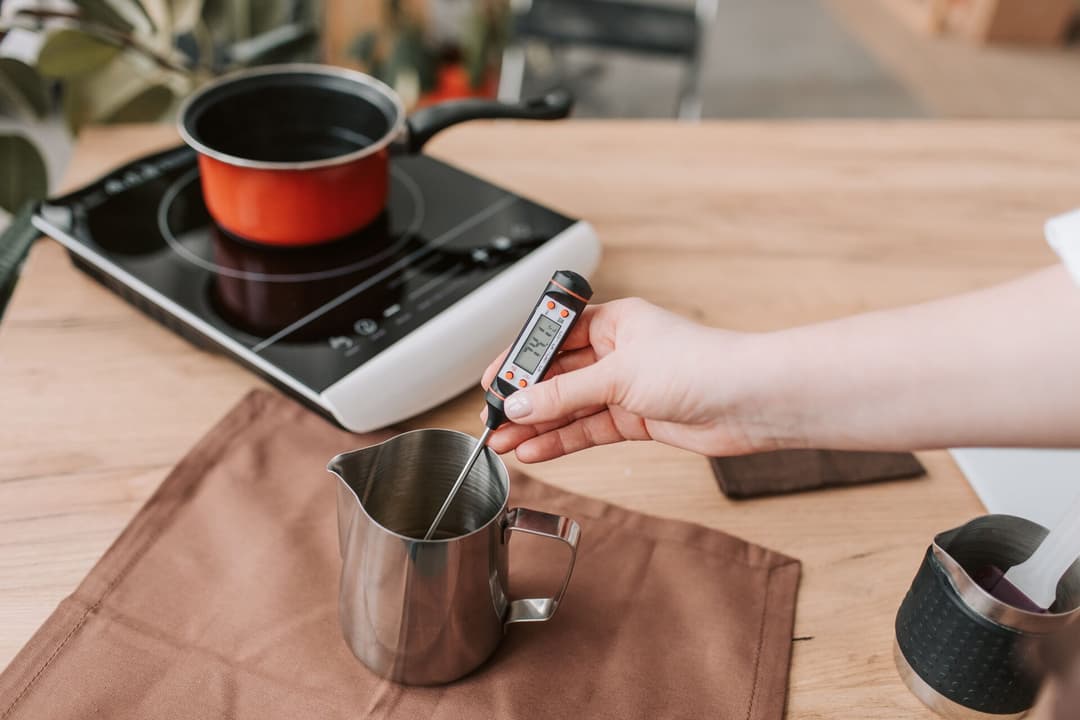
Saponification is a chemical reaction between oils and lye (sodium hydroxide dissolved in water). Like all chemical reactions, it speeds up with heat and slows down in the cold. That's the core principle behind every temperature decision you'll make.
When you mix lye solution into melted oils, the mixture starts thickening toward "trace," the point where saponification is underway and the batter holds a visible trail on its surface. Higher temperatures accelerate trace. Lower temperatures slow it down.
This matters because trace speed determines your working time. If you're pouring a single color into a mold, fast trace is fine. But if you're doing detailed swirl designs, you need minutes of fluid batter, and that means soaping cooler.
Temperature also determines whether your soap goes through gel phase (more on that below), how your fragrance oils behave, and whether hard butters like cocoa butter re-solidify in the pot before they've had a chance to saponify.
What Temperature Should Your Lye Solution Be?
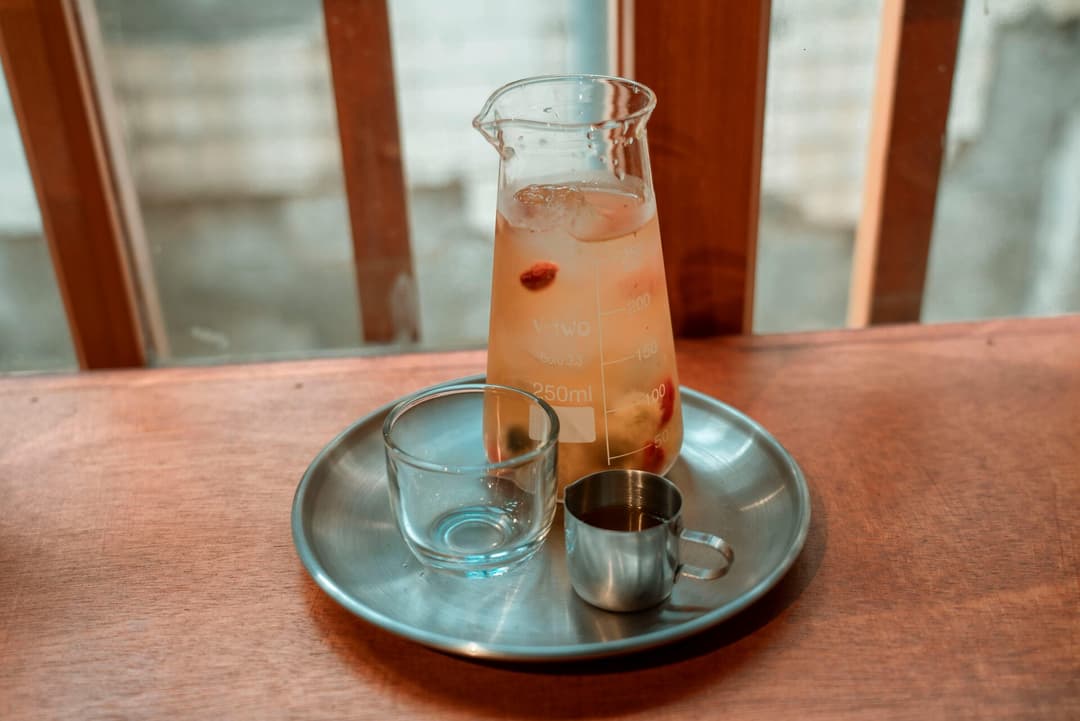
When you dissolve lye in water, the solution heats up fast, often reaching 180-200°F (82-93°C). You'll need to let it cool before combining it with your oils.
For most recipes: Cool your lye solution to somewhere between 100-120°F (38-49°C). This is the sweet spot that gives you a manageable trace speed without risking false trace from cold hard oils.
For milk soaps or sugar-heavy recipes: Cool your lye solution to 80-90°F (27-32°C) or even lower. The natural sugars in milk and honey generate extra heat during saponification, and starting cool helps prevent overheating, scorching, and volcano-like eruptions in the mold.
For room temperature soaping: Some experienced soap makers let their lye solution cool all the way to 70-80°F (21-27°C). This works well with all-liquid oil recipes (like high olive oil formulas), but it's risky with recipes containing coconut oil, palm oil, or butters that solidify below 76°F.
A standard kitchen thermometer or an infrared thermometer works perfectly for checking lye temperature. Always measure before combining. If you're new to working with lye, review our soap making safety guide before you start.
What Temperature Should Your Oils Be?
Your oil temperature depends on what's in your recipe.
Recipes with hard oils and butters (coconut oil, palm, cocoa butter, tallow): These need to be fully melted and around 100-120°F (38-49°C). If they cool too much, they'll start to re-solidify and create lumps or false trace. Coconut oil melts at 76°F, but palm oil and tallow have higher melt points, so you'll want a buffer above those thresholds.
All-liquid oil recipes (olive oil, sunflower, sweet almond): You have more flexibility. These oils won't solidify at room temperature, so you can soap anywhere from 80-120°F (27-49°C) without worrying about false trace.
Recipes with heat-sensitive additives: If you're adding ingredients like essential oils that flash off at high temps, or natural colorants that shift color with heat, keep your oils closer to 100°F (38°C).
Here's a quick reference:
| Recipe Type | Oil Temperature | Why |
| --- | --- | --- |
| Standard (mixed oils) | 100-120°F (38-49°C) | Keeps hard oils melted, moderate trace |
| High olive oil | 80-100°F (27-38°C) | Slows trace for longer working time |
| Recipes with butters | 110-130°F (43-54°C) | Prevents re-solidification |
| Milk or honey soaps | 90-100°F (32-38°C) | Controls exothermic heat |
| Designs and swirls | 85-100°F (29-38°C) | Maximizes working time |
Do Lye and Oil Temperatures Need to Match?
This is one of the most common questions beginners ask, and the short answer is: they should be close, but they don't need to be identical.
The old rule of thumb was that both temperatures had to be within 10°F of each other. That's a decent guideline, but it's not a hard law of chemistry. What actually matters is that both are in a workable range and that neither one is so far off that it causes problems.
The real risks of a big temperature gap:
- If your lye is very hot (say 150°F) and your oils are at 90°F, the lye can cause immediate thick trace or even seize the batch.
- If your oils are warm (120°F) but your lye is at 70°F, you might get uneven saponification, or the cold lye could cause hard oils to chunk up.
Practical approach: Aim for both to be in the 100-110°F range. If one is at 100°F and the other is at 115°F, that's perfectly fine. You don't need to babysit them until they're exactly the same number.
Some soap makers use the Soaply calculator to plan recipes with specific oil profiles, then choose their temperatures based on how fast they expect trace to hit. A recipe heavy in coconut oil and palm oil accelerates faster, so cooler temps make sense. A recipe that's mostly olive oil crawls to trace, so warmer temps help move things along.
What Is Gel Phase and How Does Temperature Trigger It?
Gel phase is a stage during saponification where the soap heats up from the inside, becomes translucent, and then cools back down. It's completely optional, but it changes the final look and feel of your bars.
What gel phase does:
- Makes colors deeper and more saturated
- Creates a slightly more translucent bar
- Speeds up saponification (the reaction finishes faster)
- Can reduce cure time slightly, though full curing is still recommended
What triggers gel phase:
Gel phase happens when the internal temperature of the soap reaches roughly 130-160°F (54-71°C). You can encourage it by:
- Soaping at warmer temperatures (110-120°F for both lye and oils)
- Insulating the mold after pouring (wrap it in towels or a blanket)
- Using CPOP (Cold Process Oven Process): Pour your soap, then place the covered mold in an oven preheated to 170°F (77°C), turn the oven off, and leave it overnight
Preventing gel phase:
Some soap makers prefer the matte, opaque look of ungelled soap. To prevent gel:
- Soap at cooler temperatures (90-100°F)
- Don't insulate the mold
- Place the mold in the fridge or freezer for the first 24 hours
Partial gel, where only the center of the soap gels, creates a darker ring in the middle of each bar. It's purely cosmetic but annoying. If you're going to gel, commit fully. If not, take active steps to prevent it.
Best Temperatures for Swirls and Designs
If you want to create swirl patterns, temperature is your most powerful tool for controlling working time.
The golden rule for designs: Soap cool. Aim for 85-100°F (29-38°C) for both lye and oils.
Lower temperatures slow trace, which gives you more time to pour multiple colors, drag a hanger through the batter, or do a drop swirl. Once the batter gets thick, your design options disappear fast.
Other factors that affect working time alongside temperature:
- Recipe: High olive oil and sunflower oil slow trace. High coconut and castor accelerate it.
- Lye concentration: Lower concentrations (more water) slow trace. Use a water discount calculator to find the right balance between working time and cure time.
- Fragrance: Some fragrance oils accelerate trace dramatically. Test unfamiliar fragrances in small batches first.
- Stick blender technique: Short pulses (1-2 seconds) followed by hand stirring give you more control than continuous blending.
Pro tip: Prepare all your colors, fragrance, and tools before you start mixing. When you're soaping cool for a design, you might still only have 5-10 minutes of working time, and scrambling for supplies eats into that window fast.
Temperature Tips for Milk Soaps
Milk soaps are one of the trickiest temperature situations you'll run into. The natural sugars in milk (lactose in goat milk, for instance) react with lye and generate a lot of extra heat. If you're not careful, the mixture can turn orange, smell scorched, or even volcano out of the mold.
How to handle lye and milk:
- Freeze the milk into cubes before adding lye. This slows the reaction and keeps temperatures manageable.
- Add lye slowly to the frozen milk, stirring constantly. The goal is to dissolve the lye without the mixture going above 100°F (38°C).
- Place the mixing container in an ice bath while you add the lye for extra insurance.
Oil temperature for milk soaps: Keep oils at 90-100°F (32-38°C). You want them warm enough to stay liquid but cool enough to avoid adding more heat to an already heat-prone batch.
After pouring: Don't insulate milk soap unless you want gel phase. Many milk soap makers put their molds straight in the freezer for 12-24 hours to prevent overheating and keep that creamy white color.
How Room Temperature and Season Affect Your Soap
Your workspace temperature matters more than you might think. The same recipe and the same soaping temperatures can behave differently in July versus January.
Summer (warm room, 75-85°F):
- Trace comes faster because the ambient heat prevents cooling
- Gel phase happens more easily, sometimes when you don't want it
- You might need to soap 5-10°F cooler to compensate
- Consider putting molds in the fridge if you want to avoid gel
Winter (cool room, 55-65°F):
- Trace comes slower, which is nice for designs
- Hard oils can re-solidify if your workspace is cold, causing false trace
- Gel phase is harder to achieve without insulation
- Preheat your mold slightly and insulate well if you want full gel
Practical solution: Keep your workspace around 68-72°F (20-22°C) if you can. That's the range where most recipes perform predictably. If you can't control room temperature, adjust your soaping temperatures to compensate.
Common Temperature Mistakes and How to Fix Them
Mistake 1: Soaping with lye that's too hot
What happens: The batter seizes, trace happens in seconds, and you can't get the soap into the mold smoothly. Fragrance oils flash off. You end up with a lumpy, ugly bar.
Fix: Be patient. Let lye cool to at least 120°F before combining. If your batter seizes, try the stick-blending-and-glop method: blend until smooth and scoop into the mold. It won't be pretty, but it'll still be soap. Check our troubleshooting guide for more rescue techniques.
Mistake 2: Oils too cool, hard oils re-solidified
What happens: You see tiny flecks or chunks of solid oil in your batter. You might hit "false trace," where the batter looks thick but isn't actually saponifying. The finished bars can have pockets of unsaponified fat.
Fix: If you catch it early, gently warm the pot (a few seconds in the microwave or on low heat) while stick blending. If the bars are already made and have white chunks, you can rebatch them.
Mistake 3: Partial gel from inconsistent temperatures
What happens: The center of the soap overheats and gels while the edges stay cool. You see a darker circle or ring when you cut the bars.
Fix: For future batches, commit to one approach. Insulate fully for complete gel, or refrigerate to prevent gel entirely. Partial gel doesn't affect the soap's quality, just its appearance.
Mistake 4: Not adjusting for accelerating ingredients
What happens: You soap at your usual temperature, but a new fragrance oil or additive (like honey or beer) causes the batch to trace much faster than expected.
Fix: When using new ingredients, reduce your soaping temperature by 10-15°F and prepare for fast trace. Keep your mold ready and skip elaborate designs until you know how the ingredient behaves.
💬 Frequently Asked Questions
What temperature should lye and oils be for cold process soap?
For most cold process recipes, aim for both lye solution and oils to be between 100-120°F (38-49°C). They should be within about 10-15°F of each other. Cooler temps (85-100°F) work better for swirl designs, while slightly warmer temps (110-120°F) help promote gel phase.
Can you soap at room temperature?
Yes, but only with certain recipes. All-liquid oil formulas (high olive oil, sunflower, or sweet almond) work at room temperature. Recipes with coconut oil, palm oil, or solid butters need to be warm enough that those fats stay fully melted, usually above 90-100°F.
What happens if your soap gets too hot?
Overheated soap can crack down the center, develop an oily glycerin river, or volcano out of the mold. It may also discolor or develop a strong chemical smell. To prevent overheating, don't insulate heavily, avoid warm environments, and consider using the fridge for heat-prone recipes like milk and honey soaps.
How do you know if soap reached gel phase?
During gel phase, the soap becomes translucent and warm to the touch (you can feel heat radiating from the mold). After it cools, gelled soap looks slightly shinier and more saturated in color compared to ungelled soap. If only the center gelled, you'll see a visible ring when you cut the bars.
Does soaping temperature affect the final bar quality?
Temperature affects appearance (color vibrancy, translucency) and trace speed, but it doesn't significantly change the cleaning ability or mildness of the finished bar. A well-formulated recipe made at 90°F produces the same quality soap as one made at 120°F. Use the Soaply calculator to nail your recipe, then pick temperatures based on the look and technique you're going for.
Ready to put this into practice? Try running your recipe through our free soap calculator to dial in your oil ratios, lye amount, and superfat percentage, then pick your temperatures based on the design you have in mind.
Ready to Try It?
Use our free soap calculator to create your perfect recipe with real-time property predictions.
Open Calculator