What Is Saponification? The Chemistry of How Soap Is Made
Saponification is the chemical reaction that turns oils and lye into soap. Learn how it works, how long it takes, SAP values, and how to know when it is complete.
Saponification is the chemical reaction between a fat or oil and a strong base (lye) that produces soap and glycerin. It's the reaction that turns a bowl of olive oil and a caustic solution of sodium hydroxide into a bar you can wash your hands with. Every cold process, hot process, and liquid soap on the planet is the product of this one reaction.
- What Is Saponification?
- The Chemistry: Triglycerides Plus Lye
- The Saponification Reaction Step by Step
- SAP Values: How Much Lye You Actually Need
- What Affects How Fast Saponification Happens
- Saponification in Cold Process vs Hot Process
- How to Tell When Saponification Is Complete
- What Happens If Saponification Fails
- Why Glycerin Is the Secret Bonus
- Frequently Asked Questions
What Is Saponification?
Saponification is the chemical reaction between a fat or oil and a strong alkali that produces soap (a salt of a fatty acid) and glycerin. The word comes from the Latin sapo, meaning soap. Chemists use the word for any reaction where an ester gets hydrolyzed by an alkali, but for soapmakers it has one specific meaning: turning oils into soap with lye.
Without saponification, there is no real soap. Detergents, body washes, and surfactant bars are different chemistry. True soap, the kind handmade soapmakers produce in their kitchens, is always a saponification product.
The reaction needs three things to happen:
- A fat or oil that contains triglycerides (which is basically every cooking oil, animal fat, and butter you can buy)
- A strong base, usually sodium hydroxide (NaOH, lye) for bar soap or potassium hydroxide (KOH) for liquid soap
- Water as a reaction medium so the lye can dissolve and contact the oils
Mix those three together in the right proportions and you get soap. Get the proportions wrong and you get either caustic, unusable mess or oily, soft slime. The chemistry is forgiving in one direction (a little extra oil is fine) and brutal in the other (a little extra lye burns skin).
The Chemistry: Triglycerides Plus Lye
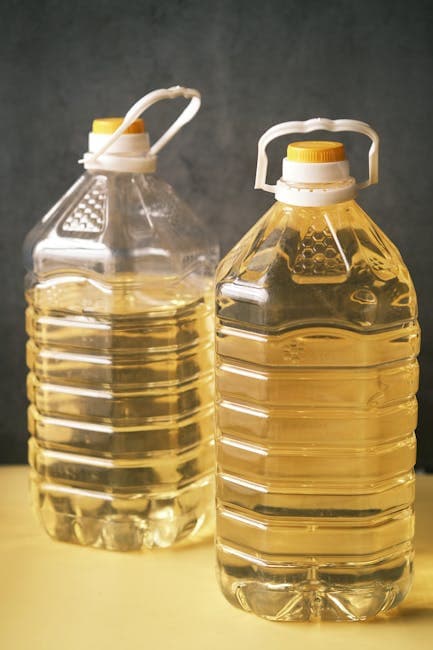
A triglyceride is one glycerol molecule bonded to three fatty acid chains. Picture a letter E. The vertical line is glycerol. The three horizontal arms are fatty acids. Every drop of olive oil, coconut oil, lard, or shea butter is mostly triglycerides held together this way.
When lye dissolves in water, it splits into sodium ions (Na+) and hydroxide ions (OH-). The hydroxide is the reactive part. It attacks the ester bonds that hold each fatty acid to the glycerol, breaking them and freeing the fatty acid chain.
The freed fatty acid immediately grabs a sodium ion, forming a sodium salt of the fatty acid. That salt is soap. The glycerol that's left behind is glycerin, which stays mixed throughout the bar and gives handmade soap its skin-loving feel.
Simplified equation:
Triglyceride + 3 NaOH → 3 Soap molecules + 1 Glycerin molecule
Every triglyceride yields three soap molecules and one glycerin molecule. That's why even a small batch of soap produces noticeable glycerin content. Commercial soap factories often strip the glycerin out to sell separately. Handmade soap keeps it.
The Saponification Reaction Step by Step
If you could zoom in on a fresh batch of soap batter, here's what would be happening at the molecular level.
Minute 1: Lye dissolves. The sodium hydroxide pellets hit the water and dissolve into free ions. The water hits 180 to 200°F from the energy released. The solution is now highly caustic.
Minute 2: Lye solution meets oils. When you pour the lye water into the oils, the two don't immediately combine. They form an emulsion of tiny droplets, with lye solution dispersed through the oil.
Minute 5 to 10: Stick blender accelerates contact. The stick blender breaks lye water and oil droplets into smaller and smaller particles. The smaller the droplets, the more surface area between lye and oil, and the faster hydroxide ions can attack ester bonds.
Trace. Once enough fatty acids have been freed and converted to soap, those soap molecules act as their own emulsifier. The batter thickens and stays mixed without separating. This is trace, and it tells you the reaction is well underway.
Hour 1 to 4: Gel phase, sometimes. Saponification is exothermic, so the batter heats itself. In an insulated mold, the center can hit 160 to 180°F and pass through gel phase, where soap molecules briefly become translucent before solidifying.
Hour 12 to 48: Most saponification completes. By the time you can unmold the loaf, around 90 to 95% of the lye has reacted with oils. This is why fresh-cut bars are already safe to handle without gloves.
Week 1 to 6: Final cleanup. The remaining few percent of saponification finishes during the cure. Water also evaporates from the bar, hardening it and concentrating the soap.
Saponification doesn't pause and restart. It runs continuously from the moment lye and oil touch until almost all of the available fatty acid molecules have been converted.
SAP Values: How Much Lye You Actually Need
Different oils need different amounts of lye to saponify completely. This is because each oil has a unique blend of fatty acid chains, and longer or shorter chains need different amounts of hydroxide.
The number that captures this is called the SAP value (saponification value). It tells you exactly how many milligrams of potassium hydroxide are needed to saponify one gram of that oil. For sodium hydroxide (the bar soap version), the number is smaller because NaOH has a lower molecular weight than KOH.
Here are NaOH SAP values for common soapmaking oils:
| Oil | NaOH SAP Value |
| ----- | ---------------- |
| Olive Oil | 0.1345 |
| Coconut Oil (76°F) | 0.1909 |
| Palm Oil | 0.1414 |
| Shea Butter | 0.1280 |
| Castor Oil | 0.1286 |
| Lard | 0.1390 |
| Tallow | 0.1410 |
| Cocoa Butter | 0.1370 |
| Avocado Oil | 0.1339 |
| Sweet Almond Oil | 0.1360 |
To calculate lye for a recipe, multiply each oil's weight by its SAP value, sum the results, then subtract your superfat percentage. For a 1000g batch with 5% superfat, that math gets ugly fast.
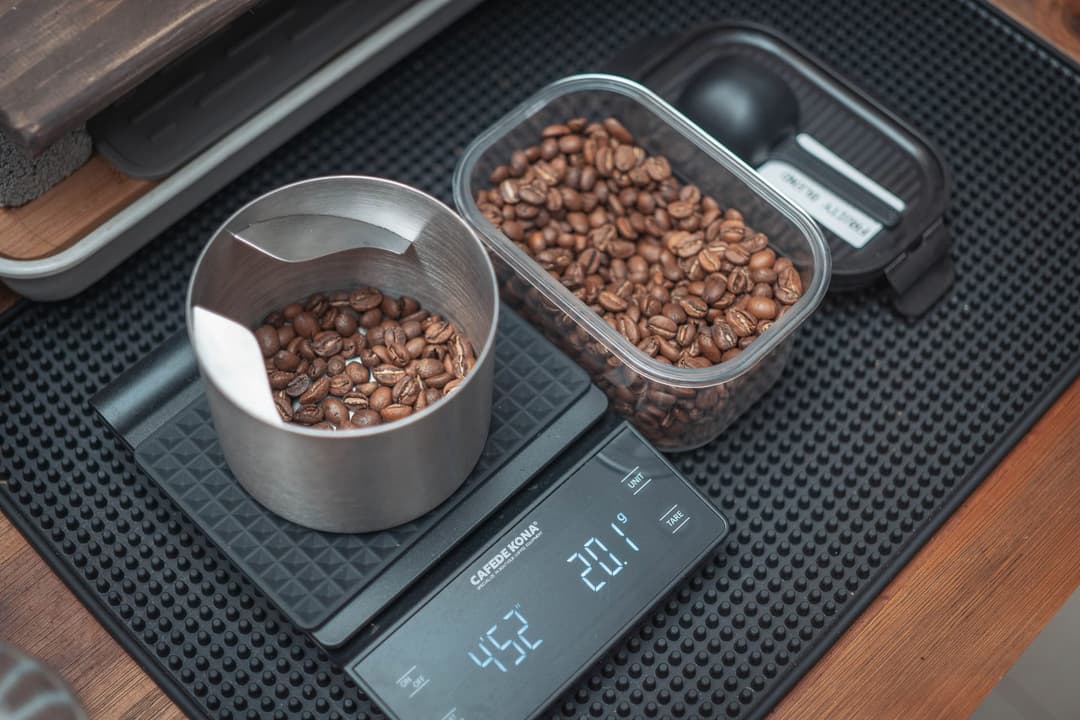
This is exactly why every soapmaker uses a calculator. Run your oils through the Soaply calculator and it does the SAP math, water calculation, and superfat adjustment in one step. Eyeballing lye amounts based on memory or a rough percentage is how you end up with caustic, unusable bars.
What Affects How Fast Saponification Happens
Saponification will always finish given enough time, but a lot of variables affect how fast it happens. Understanding them lets you push trace faster, prevent acceleration, or troubleshoot batches that won't behave.
Temperature. Higher temperatures dramatically speed up saponification. At 100°F the reaction is brisk. At 180°F (gel phase) it's racing. At room temperature it's slow. This is why cold process bars need 24 to 48 hours in the mold, while hot process bars finish in under an hour.
Water content. More water means hydroxide ions can move more freely and contact oil molecules faster. A high water content recipe (28% lye concentration) reaches trace slower than a water-discounted recipe (38% lye concentration) because the hydroxide is more dilute, but it gives you more working time.
Stirring and emulsification. A stick blender creates millions of tiny lye-oil interfaces in seconds. Hand-stirring with a spoon would still produce soap, but it could take 30 to 60 minutes to reach trace instead of 30 to 60 seconds.
Fatty acid type. Short-chain fatty acids like lauric acid (in coconut oil) saponify faster than long-chain fatty acids like erucic acid (in some specialty oils). A coconut-heavy recipe traces faster than an olive-heavy one.
Additives. Sugars (honey, milk, beer, fruit purees) accelerate the reaction by feeding the heat output. Sodium lactate slightly speeds saponification too. Salt slows trace by interfering with emulsification.
Fragrance and essential oils. Some accelerate trace dramatically (vanilla-heavy blends, florals, spice oils). Others have no effect (most citrus). A fast-tracing fragrance can take a batch from pourable to seized in 30 seconds.
You can learn to predict batch behavior by reading the recipe. High coconut + honey + spice fragrance + hot temperatures means seize warning. High olive + room temperature soap + no fragrance means hours of working time.
Saponification in Cold Process vs Hot Process
The reaction is the same in both methods. The difference is how you handle the heat.
Cold process lets saponification run at its natural pace inside the mold. You pour at 90 to 115°F, then let the exothermic reaction generate its own heat. The batter typically gels in the mold over 1 to 4 hours, then cools and saponifies the rest of the way over the next 24 to 48 hours. The cure period finishes the last few percent.
Hot process forces saponification to complete on the stove or in a crockpot. You cook the batter at 180 to 200°F for 45 to 60 minutes, which drives the reaction to essentially full completion before you mold it. The bar is technically usable as soon as it's hard enough to handle.
The bar performance after a full cure is essentially identical between the two methods, but the working experience is very different. Cold process gives you smooth, pourable batter for swirls and detailed designs. Hot process gives you a thick, applesauce-like texture that's harder to mold but lets you add temperature-sensitive ingredients after the cook. Our hot vs cold process comparison covers the tradeoffs in more detail.
How to Tell When Saponification Is Complete
You can't see saponification happening directly, but there are reliable signals that tell you how far along it is.
The zap test. Touch the tip of your tongue to a cured bar. Active lye gives a sharp electric tingle, almost like licking a 9-volt battery. No zap means saponification is complete. This is the gold standard test that experienced soapmakers have used for over a century.
pH testing. Fresh saponified soap has a pH between 9 and 10. If you measure pH and get 11 or higher, you've got unreacted lye. If you get 8 or lower, something has gone wrong (often a measurement error in the original recipe).
Visual signs. Fully saponified soap is uniform in color, has no oily pockets or pools, doesn't smell like raw lye, and doesn't have a slick film on the surface.
Time. For most cold process bars at 5% superfat, saponification is functionally complete within 48 hours of pouring. The full cure (4 to 6 weeks) is mostly about water evaporation and crystal structure development, not finishing the reaction.
If a bar passes the zap test, it's safe to use. The cure period after that is about quality, not safety.
What Happens If Saponification Fails
Saponification doesn't really fail in the literal sense. The reaction wants to happen and will run as long as lye and fat are in contact. But the result can go wrong in two main directions.
Too much lye (lye heavy). If you used more lye than the SAP math called for, the extra hydroxide has no fatty acid to bond with. It stays in the bar as free caustic, gives a sharp zap on the tongue test, raises the pH above 11, and can chemically burn skin. Lye-heavy soap can sometimes be saved by rebatching with extra oil. Often the safer move is to throw it out.
Too little lye (oil heavy). If you used less lye than needed, some of the oils never get converted to soap. They stay in the bar as free oil, making it soft, oily to the touch, prone to going rancid, and slow to lather. A small excess (the intentional 5% superfat) is desirable. A big excess (10%+ unintentionally) ruins the bar.
Separation (false trace). Sometimes batter that looks emulsified separates back into oil and lye water once it sits. This is false trace, and it usually traces back to soaping too cold or insufficient blending. Re-blending and warming the batter often fixes it.
The way to avoid all three problems is the same: weigh ingredients in grams on a digital scale, run the recipe through a calculator, and stick-blend long enough to reach genuine trace before adding extras.
Why Glycerin Is the Secret Bonus
Every triglyceride that saponifies releases one molecule of glycerin. In a typical handmade bar, that adds up to around 5 to 8% glycerin by weight, distributed throughout the soap.
Glycerin is a humectant, meaning it pulls moisture from the air to the skin. That's the reason handmade soap feels more moisturizing than commercial bars. Big soap factories typically separate and sell the glycerin (it's valuable for cosmetics and pharmaceuticals) and sell you the stripped soap. Handmade soapmakers leave it in, which is why one of the main selling points of artisan soap is that "natural glycerin" feel.
You don't have to do anything special to keep glycerin in your soap. It's produced automatically as a byproduct of saponification and stays mixed throughout the bar as long as you don't intentionally remove it.
💬 Frequently Asked Questions
Is saponification the same as soap making?
Saponification is the chemical reaction at the core of soap making, but soap making includes more steps than just the reaction. The full process covers weighing oils, mixing lye solution, blending to trace, adding fragrance and color, pouring into a mold, curing, and cutting. Saponification is what makes the chemistry work, but soap making is the craft around it.
How long does saponification take?
Saponification in cold process soap is about 90 to 95% complete within 24 to 48 hours and essentially finished within a week. The full 4 to 6 week cure period is mostly about water evaporation and crystal hardening, not saponification itself. Hot process soap completes saponification in under an hour on the stove.
Can saponification happen without lye?
No. True saponification requires a strong base, almost always sodium hydroxide (NaOH) or potassium hydroxide (KOH). Melt and pour soap skips lye handling because the saponification was already done at a factory before the base was sold to you. There is no path to making soap from oils without lye being involved somewhere in the chain.
What is the saponification value (SAP) of an oil?
The saponification value of an oil is the exact amount of lye needed to fully saponify one gram of that oil. It varies because each oil has a different blend of fatty acid chains. A soap calculator multiplies your oil weights by their SAP values to figure out the total lye your recipe needs.
Does saponification produce heat?
Yes, saponification is exothermic, meaning it releases heat as it proceeds. The heat is why cold process soap goes through gel phase, why hot process soap can cook itself in a crockpot with minimal external heat, and why lye-heavy batches can sometimes overheat enough to volcano out of the mold.
Can you reverse saponification?
Practically, no. Once oils have been chemically converted to soap and glycerin, you can't easily turn them back into the original oils. You can rebatch soap by shredding and melting it, but that doesn't reverse the saponification. It just remelts already-saponified soap.
Run the Numbers Before You Pour
Saponification is the chemistry that makes soap possible, but it's only as reliable as the inputs you give it. Wrong oil weights, wrong lye amounts, or wrong water ratios will turn a perfectly natural reaction into a failed batch.
Run every recipe through the Soaply calculator before you mix anything. It applies the right SAP value for each oil, calculates lye and water amounts, and lets you set superfat to leave a safe margin of excess oil. The reaction will do its part. Your job is just to give it the right numbers.
Ready to Try It?
Use our free soap calculator to create your perfect recipe with real-time property predictions.
Open Calculator