Dreaded Orange Spots (DOS) on Soap: Causes, Prevention, and Fixes
Why your handmade soap is getting orange spots and how to stop it. Learn what causes DOS, how to prevent rancidity, and whether a spotted bar is still safe to use.
Dreaded orange spots, or DOS, are small orange or rust-colored blotches that appear on handmade soap weeks or months after it cures. They're caused by oils in the bar going rancid, usually because of an unstable oil, too much superfat, contaminated water, or exposure to air, heat, and light during storage. The spots aren't dangerous to touch, but the bar smells off and shouldn't be sold or gifted once they appear.
If you've opened a curing rack and found pumpkin-colored freckles on bars that looked perfect last week, you're not alone. DOS is one of the most frustrating defects in cold process soap because it shows up after all the work is done. The good news: it's almost always preventable once you understand which oils, ratios, and storage habits trigger it.
- What Are Dreaded Orange Spots?
- What Causes DOS in Soap
- Which Oils Are Most Likely to Cause DOS
- How to Prevent DOS Before You Pour
- Storage Habits That Prevent Rancidity
- Can You Fix Soap That Already Has DOS?
- Is DOS Soap Safe to Use?
- Frequently Asked Questions
What Are Dreaded Orange Spots?
DOS shows up as small, round, orange or yellow-brown spots on the surface of cured soap. They start tiny, often the size of a pinhead, and grow outward over weeks. A single bar might have one or two spots, or it might develop dozens that merge into rust-colored streaks across the face.
Along with the spots comes a smell. Most soapmakers describe it as old crayons, stale cooking oil, or the back of a kitchen cabinet where you forgot a bottle of olive oil. That smell is the giveaway that you're looking at rancidity, not a fragrance discoloration or a clay reaction.
The spots usually appear 2 to 6 months after pouring, though aggressive cases can show up at 6 weeks and slow ones can take over a year. They almost never appear during the first month of cure, which is why a bar that looks perfect at unmolding can still develop DOS later.
DOS is not the same as morphing fragrance discoloration, gel phase color shifts, or vanilla-induced browning. Those are even and predictable. DOS is uneven, blotchy, and gets worse over time.
What Causes DOS in Soap
The underlying chemistry is oxidation. Unsaturated fatty acids in soap react with oxygen, light, heat, and trace metals. The reaction breaks the fatty acid chains down into shorter molecules called aldehydes and ketones, which carry that distinctive rancid smell and create the orange pigmentation you see on the bar.
Four factors push a batch toward DOS:
1. Unstable or oxidized oils. Some oils oxidize easily because their fatty acid chains have multiple double bonds. Oils with high linoleic or linolenic acid content are at highest risk. If the oil was already past its prime when you bought it, the clock was ticking before you even unwrapped the bottle.
2. Too much superfat. Superfat is the unreacted oil left in the finished bar. A 5% superfat means 5% of your oils stayed as free oil rather than turning into soap. That free oil is exactly what oxidizes. Superfats above 7 to 8% give DOS a much easier path to develop, especially in recipes built on linoleic-rich oils.
3. Contaminated water. Tap water contains trace amounts of iron, copper, and other metals that act as catalysts for oxidation. Even small amounts speed up the reaction dramatically. Distilled or deionized water removes this trigger.
4. Heat, light, and air during storage. A bar sitting on a sunny windowsill or in a warm garage oxidizes faster than the same bar in a cool, dark closet. Air circulation around bars during cure is good for evaporating water, but bagged or wrapped bars stored in warm conditions can develop DOS even faster than open-air bars.
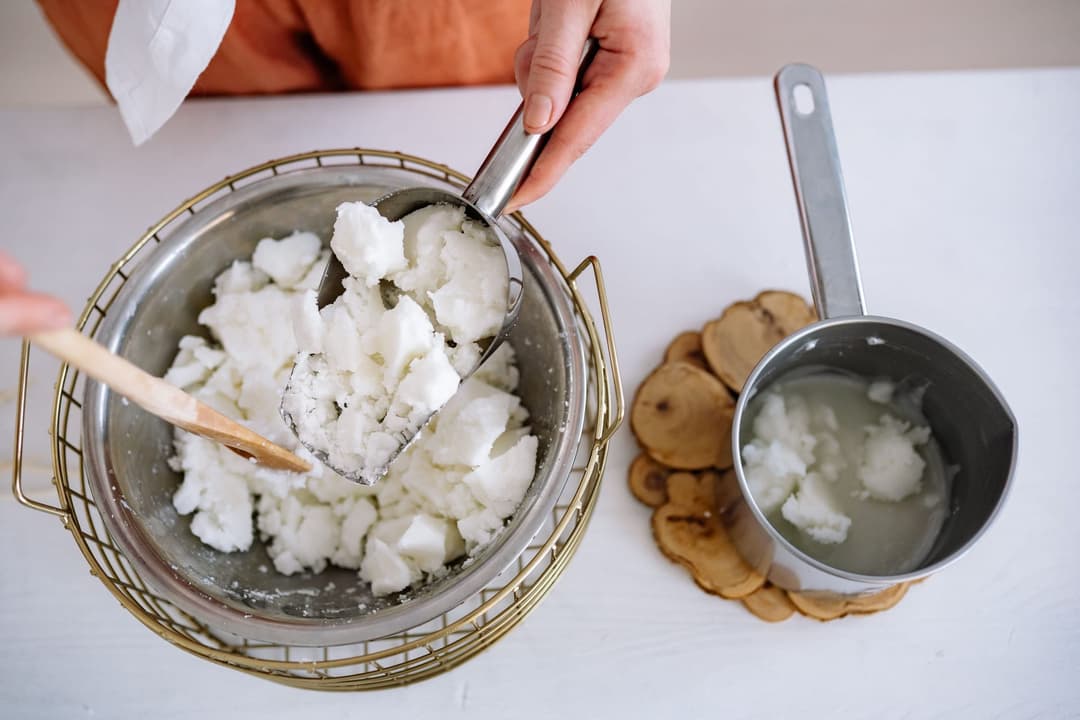
The combination matters more than any single factor. A recipe with stable oils, distilled water, modest superfat, and cool dark storage will resist DOS for years. A recipe that fails on all four factors can develop spots within weeks.
Which Oils Are Most Likely to Cause DOS
Not all soaping oils are equal. The fatty acid profile determines how stable the resulting soap is. Linoleic acid is the main culprit, followed by linolenic acid. Both have multiple double bonds in their chemical structure, and each double bond is a potential oxidation site.
Higher DOS risk oils:
- Sunflower oil (high linoleic)
- Safflower oil (high linoleic)
- Soybean oil (linoleic and linolenic)
- Hemp seed oil (high linoleic and linolenic)
- Grapeseed oil (very high linoleic)
- Rice bran oil (moderate linoleic, prone to going rancid in storage)
- Sweet almond oil (moderate linoleic)
- Hazelnut oil (linoleic content varies)
Moderate DOS risk oils:
- Olive oil (mostly oleic, but still some linoleic)
- Avocado oil (oleic plus some linoleic)
- Canola oil (mostly oleic but processed varies)
Low DOS risk oils:
- Coconut oil (almost no linoleic, very stable)
- Babassu oil (similar to coconut)
- Palm oil (mostly palmitic and oleic)
- Lard (saturated fats, stable)
- Tallow (saturated fats, very stable)
- Cocoa butter (stable saturated fats)
- Shea butter (mostly stearic and oleic)
- Castor oil (mostly ricinoleic, stable enough at typical use levels)
You don't have to avoid the higher-risk oils entirely. A small percentage of sunflower or sweet almond oil in a balanced recipe is fine. The trouble starts when those oils make up 30% or more of the recipe and the bar is also high-superfat or poorly stored. See our best oils for soap making guide for the full breakdown.
A simple rule: keep linoleic acid content under 15% of the total fatty acid profile. The Soaply calculator shows the fatty acid breakdown for your recipe so you can check before you pour.
How to Prevent DOS Before You Pour
DOS prevention starts at the recipe stage. By the time the soap is in the mold, most of your DOS fate is sealed. Six practices stack the odds in your favor.
Use fresh oils. Buy from suppliers with high turnover and check the bottle date. Don't use cooking oils that have been open for over six months. Oils stored in clear bottles on a shelf at room temperature can go rancid before you ever pour them. Smell each oil before adding it. A bottle that smells off will pass that smell straight into your bars.
Keep superfat moderate. Five percent is the sweet spot for most recipes. Two to three percent gives a cleansing bar with very low DOS risk and is a smart choice if you're working with a linoleic-heavy recipe. Going above 7% increases DOS risk meaningfully, especially in unsaturated-oil-heavy recipes. See our superfat guide for how to dial this in.
Use distilled or deionized water. Spring water, tap water, and well water all contain trace metals that catalyze oxidation. A gallon of distilled water from the grocery store costs about $1.50 and is enough for several batches. This single change has fixed DOS problems for many soapmakers.
Add a chelator. Sodium citrate, EDTA, or citric acid bind to trace metals and remove them from the oxidation equation. Sodium citrate is the easiest to use. Add 2 to 3% of your oil weight as sodium citrate dissolved in your lye water. Note that adding citric acid increases your lye requirement (it reacts with lye to form sodium citrate in the bar), so use the Soaply calculator to adjust your lye amount accordingly.
Add an antioxidant. Rosemary oleoresin extract (ROE) is the most popular antioxidant for soapmakers. A few drops per pound of oils slows oxidation significantly. Add ROE to your warm oils before adding lye, not to the finished trace. Vitamin E (tocopherol) is sometimes used too, but ROE is more effective at the dosages most soapmakers use.
Balance the fatty acid profile. A recipe with under 15% linoleic acid will resist DOS far better than one at 30%. If you love a sunflower-heavy recipe, balance it with hard butters and saturated oils to bring the linoleic percentage down.
Storage Habits That Prevent Rancidity
A bar that survives the curing rack still has years of potential storage life ahead of it. Where and how you store finished bars matters as much as the recipe.
Cool storage. Aim for 60 to 75 degrees Fahrenheit. Garages, attics, and uninsulated sheds swing too hot in summer. A spare closet or an interior shelf works well. Heat doesn't just speed up oxidation, it also drives volatile aroma molecules out of the bar, so cool storage protects scent throw too.
Dark storage. UV light accelerates oxidation. Bars sitting in a sunny display window or under bright shop lighting age faster than bars on a back shelf. If you sell at craft fairs, don't display bars in direct sun for hours at a time. Store the inventory in opaque bins between events.
Airflow during cure, but not during long-term storage. Bars need airflow for the first 4 to 6 weeks to evaporate water. After cure, bars can be wrapped or boxed without DOS risk, as long as they're cool and dark. Some soapmakers seal cured bars in zip-top bags with the air pressed out and store them in cool boxes for months without issues.
Watch humidity. Very humid storage can cause glycerin in the soap to attract water (called glycerin dew). The wet surface is more prone to spotting. Aim for under 60% relative humidity. A small dehumidifier or a few silica packs in the storage bin can help in muggy climates.
Rotate stock. If you sell, sell the oldest bars first. The longer a bar sits, the more risk of DOS appearing. Set a 12-month cap on inventory. Bars that don't sell by then can be rebatched, used as personal stock, or composted.
Can You Fix Soap That Already Has DOS?
Once spots appear, you can't reverse the chemical reaction. The oxidation has already broken down the fatty acid chains, and the smell is going to keep getting worse over time. There are a few salvage options though.
Cut off the spots. For mild DOS with one or two visible spots, you can shave the affected layer off with a soap planer or vegetable peeler and use the bar for personal use. It won't smell perfect, but it'll still wash. Don't sell or gift these bars.
Rebatch the bar. Grating and rebatching can hide spots and refresh the smell with new fragrance, but it doesn't stop the underlying oxidation. The rebatched bar will likely develop new DOS faster than fresh soap because the oils are already part-oxidized. Treat rebatched DOS bars as personal use only. See our rebatching guide for the steps.
Compost or discard. Heavy DOS bars with widespread spotting and a strong rancid smell are best discarded. Some soapmakers grind them up for laundry use, but the off smell can transfer to clothes. Composting works if the bar is mostly natural ingredients.
Don't sell DOS bars. This is the most important rule. A customer who buys a fresh-looking bar and finds orange spots in their bathroom three weeks later won't come back. Quality control means catching DOS before product goes out and pulling any displayed bars that show even one spot.
Is DOS Soap Safe to Use?
DOS bars are not dangerous in the way contaminated or moldy soap might be. Rancid oils aren't toxic to skin in the concentrations found in a soap bar. You can wash with a DOS bar without immediate health concerns.
But there are good reasons not to use them anyway. The smell is unpleasant and can transfer to skin and clothes. The bar lathers less well as oxidation progresses. And the broken-down fatty acid molecules may be more irritating to sensitive skin, even if they're not dangerous.
If you find a bar of your own with one small spot and a faint smell, using it personally is fine. If a bar smells strongly rancid, the right move is to retire it. DOS isn't a safety crisis, it's a quality failure, and treating it as a quality issue helps you build better recipes and storage habits over time.
💬 Frequently Asked Questions
Why is my handmade soap getting orange spots?
The orange spots are dreaded orange spots (DOS), caused by oils in the bar oxidizing and going rancid. Common triggers are unstable oils high in linoleic acid, superfat above 7%, tap water with trace metals, and storage in warm, humid, or bright places. Each factor adds up, so a soap with several risk factors can develop DOS in weeks.
How do I prevent DOS in cold process soap?
Use fresh oils with low linoleic content, keep superfat at 5% or under, use distilled water, and add a chelator like sodium citrate plus an antioxidant like rosemary oleoresin extract (ROE). Store cured bars in cool, dark, low-humidity conditions. These five habits together prevent the vast majority of DOS cases.
Does adding ROE prevent DOS?
Rosemary oleoresin extract slows oxidation but doesn't prevent it entirely. ROE works best as one layer of protection in a recipe that already has stable oils, moderate superfat, distilled water, and a chelator. Adding ROE to a recipe that's heavy in old sunflower oil at 10% superfat will delay DOS but won't fix the underlying problem.
Can DOS soap make you sick?
Rancid soap isn't toxic and won't cause acute illness if you wash with it. The off smell can transfer to skin, lather is poor, and sensitive skin may react to the oxidation byproducts, but it's a quality and aesthetic problem rather than a health hazard. Throw out heavily spotted bars to avoid frustration, not because they're dangerous.
How long does handmade soap last before DOS?
A well-formulated bar made with stable oils, low superfat, distilled water, and proper storage can last 2 to 3 years without DOS. A bar with high-linoleic oils and 8% superfat stored in a warm garage might develop spots in 3 to 6 months. The recipe and storage together determine the realistic shelf life.
Build DOS-Resistant Recipes From the Start
The fastest way to fight DOS is to formulate against it. Check your linoleic acid percentage, keep superfat moderate, and pick oils that hold up in storage. The Soaply calculator shows the full fatty acid breakdown for any recipe you build, so you can see at a glance whether your formula is leaning toward DOS risk before you measure a single gram.
Combine that with distilled water, a small dose of sodium citrate or ROE, and cool dark storage, and orange spots become a problem you read about instead of one you find on your curing rack.
Ready to Try It?
Use our free soap calculator to create your perfect recipe with real-time property predictions.
Open Calculator