Natural Colorants for Soap: Complete Guide to Plant-Based Colors
Discover how to color soap naturally using clays, botanicals, spices, and more. Get a full chart of natural colorants by shade with usage rates and stability tips.
This article contains Amazon links. As an Amazon Associate, Soaply earns from qualifying purchases at no extra cost to you.
The most reliable natural colorants for cold process soap are clays, activated charcoal, cocoa powder, and oil infusions of annatto, alkanet, and madder root. They hold their color through the high pH of fresh soap and through a full cure. Plant powders like spirulina and turmeric work too, but they fade over a few months. Most of these go in at 1 to 2 teaspoons per pound of oils, dispersed in a little oil first so they don't clump. This guide covers what each colorant looks like in a finished bar, how much to use, which ones fade and why, and the handful of mistakes that turn a pretty batch into a speckled or scratchy one.
- What Counts as a Natural Soap Colorant?
- Why Choose Natural Colorants?
- Types of Natural Colorants
- How Do You Infuse Oil with Botanicals?
- Colors by Shade
- Stability Guide
- How Much Natural Colorant Should You Use?
- What Goes Wrong with Natural Colorants?
- Tips for Success
- Getting Started
- Where to Buy Natural Colorants
- Frequently Asked Questions
What Counts as a Natural Soap Colorant?
A natural colorant is a mineral or plant material used as-is, or infused into oil, to tint soap. Clays are ground earth. Charcoal is carbonized wood or coconut shell. Cocoa, turmeric, and paprika come straight from the spice rack. Annatto, alkanet, and madder are seeds and roots that give up their color when steeped in oil.
Micas and oxides sit in a gray area. Cosmetic micas are lab-coated minerals, and the oxides and ultramarines sold for soap are made in a lab to match the mined versions, which carry heavy metals. They're safe and stable, but if your label says "colored with plants and clays," they don't belong in the bar. Customers who care about natural color usually ask.
Why Choose Natural Colorants?
- Marketing appeal. "Colored with clay and cocoa" is a claim shoppers understand and pay for.
- Sensitive skin. Clays and botanicals are less likely to irritate than some synthetic dyes, and several clays add a gentle drawing effect of their own.
- Sustainability. Most are food or agricultural byproducts with a short ingredient list.
- Depth of color. Natural colors are muted and slightly uneven, which reads as handmade in a way flat mica never does.
The trade-off is control. You won't get a neon pink or a true primary blue, and two batches made the same way can come out a shade apart. For the bright end of the spectrum, mica is the honest tool, and our swirling guide covers how to use it.
Types of Natural Colorants
Clays
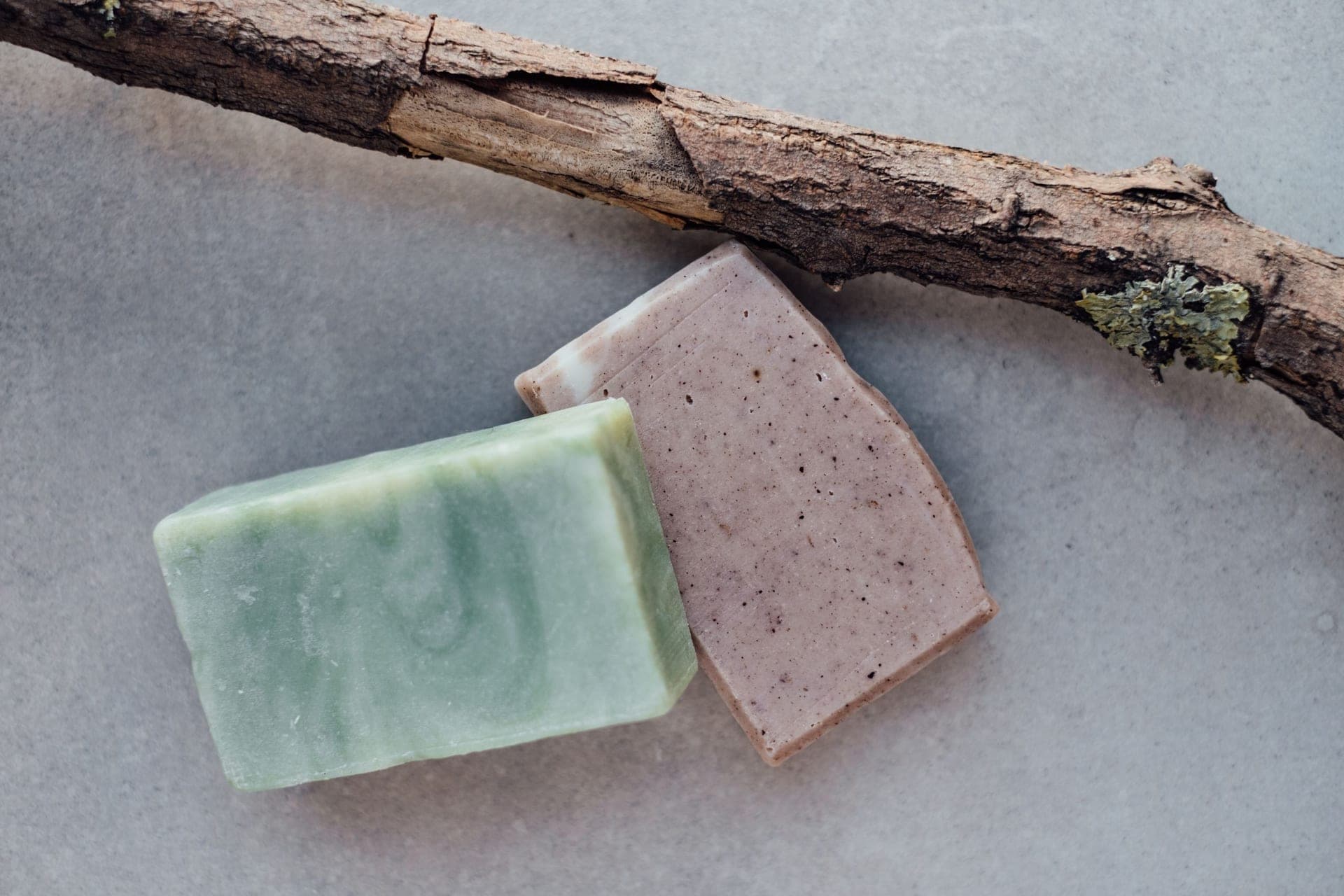
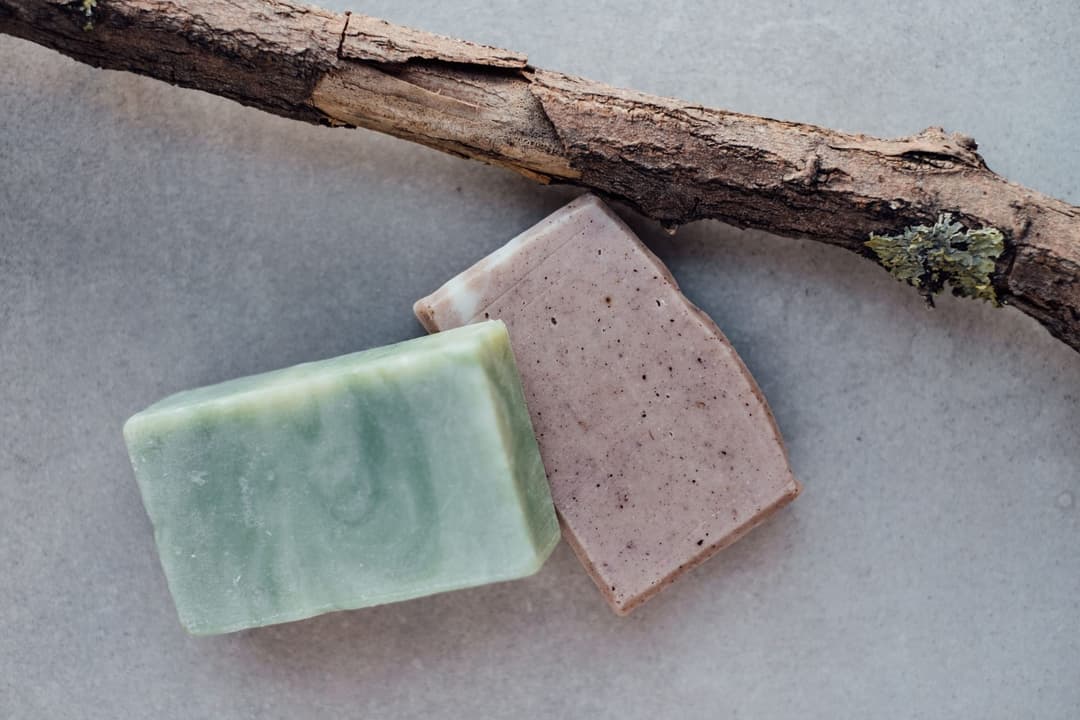
Clays are the most reliable natural colorants. They're stable in high pH and don't morph. They also give a smooth, slippery feel to the lather, which is why so many shaving and facial bars lean on them. Our clay in soap guide goes deeper on each type.
| Clay | Color | Usage Rate |
| ------ | ------- | ------------ |
| Kaolin (White) | White/lighten | 1-2 tsp PPO* |
| French Green | Sage green | 1 tsp PPO |
| Rose Clay | Pink/rose | 1-2 tsp PPO |
| Rhassoul | Brown/taupe | 1 tsp PPO |
| Bentonite | Gray-green | 1 tsp PPO |
| Cambrian Blue | Blue-gray | 1 tsp PPO |
| Yellow Brazilian | Yellow/gold | 1 tsp PPO |
*PPO = Per Pound of Oils
Tip: Mix clay with a little oil or water before adding to soap to prevent clumping. Clay also soaks up liquid and can speed trace, so have your mold ready before it goes in.
Botanicals & Herbs
Botanicals come in two forms: powders you stir into the batter, and roots or seeds you infuse into oil ahead of time. The infusions are the more dependable of the two.
| Ingredient | Color | Notes |
| ------------ | ------- | ------- |
| Spirulina | Blue-green | Fades to greenish-brown over time |
| Indigo | Blue | Stable, use powder |
| Alkanet Root | Purple | Infuse in oil |
| Turmeric | Yellow-orange | Very potent, fades to peach |
| Paprika | Orange | Gentle color, can be speckly |
| Madder Root | Pink-red | Infuse in oil |
| Annatto | Orange | Infuse in oil, very stable |
Spices
| Spice | Color | Usage |
| ------- | ------- | ------- |
| Turmeric | Yellow | 1/2-1 tsp PPO |
| Paprika | Orange | 1-2 tsp PPO |
| Cinnamon | Brown | 1/2 tsp PPO (can irritate) |
| Cocoa Powder | Brown | 1-2 tbsp PPO |
| Activated Charcoal | Black | 1 tsp PPO |
| Coffee Grounds | Brown + exfoliant | 1-2 tbsp PPO |
Charcoal and cocoa are the two workhorses here. Charcoal gives a true black at a teaspoon per pound and a soft gray at a quarter of that; the activated charcoal soap guide has a full recipe. Cocoa needs more, since it's a weak tint, and it brings a faint chocolate smell that survives cure. Coffee grounds are as much exfoliant as color, and the coffee soap recipe shows how to use brewed coffee as the liquid for a deeper brown.
How Do You Infuse Oil with Botanicals?
Annatto, alkanet, and madder don't disperse well as powders. They speckle and settle. Infusing them into oil pulls the color out and leaves you with a smooth liquid you can add like any other oil.
- Put 1 to 2 tablespoons of dried root or seed per cup of liquid oil in a jar. Olive, sunflower, or sweet almond all work.
- For a warm infusion, set the jar in a pot of barely simmering water for two to four hours. For a cold infusion, cap it and leave it in a cupboard for two to four weeks, shaking now and then.
- Strain through a coffee filter or fine cloth. You want no grit at all.
- Label the jar with the oil and the date.
The infused oil counts as that oil in your recipe. If you made annatto-infused olive oil, enter it as olive oil in the calculator and it saponifies the same way. The colorant doesn't change the lye math. Use anywhere from a tablespoon of infused oil per pound for a pale tint to the full olive oil portion of the recipe for a deep shade.
Annatto is the strongest of the three: a little infused oil gives warm yellow, more gives orange. Alkanet gives gray-lavender in a batch that doesn't gel and deeper purple in one that does. Madder runs from dusty rose to brick red depending on rate and gel.
Colors by Shade
Getting Specific Colors
White: Titanium dioxide, Kaolin clay, Zinc oxide
Yellow: Turmeric (fades), Annatto seed oil, Calendula
Orange: Annatto, Paprika, Carrot puree
Pink/Red: Rose clay, Madder root, Beet powder (may brown)
Purple: Alkanet root, Purple Brazilian clay
Green: Spirulina, French green clay, Nettle powder, unrefined avocado oil
Blue: Indigo, Cambrian blue clay
Brown: Cocoa powder, Coffee, Cinnamon
Black: Activated charcoal
A few of these come from the oils themselves. Unrefined avocado oil is green enough to tint a bar on its own at 10 to 20% of the recipe, and unrefined hemp seed oil does the same. Pumpkin and carrot purees give a soft orange and add sugars that heat the batch, so treat them like a milk soap and keep temperatures low.
Some colors you can't get. There's no natural bright red that survives cold process: beet turns brown, hibiscus gray, rose petals beige. Red is a job for an oxide.
Stability Guide
Natural colorants behave differently than micas. Here's what to expect:
Stable (Won't Fade)
- Clays (all types)
- Activated charcoal
- Cocoa powder
- Annatto (in oil)
Moderate (Some Fading)
- Madder root
- Alkanet root
- Indigo
- Paprika
Unstable (Will Fade/Morph)
- Spirulina (goes brown-green)
- Chlorophyll (fades significantly)
- Turmeric (fades to peach)
- Most green plant materials
Three things do the fading. The first is pH: fresh soap batter is strongly alkaline, and many plant pigments shift color the moment they meet it, which is why alkanet goes from red in the oil to purple in the bar. The second is light. Chlorophyll-based greens break down in daylight within weeks, so a spirulina bar left on a sunny shelf loses its color long before the cure is done. The third is oxidation over the months of storage, which is what turns turmeric from gold to peach.
Gel phase changes the result too. A batch that gels comes out darker and more saturated with most botanicals, so decide whether you'll insulate and stick to it, or the same colorant at the same rate will give you two different colors.
How Much Natural Colorant Should You Use?
Start at 1 teaspoon per pound of oils for clays, charcoal, indigo, and spices, and 1 tablespoon per pound for weak tints like cocoa and coffee. That's enough to see the color clearly without any of the side effects below. Go to 2 teaspoons for a deeper shade, and treat that as the ceiling for clays and charcoal.
There are three places to add a colorant, and the choice matters:
- In the oils, before the lye. Best for infused oils and for whole-batch color. The colorant gets fully blended and there's no chance of streaks.
- At light trace, in a separate cup. The standard way to color part of a batch for swirls. Take out a portion of batter, stir in the pre-dispersed colorant, and pour.
- In the lye water. Indigo and some clays give a smoother, more even result added to the cooled lye solution, and indigo turns a cleaner blue this way than it does stirred into oil. Don't try it with botanicals that scorch.
Whichever you choose, pre-disperse the powder first. Mix a teaspoon of colorant with a tablespoon or so of oil taken from the recipe, work out every lump with the back of a spoon, and add the slurry. Dry powder dumped straight into batter gives you the speckles you've seen in beginner bars.
What Goes Wrong with Natural Colorants?
Speckling. Almost always a dispersion problem: the powder wasn't wetted before it went in, or a coarse spice like paprika still had grit. Sieve spices through a tea strainer and disperse everything in oil.
Scratchy bars. Too much clay, or coffee grounds that were too coarse. Clay above about 2 teaspoons per pound starts to feel gritty and can leave skin tight. Coffee grounds should be finely ground and used at a tablespoon per pound at most, or you've made a pumice bar.
Accelerated trace. Clay drinks liquid and thickens the batter. Cinnamon and clove do it through the fragrance side. If you're planning a detailed swirl, add clay to only one of your colors and expect that one to move faster than the rest.
Smell. Spirulina, nettle, and kelp powders smell like a pond above a teaspoon per pound, and it can hang on through cure. Keep the rate low and pair them with rosemary or eucalyptus.
Tips for Success
- Do Small Test Batches - Natural colorants are unpredictable. Test before committing to a large batch.
- Expect Variation - Each batch may look slightly different. That's part of the natural charm!
- Combine for Depth - Layer multiple natural colorants for complex, interesting colors. Kaolin under a botanical brightens it; a pinch of charcoal in a clay deepens it.
- Don't Overshoot - More isn't always better. Too much can cause speckling or off-colors.
- Document Everything - Keep notes on exact amounts, whether the batch gelled, and what the bar looks like at cut and at six weeks. The two photos rarely match.
Getting Started
New to natural colorants? Start with:
- French green clay - Easy, stable green
- Rose clay - Reliable pink
- Activated charcoal - Perfect black
- Cocoa powder - Rich browns
- Annatto oil - Bright orange
These five give you a solid natural palette, and every one holds its color for the life of the bar. Once they're second nature, add indigo for blue and alkanet for purple.
Calculate Your Recipe
Use our Soaply calculator to build your recipe, then choose natural colorants to complement your oil blend. Colorants added at trace don't change the lye or water amounts, and infused oils are entered as the oil you infused. Natural colors work best with natural, earth-toned branding.
Where to Buy Natural Colorants
- Kaolin Clay (White) - Lighten soap, gentle on skin
- French Green Clay - Beautiful sage green
- Rose Clay - Natural pink tones
- Activated Charcoal (Food Grade) - Deep black
- Spirulina Powder - Natural blue-green
- Mica Powder Variety Set - If you want bolder colors too
Related Articles
- Best Oils for Soap Making - Build your base recipe
- Essential Oils vs Fragrance Oils - Pair colors with scents
- Palm-Free Soap Recipes - Natural colors + palm-free = great branding
💬 Frequently Asked Questions
What natural ingredients can you use to color soap?
The most reliable natural soap colorants include clays (French green, rose, kaolin), spices (turmeric, paprika, cocoa powder), activated charcoal, and botanical infusions (alkanet root, madder root, annatto seeds). Clays are the easiest for beginners because they're stable and predictable.
Do natural colorants fade in cold process soap?
Some do, some don't. Clays, activated charcoal, and cocoa powder are very stable. Spirulina, chlorophyll, and turmeric tend to fade or shift color over time, and daylight speeds that up. Check the stability guide above before choosing your colorant, and cure colored bars out of direct sun.
How much natural colorant should I add to soap?
Most natural colorants work at 1-2 teaspoons per pound of oils. Start with less and increase next batch if you want deeper color. Always mix powdered colorants with a small amount of oil or water first to prevent clumping.
Can you make blue soap with natural colorants?
Yes! Indigo powder produces a reliable blue in cold process soap, and it comes out cleaner when added to the cooled lye water than when stirred into the oils. Cambrian blue clay gives a softer blue-gray. Woad is another traditional plant-based blue option, though it's harder to source.
Do natural colorants change how much lye I need?
No. Powders added at trace or to the lye water don't saponify, so the lye amount stays the same. Oil infusions are just the base oil with color in it, so enter them as that oil in the calculator. The one exception is purees like pumpkin or carrot, which add liquid and sugar to the batch and should be treated like a milk soap for temperature.
Ready to Try It?
Use our free soap calculator to create your perfect recipe with real-time property predictions.
Open Calculator