How to Make Shaving Soap (Cold Process Recipe With Stearic Acid)
Make shaving soap from scratch with this cold process recipe. Uses stearic acid and dual lye for thick, creamy lather that protects skin while shaving.
This article contains Amazon links. As an Amazon Associate, Soaply earns from qualifying purchases at no extra cost to you.
A good shaving soap whips into a thick, creamy lather that cushions the blade and lets it glide. Regular bath soap can't do that, no matter how much you swirl your brush. The difference comes down to a single ingredient most bath soaps don't use: stearic acid.
This guide walks you through both a beginner-friendly NaOH version and the traditional dual-lye method that produces the soft, cream-style shaving soap you find in vintage tins. Both recipes use the Soaply calculator to lock in safe lye amounts before you start.
- What Makes Shaving Soap Different From Regular Soap
- Key Ingredients in Shaving Soap
- NaOH Only vs Dual Lye Methods
- Equipment You'll Need
- Beginner Cold Process Shaving Soap Recipe
- Traditional Dual-Lye Shaving Soap Recipe
- Step-by-Step Instructions
- How Long to Cure Shaving Soap
- Common Shaving Soap Problems and Fixes
- Frequently Asked Questions
What Makes Shaving Soap Different From Regular Soap
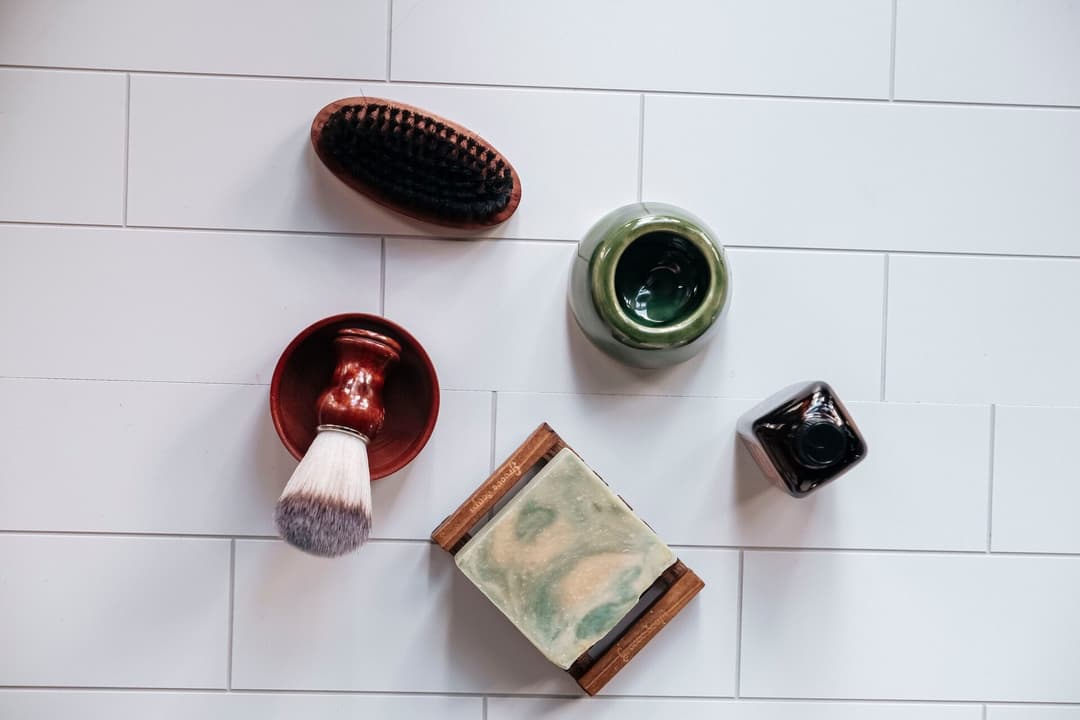
Bath soap is built around a balance of cleansing, conditioning, and bubbly lather. Shaving soap throws that balance out the window. The goal isn't to wash, it's to create a stable, dense foam that holds water against the skin so a razor can cut hair without dragging.
Three things give shaving soap its signature feel:
- High stearic acid content for thick, stable lather that doesn't pop the second you swirl your brush
- Lots of slip from clays, glycerin, or both, so the razor glides instead of skips
- Lower bubbly content than bath soap so the lather is creamy and dense, not airy and fragile
If you've ever tried to shave with regular handmade soap, you know what's missing. The bubbles look fine in the mug, but they collapse on your face within seconds. Shaving soap holds its shape from the first stroke through the last rinse.
Key Ingredients in Shaving Soap
Most cold process shaving soap recipes share the same core ingredient list, even when the percentages vary.
Stearic Acid
This is the magic ingredient. Stearic acid is a saturated fatty acid that's solid at room temperature and gives shaving soap its dense, stable lather. It saponifies with both sodium hydroxide and potassium hydroxide, so it works in NaOH-only and dual-lye recipes.
You can buy pure stearic acid pellets from soap suppliers and Amazon. Tallow and cocoa butter contain stearic acid naturally, but neither has enough on its own. Most shaving soap recipes use 25 to 50% pure stearic acid in addition to whatever stearic the other oils contribute.
Coconut Oil
Adds bubbly lather and balances the dense, creamy lather that stearic acid produces alone. Most shaving soaps run 20 to 30% coconut. Going higher dries the skin too much for daily face use.
Castor Oil
A small amount (5 to 10%) boosts lather and helps the bubbles last longer. Castor oil also adds humectant properties that pull moisture into the foam.
Conditioning Oils
Olive oil, sweet almond oil, and avocado oil add skin care benefits without dominating the lather profile. Run 20 to 35% of the recipe through whichever conditioning oil you prefer.
Kaolin Clay or Bentonite Clay
Clays add slip and let the razor glide across the skin. Kaolin is gentler and the standard choice. Bentonite gives more slip but can dry out skin in larger amounts. Use 1 tablespoon per pound of oils.
Glycerin (Optional Add-In)
Some recipes add 1 to 2 teaspoons of vegetable glycerin per pound of oils for extra moisture retention in the lather.
NaOH Only vs Dual Lye Methods
This is the biggest decision you'll make before mixing a batch.
NaOH Only (Sodium Hydroxide)
Standard cold process method. Produces a hard bar of shaving soap that you can use straight from the cure rack or pour into individual tins. Easier for beginners since the math and process match every other cold process recipe you've made. Lather is good but not quite as creamy as a dual-lye version.
Dual Lye (NaOH + KOH)
Traditional shaving soap method. KOH (potassium hydroxide) produces a softer soap that holds the cream-style consistency you scoop out of a tin with a brush. Most dual-lye shaving soaps use a 50/50 split between NaOH and KOH by total lye weight, though some recipes go as high as 70% KOH for an even softer result.
Dual lye gives you that classic shaving soap texture: firm enough to stay in the tin, soft enough to whip into lather with just a wet brush. Downside is that it's more advanced. You need both lyes, you need to weigh them separately, and the math takes more care.
For your first batch, the NaOH-only recipe below is the easier starting point. Once you've made a few successful batches, the dual-lye version is worth the upgrade.
Equipment You'll Need
Most of this overlaps with regular cold process soap making, with a few additions specific to shaving soap.
Standard Soap Making Gear
- Safety goggles and chemical-resistant gloves
- Digital scale that measures in grams
- Stick blender for emulsification
- Heat-safe pitchers for lye and oils
- Infrared thermometer for fast temperature checks
- Stainless steel pot for melting stearic acid
Shaving-Soap-Specific Gear
- Shaving soap tins or wide-mouth jars for soft soap
- Silicone soap molds for hard puck-style bars
- Stearic acid pellets (this is the key purchase)
- Kaolin clay for slip
- Potassium hydroxide if doing dual lye
Stearic acid melts at around 157°F (69°C), so you'll need to keep the oil mixture warm enough that the stearic doesn't solidify before you mix in the lye. A temperature gauge is essential for this recipe.
Beginner Cold Process Shaving Soap Recipe
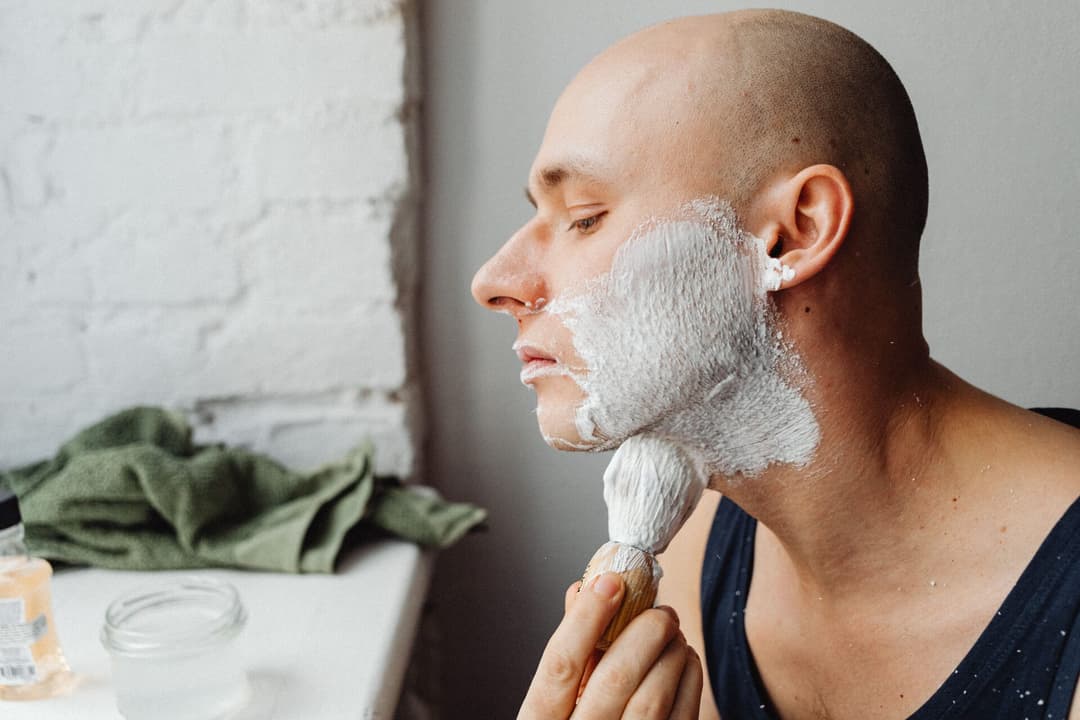
This recipe uses NaOH only and produces a hard puck-style shaving bar. It's the easiest entry point and gives a good lather right out of the gate.
Recipe (1 lb / 16 oz oils)
| Ingredient | Percentage | Weight |
| --- | --- | --- |
| Stearic Acid | 25% | 4.0 oz |
| Coconut Oil | 25% | 4.0 oz |
| Olive Oil | 30% | 4.8 oz |
| Castor Oil | 10% | 1.6 oz |
| Cocoa Butter | 10% | 1.6 oz |
| Total Oils | 100% | 16 oz |
Settings
- Superfat: 3% (lower than usual to keep lather stable)
- Lye concentration: 33%
- Kaolin clay: 1 tablespoon mixed with 1 tablespoon distilled water
- Optional: 0.5 oz fragrance oil tested for shaving soap (sandalwood, bay rum, and lavender are classics)
Run these numbers through the Soaply calculator before mixing. Stearic acid has a different SAP value than most oils, so the lye amount on this recipe will be slightly higher than a non-stearic recipe of the same total oil weight.
Why a Lower Superfat?
Standard bath soap runs 5 to 8% superfat. Shaving soap drops to 1 to 3% because excess unsaponified oils interfere with lather stability. A higher superfat won't ruin the bar, but the lather will be thinner and less stable on the skin.
Traditional Dual-Lye Shaving Soap Recipe
This recipe uses both NaOH and KOH for the classic cream-style shaving soap that you scoop from a tin. It's more advanced but produces a noticeably better lather.
Recipe (1 lb / 16 oz oils)
| Ingredient | Percentage | Weight |
| --- | --- | --- |
| Stearic Acid | 35% | 5.6 oz |
| Coconut Oil | 25% | 4.0 oz |
| Olive Oil | 25% | 4.0 oz |
| Castor Oil | 10% | 1.6 oz |
| Shea Butter | 5% | 0.8 oz |
| Total Oils | 100% | 16 oz |
Lye Settings
- NaOH: 50% of total lye weight
- KOH: 50% of total lye weight (remember KOH is usually 90% pure, so adjust upward)
- Superfat: 2%
- Lye concentration: 30%
- Kaolin clay: 1 tablespoon mixed with 1 tablespoon distilled water
- Glycerin: 2 teaspoons added at trace
The Soaply calculator handles dual-lye math when you specify the NaOH/KOH ratio. Don't try to do this by hand. KOH and NaOH have different SAP values for every oil, and getting the split wrong means either lye-heavy soap or excess unsaponified fats.
Why 50/50 NaOH/KOH?
A pure KOH soap is fully liquid (think liquid hand soap). A pure NaOH soap is hard like a bath bar. The 50/50 split lands in the middle: firm enough to hold its shape in a tin, soft enough to whip into lather with a wet brush. Going up to 70% KOH gives an even softer, more cream-like consistency. Going below 30% KOH gives a hard puck.
Step-by-Step Instructions
The process is similar to standard cold process, with a few adjustments for the high stearic content.
Step 1: Safety First
Put on goggles and gloves before opening any lye container. Work in a ventilated area and keep kids and pets out of the room. Review our soap making safety guide if it's been a while.
Step 2: Make the Lye Solution
Weigh your distilled water into a heat-safe pitcher. Slowly add the lye to the water (never the other way around). For dual-lye recipes, dissolve the NaOH first, let it cool slightly, then add the KOH. Stir until both are fully dissolved. Set the solution aside to cool.
For dual-lye, expect the solution to look slightly cloudy. That's normal.
Step 3: Pre-Mix the Clay
Stir the kaolin clay into a tablespoon of distilled water until it forms a smooth slurry with no lumps. Set aside. You'll add this at trace.
Step 4: Melt the Oils
Combine all your solid fats (stearic acid, coconut oil, cocoa butter, shea butter) in a stainless steel pot. Heat on low until everything melts. Stearic acid takes the longest, so don't rush. Once everything is liquid, stir in the olive oil and castor oil.
The oil mixture needs to stay above 160°F (71°C) until you add the lye. If it cools below that, the stearic acid will start re-solidifying and you'll get a chunky, lumpy mess.
Step 5: Match Temperatures
This is where shaving soap differs most from standard cold process. Both your lye and oil temperatures need to be 160 to 170°F (71 to 77°C) when you combine them. That's much warmer than the usual 100 to 120°F for cold process.
If your lye solution is cooler, gently reheat the pitcher in a hot water bath. Don't microwave lye solution.
Step 6: Combine and Stick Blend
Slowly pour the lye solution into the oils. Stick blend immediately. The batter will reach trace fast, often within 30 seconds. Stearic acid accelerates trace dramatically. Don't waste time admiring your work.
Step 7: Add Clay and Glycerin
At light trace, stir in the kaolin clay slurry. If you're using glycerin, add it now too. Mix until uniform.
Step 8: Add Fragrance (Optional)
If you're using fragrance oil, stir it in next. Skip the stick blender for this step. The batter will be thick fast, so move quickly.
Step 9: Pour Into Molds
For NaOH-only hard pucks, pour into silicone soap molds or individual cavity molds. For dual-lye soft soap, pour directly into shaving tins or jars.
The batter will set up fast because of the stearic acid. Tap the molds firmly to release air bubbles before it fully solidifies.
Step 10: Insulate or Don't?
Most shaving soap recipes don't need extra insulation. The high stearic content means the batch generates plenty of heat on its own. Cover the molds loosely with cardboard to keep dust off and let them sit at room temperature for 24 to 48 hours.
How Long to Cure Shaving Soap
NaOH-only shaving soap pucks need a full 4 to 6 week cure like any other cold process bar. Some experienced soapmakers cure shaving soap for 8 to 12 weeks for even better lather stability.
Dual-lye shaving soap can be tested as early as 2 weeks but performs best after 4 to 6 weeks of curing. The KOH portion saponifies faster than NaOH, but the soap still needs time for water to evaporate and the bar to firm up to the right consistency.
You'll know the soap is ready when:
- The surface looks dry and slightly chalky, not wet
- A wet brush whips up dense, stable lather in 30 to 60 seconds
- The lather holds its shape when you spread it on your arm
If your lather collapses fast or feels watery, give the soap another 2 weeks and test again.
Common Shaving Soap Problems and Fixes
Lather Collapses Too Fast
Usually means superfat is too high or stearic acid percentage is too low. Drop superfat to 2% on your next batch and try increasing stearic to 35 to 40%.
Soap Is Too Hard for Whipping
If you wanted a soft, cream-style soap and got a brick instead, your KOH percentage was too low or you used NaOH only. Either rebatch with added KOH (advanced) or cut the puck into chunks and use it like a hard puck instead.
Razor Drag (Not Enough Slip)
Add more clay on the next batch or stir in 1 teaspoon of vegetable glycerin per pound of oils at trace. You can also try kaolin and bentonite combined at 1.5 tablespoons total per pound.
Stearic Acid Won't Melt Evenly
Stearic acid melts at 157°F. Make sure your pot is hot enough and stir continuously. If the stearic clumps, it didn't fully melt before you added the other oils. Heat back up and let it dissolve completely before continuing.
Lye-Heavy Bar (Zaps the Tongue)
Means your lye math was off. Always run dual-lye recipes through the Soaply calculator and double-check your KOH purity (most KOH is 90% pure, so the calculator's adjustment matters). If a finished bar zaps, rebatch it with added oils to neutralize the excess lye.
A Note on Fragrance Oils
Not every fragrance oil works in shaving soap. The high stearic content and warm soaping temperatures cause some fragrances to misbehave (accelerated trace, ricing, separation). Stick to fragrances tested by suppliers for shaving soap.
Classic shaving soap scents that perform well:
- Bay rum
- Sandalwood
- Lavender
- Bergamot
- Cedar
- Eucalyptus mint
Avoid heavy florals and vanilla-based fragrances. They tend to seize in stearic-heavy batter.
💬 Frequently Asked Questions
What's the difference between shaving soap and regular soap?
Shaving soap uses high stearic acid content (25 to 50%) for thick, stable lather that cushions the razor. Regular soap balances cleansing, conditioning, and bubbles for skin washing. Shaving soap also runs a lower superfat (2 to 3%) and often includes clay for slip. You can technically shave with regular soap, but the lather won't hold up the same way.
Can I make shaving soap with NaOH only?
Yes. NaOH-only shaving soap produces a hard puck-style bar that works well with a wet brush. The lather isn't quite as creamy as a dual-lye version, but it's much easier for beginners and uses ingredients you probably already have. Use the beginner recipe in this guide as a starting point.
Why does shaving soap need stearic acid?
Stearic acid is what makes shaving lather thick, dense, and stable on the skin. Without it, the lather collapses within seconds, leaving the razor with nothing to glide on. Tallow and cocoa butter contain some stearic acid naturally, but pure stearic acid pellets at 25 to 50% of the recipe are what give shaving soap its signature performance.
How long does homemade shaving soap last?
A 4 oz tin of shaving soap typically lasts 3 to 6 months of daily use, depending on how generously you load your brush. Properly cured shaving soap can sit in a tin or on a shelf for years without going bad, as long as the oils don't go rancid. Use stable oils and keep the bars in a cool, dry place.
Do I need a shaving brush to use it?
Yes, and you'll get the best results from a badger or boar bristle brush. The brush whips air into the soap and builds the dense lather that shaving soap is designed to produce. You can use your fingers in a pinch, but the lather won't be as thick or as stable on the skin.
Build Your First Batch
Shaving soap is one of the most rewarding cold process projects because the difference between homemade and store-bought is dramatic. A good homemade puck whips into lather that store-bought aerosol cans can't match.
Start with the NaOH-only recipe, get one successful batch under your belt, then move up to the dual-lye method once you're comfortable working with stearic acid at warmer soaping temperatures. Run every recipe through the Soaply calculator before you mix, especially for dual-lye batches where the NaOH/KOH split has to be exact.
Once you've nailed the basics, experiment with different fragrance combinations, swap in different oils to match your skin type, and try aging a batch for 12 weeks to see how much better the lather gets with extended cure time.
Ready to Try It?
Use our free soap calculator to create your perfect recipe with real-time property predictions.
Open Calculator