Beginner's Guide to Cold Process Soap Making
Learn cold process soap making step by step. Get a beginner recipe, equipment list, safety tips, and expert advice to make your first batch at home.
This article contains Amazon links. As an Amazon Associate, Soaply earns from qualifying purchases at no extra cost to you.
Cold process soap is made by mixing oils with a lye solution, blending until the batter thickens to "trace," pouring it into a mold, and letting it cure for 4 to 6 weeks. That's the entire method. You need a scale, a stick blender, eye protection, and a recipe you ran through a soap calculator rather than copied from a screenshot. This guide covers the equipment, a forgiving first recipe, every step, and the mistakes that ruin most beginner loaves.
- What Is Cold Process Soap?
- What You'll Need
- What Is a Good First Cold Process Soap Recipe?
- How Do You Make Cold Process Soap Step by Step?
- What Does Trace Look Like?
- Should You Insulate the Mold?
- What Are the Most Common Beginner Mistakes?
- How Does Superfat Work?
- How Do You Know Your Soap Turned Out?
- Next Steps
- Frequently Asked Questions
What Is Cold Process Soap?
Cold process (CP) soap is made by combining oils and fats with sodium hydroxide, better known as lye, dissolved in water. The lye and the oils react in a process called saponification, and the result is soap plus glycerin. Unlike a melt and pour base, which is soap somebody else already made, cold process is soap from scratch.
The "cold" part is a little misleading. The batter never gets cooked, which is what separates it from hot process soap, but the reaction itself generates plenty of heat inside the mold. Cold means no external heat, not that the soap stays cool.
Saponification is mostly complete within a day or two, but the bar keeps hardening and mellowing for weeks after that. That waiting period is the cure, and it's the part beginners most want to skip.
What You'll Need
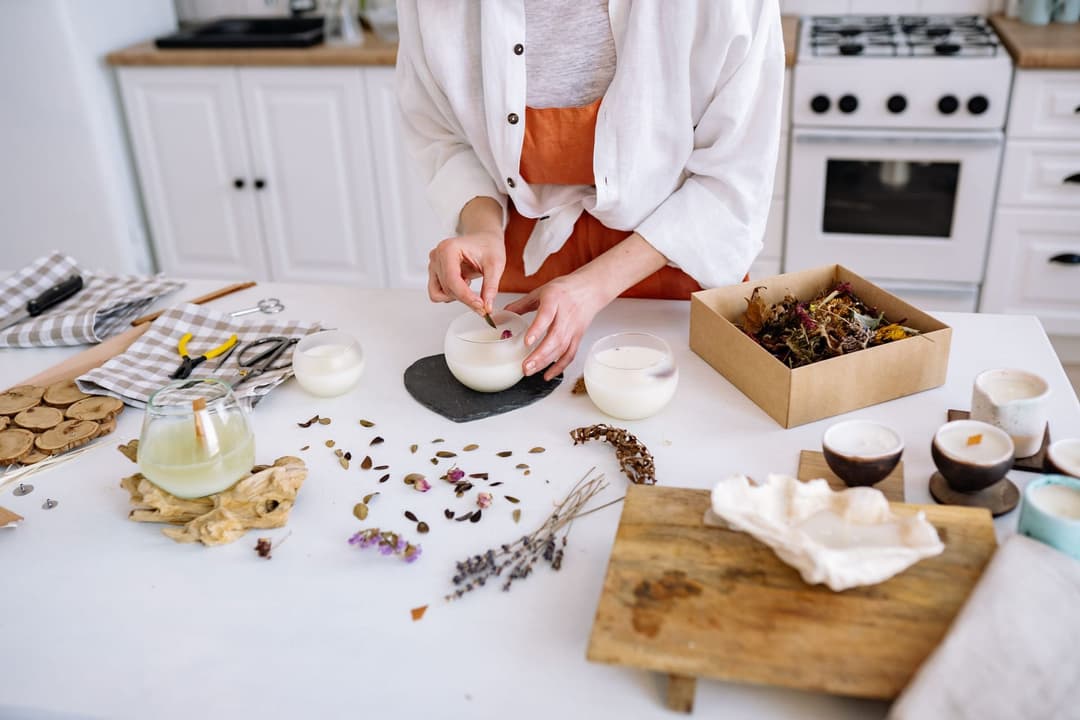
The list is short, but anything that touches lye should be dedicated to soap from now on.
Safety Gear
- Safety goggles: not glasses, goggles. A splash of lye solution in the eye can cause permanent damage.
- Chemical-resistant gloves: nitrile or rubber, kept on until cleanup is done. Raw batter burns too.
- Long sleeves and closed shoes: cover anything a drip could land on.
- Ventilation: mix the lye solution near an open window, under a range hood, or outdoors. The fumes in the first minute are sharp.
Read the soap making safety guide before your first batch. It covers what to do if lye touches skin and how to store it safely.
Tools
- Digital scale: everything in soap is measured by weight, never by volume. Grams are easier than ounces at small batch sizes.
- Stick blender: turns a 45 minute hand-stir into a few minutes.
- Heat-safe containers: a polypropylene pitcher for the lye solution and a larger bowl for the oils. Stainless steel is fine. Never aluminum, tin, or copper, which react with lye.
- Infrared thermometer: point and read, no probe to wash.
- Silicone soap mold or a wooden loaf mold lined with freezer paper. The soap mold guide compares the options if you're not sure which to buy.
- Silicone spatulas and a stainless or plastic spoon for stirring and scraping.
- A knife or cutter for slicing the loaf into bars after it sets.
What Is a Good First Cold Process Soap Recipe?
A good first recipe uses common oils, moves slowly enough to give you time, and unmolds within a day or two. This one does all three:
| Ingredient | Amount |
| ------------ | -------- |
| Olive Oil | 40% |
| Coconut Oil | 30% |
| Shea Butter | 20% |
| Castor Oil | 10% |
| Superfat | 5% |
| Lye Concentration | 33% |
Each oil is doing a job. Olive oil is the conditioning base and keeps the batter slow. Coconut oil brings hardness and big bubbly lather. Shea butter adds a creamy feel and firms the bar. Castor oil makes the lather stable. Together they land in the middle of every bar property range, which is where a first batch should be.
Notice what the table doesn't show: a lye weight or a water weight. Those depend on your exact oil weights, and every oil needs a different amount of lye. Open the basic beginner template, type in how much oil you want to use, and the calculator gives you the lye and water for that batch plus a preview of the bar's hardness, cleansing, and conditioning scores. How to use a soap calculator walks through every field.
Keep the first batch small. Around 500 grams of oils fills most small silicone loaf molds and makes six to eight bars, enough to learn from without wasting much if it goes wrong.
How Do You Make Cold Process Soap Step by Step?
Set aside about two hours, most of it waiting for things to cool. Read every step first, because once the lye meets the oils you can't pause.
Step 1: Gear Up and Clear the Space
Put on goggles and gloves before the lye container is opened. Cover the counter, send kids and pets out of the room, and lay out every tool within reach.
Step 2: Weigh Everything
Use the numbers from the Soaply calculator. Weigh the water into your lye pitcher, the lye into a separate dry cup, and each oil into the mixing bowl, zeroing the scale between ingredients. Precision matters most for the lye: a few grams over on olive oil changes nothing, but a few grams over on lye makes a harsh bar.
Step 3: Make the Lye Solution
- Take the water pitcher to your ventilated spot
- Pour the lye slowly into the water, never the other way around, stirring as it goes
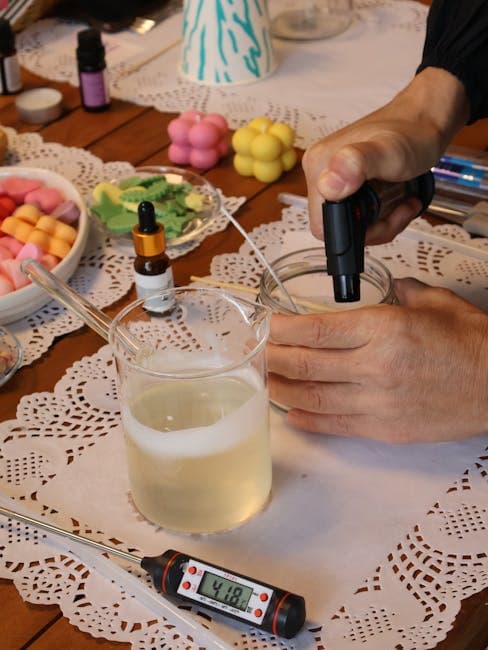
- Keep stirring until the liquid turns clear. It will heat up to 200°F+ on its own and give off fumes for a minute, so turn your face away
- Set it somewhere safe to cool to 100-110°F
Step 4: Prepare Your Oils
- Melt the coconut oil and shea butter gently on the stove or in the microwave in short bursts
- Pour the melted oils into the mixing bowl with the olive and castor oil and stir
- Let the blend cool to 100-110°F, within about ten degrees of the lye solution
Step 5: Combine and Blend to Trace
- Pour the lye solution slowly into the oils, down the shaft of the stick blender to cut splashing
- Stir by hand for a few seconds
- Pulse the stick blender in short bursts of a few seconds, stirring between bursts
- Stop when the batter thickens enough to leave a visible trail on its own surface
That trail is called trace, your signal that the oils and lye have emulsified and won't separate in the mold.
Step 6: Add Fragrance and Color
At light trace, add:
- Fragrance oil (0.7 oz per pound of oils)
- Colorants if desired
Stir them in by hand or with one short pulse, mold within reach in case the fragrance thickens the batter. The fragrance load guide explains how to adjust the amount for essential oils and stronger fragrances.
Step 7: Pour, Insulate, and Cure
- Pour into the mold and tap it on the counter to release air bubbles
- Cover and insulate for 24 hours
- Unmold after 24-48 hours, once the loaf is firm enough to hold an edge
- Cut into bars
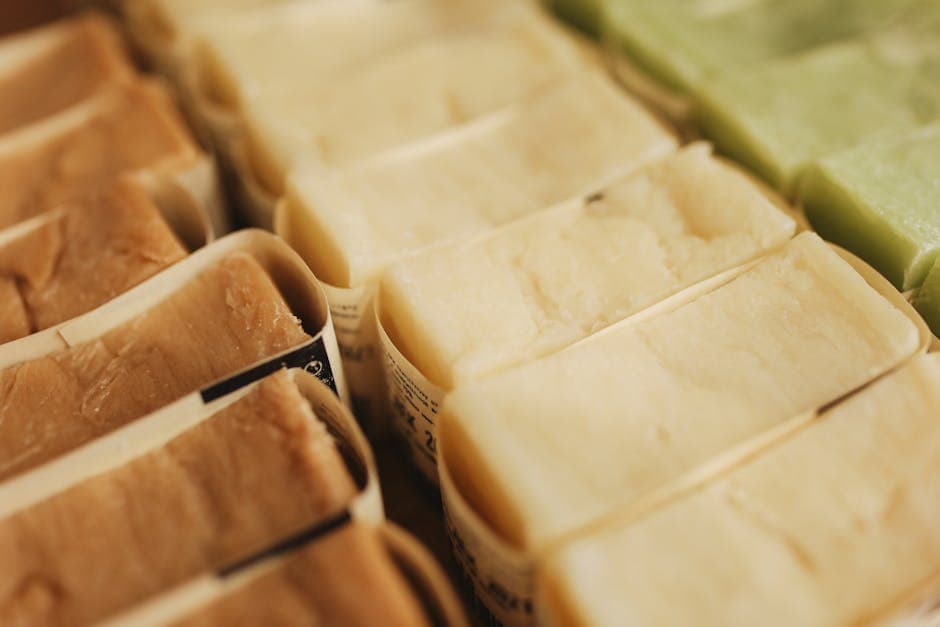
- Cure for 4-6 weeks on a rack with air on all sides before use
What Does Trace Look Like?
Trace comes in degrees, and knowing them saves a lot of first-batch panic.
Emulsion is the earliest point. The batter looks uniform, with no oily streaks, but it's still thin as cream. A drizzle across the top disappears immediately.
Light trace looks like thin pudding. A drizzle sits on the surface for a second before sinking. This is when to add fragrance and color, and the best time to pour for a smooth top.
Medium trace is pudding you'd eat, and thick trace is mashed potatoes. It has to be spooned in. Nothing has gone wrong, but you've run out of time for anything decorative.
Heat and blending both speed trace up. Soaping at the cooler end of the range and pulsing the blender gives you several minutes at light trace; running it flat out when everything is hot can take you to mashed potatoes in under a minute.
Watch out for false trace, too. If your oils cooled too far, the coconut oil and shea start to solidify and thicken the batter before the reaction has begun. It looks like trace, then thins out or separates in the mold. Keeping both liquids in the recommended range prevents it.
Should You Insulate the Mold?
Wrapping the mold traps the heat of saponification and pushes the loaf through gel phase, where the center turns translucent before it sets. Gelled soap has slightly deeper color and unmolds sooner; ungelled soap is paler and just as good to use.
For a plain first batch, insulate it: set the covered mold on a towel, fold the towel over the top, and leave it alone. Uncover it if a crack forms down the center, which means it's getting too hot. Skip the insulation if you added honey, milk, or sugar, which push temperatures higher. The gel phase guide covers how to force or prevent it on purpose.
What Are the Most Common Beginner Mistakes?
1. Not Using a Calculator
Eyeballing measurements leads to lye-heavy (caustic) or oil-heavy (soft, rancid) soap. Always use a soap calculator for safety.
2. Adding Water to Lye
Always add lye TO water, slowly. The reverse can cause a violent reaction.
3. Not Reaching Trace
If you pour too early, oils and lye may separate. Be patient and blend until you see trace.
4. Skipping the Cure
Fresh soap is harsh and soft. The 4-6 week cure allows water to evaporate and the bar to harden.
5. Swapping Oils Without Recalculating
Every oil has its own saponification value. Trade shea for cocoa butter without rerunning the calculator and your lye amount is wrong for the new blend. Substitutions are fine; unrecalculated ones aren't.
6. Trusting the Wrong Fragrance
Some fragrance oils accelerate trace or seize the batter into a solid lump within seconds. For a first batch, use an essential oil like lavender or a fragrance oil the supplier describes as well behaved in cold process.
How Does Superfat Work?
Superfat is the percentage of oils that remain unsaponified (not converted to soap). A 5% superfat means 5% of your oils stay as free oils, making the soap more moisturizing.
- 0-3% - Very cleansing, can be drying
- 5% - Standard, good balance
- 7-8% - Extra moisturizing (may reduce lather)
Superfat is also your safety margin. A few percent of extra oil means a small measuring error leaves you with a slightly richer bar instead of a lye-heavy one, which is why beginners shouldn't drop below the default. The superfat guide goes into how different oils behave at different superfat levels.
How Do You Know Your Soap Turned Out?
A good loaf at 24 to 48 hours is firm, with no pools of oil on top or liquid underneath. A light dusting of white powder on the surface is soda ash, harmless and washable.
A day or two after cutting, do the zap test. Wet a fingertip, touch a bar, and tap the fingertip to your tongue. Properly made soap tastes like soap. Lye-heavy soap gives a sharp electric zap like touching a battery. pH strips tell you less, because handmade soap sits at a high pH even when it's safe.
Bars that are soft, weeping oil, crumbly, or zapping after a week each point to a specific cause, usually a measurement error or separation in the mold. The troubleshooting guide matches each symptom to its fix.
Next Steps
Ready to calculate your first recipe? Try our free Soaply calculator to get exact measurements for any combination of oils.
Once you've mastered the basics, explore:
- Different oil combinations - Which oils create the best bars
- Water discount vs lye concentration - Control trace speed with your water amount
- Soap bar properties explained - What the calculator's scores mean
- Natural colorants (clays, botanicals)
- Essential oils vs fragrance oils - Which is right for your soap?
- Understanding superfat - Fine-tune moisturizing
- Swirl techniques once plain pours feel easy
You'll also need the lye itself: sodium hydroxide sold as 100% pure. Drain cleaner that lists other ingredients won't work.
💬 Frequently Asked Questions
Is cold process soap safe to use on skin?
Yes. Once fully cured (4-6 weeks), cold process soap contains no free lye. The saponification reaction converts all the lye into soap and glycerin, so the finished bar is safe for skin as long as the recipe was calculated correctly.
How long does it take to make cold process soap?
The active soap making process takes about 1-2 hours, including prep and cleanup. However, bars need 4-6 weeks of curing time before they're ready to use.
Can you make cold process soap without lye?
No. Lye (sodium hydroxide) is essential for saponification, the chemical reaction that turns oils into soap. If you want to skip lye handling, try melt and pour soap making instead.
What temperature should oils and lye be for cold process soap?
Both your lye solution and oils should be around 100-110°F (38-43°C) when you combine them. Use an infrared thermometer for quick, accurate readings.
Why does cold process soap need to cure for so long?
Curing allows water to evaporate from the bar, making it harder and longer-lasting. It also lets the crystal structure develop, which improves lather quality and mildness. Learn more in our curing guide.
Make Your First Batch This Weekend
Weigh carefully, keep temperatures in range, blend to a light trace, and give the bars their full cure. Do those four things and a first batch almost always turns out. Open the basic beginner template, enter your oil weights, and you'll have a safe recipe on screen in under a minute.
Ready to Try It?
Use our free soap calculator to create your perfect recipe with real-time property predictions.
Open Calculator