African Black Soap: What It Is, Benefits, and How to Make It at Home
What is African black soap really made of? Learn its traditional ingredients, skin benefits, how to use it, and two realistic ways to make it at home.
This article contains Amazon links. As an Amazon Associate, Soaply earns from qualifying purchases at no extra cost to you.
African black soap is a traditional West African cleanser made by burning plant materials like plantain skins, cocoa pods, and palm leaves into ash, then combining that ash with oils and butters such as shea and palm kernel oil. That ash is where the "black" comes from, and it's also the source of the natural alkali that turns the oils into soap. Real African black soap is soft, brown to deep grey, unscented, and a little gritty, not the jet-black glossy bar you often see sold online. This guide covers what's actually in it, whether it lives up to the hype for your skin, how to use it without drying yourself out, and two honest ways to make African black soap at home.
- What Is African Black Soap?
- What's in African Black Soap?
- How Is Authentic African Black Soap Made?
- African Black Soap Benefits for Skin
- How to Make African Black Soap at Home
- How to Use African Black Soap
- How to Spot Fake African Black Soap
- Frequently Asked Questions
What Is African Black Soap?
African black soap is a centuries-old soap tradition rooted in West Africa, especially Ghana, Nigeria, Togo, and Benin. In Ghana it's often called alata samina or anago samina, and among the Yoruba of Nigeria it's known as ose dudu, which literally means "black soap." Recipes and names shift from village to village and family to family, so there isn't one single formula. What they share is the method: local plant matter is dried and roasted into ash, and that ash provides the alkali that saponifies the oils.
That's the key difference from the cold process bars most home soapmakers make. A modern bar uses purified sodium hydroxide lye. Traditional black soap uses potash, the potassium-rich alkali leached from wood and plant ash, which is why authentic raw bars come out soft, pliable, and slightly crumbly rather than rock hard. It's closer chemically to a soft potassium soap than to a firm sodium bar.
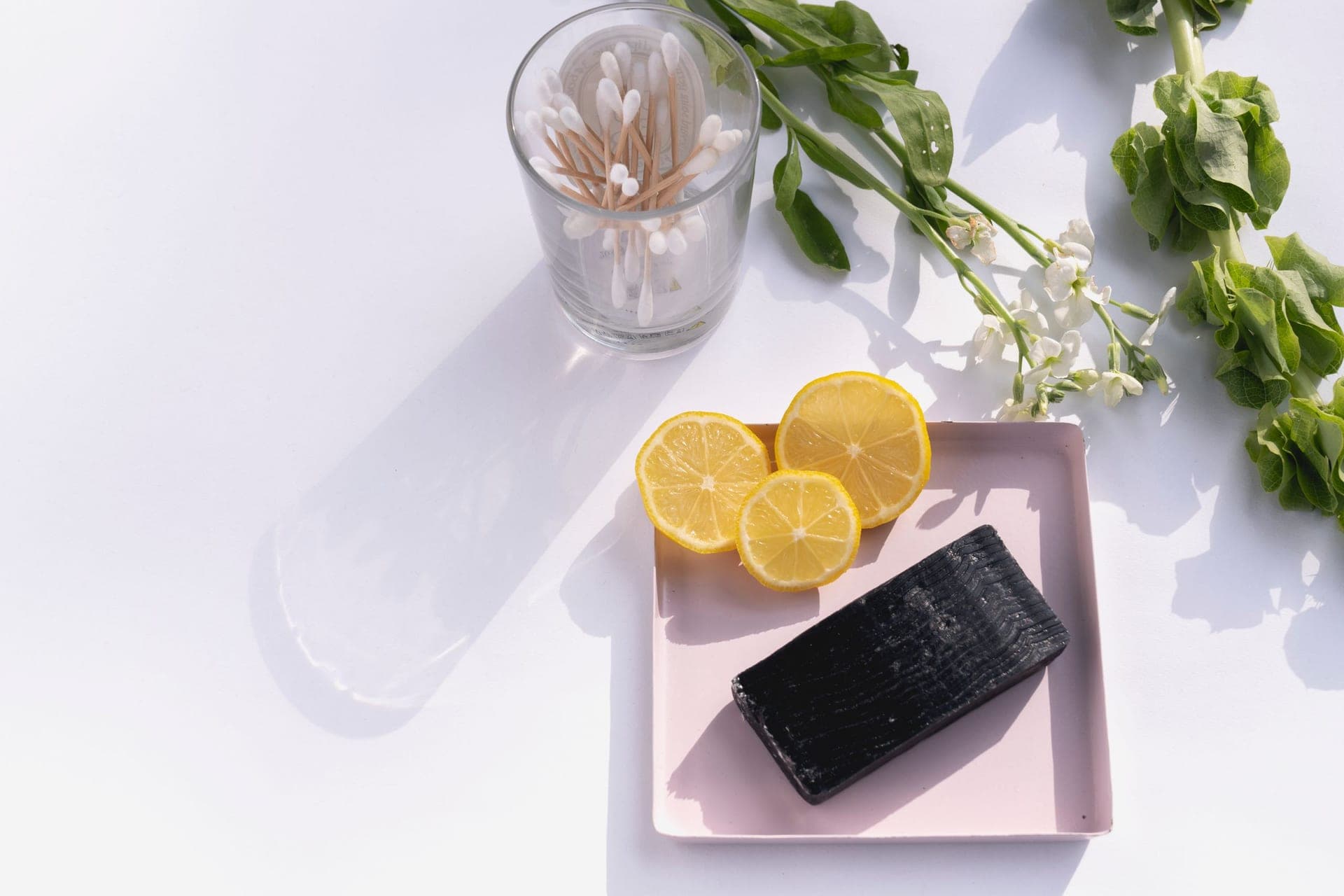
The genuine article is rarely jet black. Depending on how long the plant matter roasted, raw African black soap ranges from tan and caramel brown to a dark charcoal grey. If a bar is uniformly glossy black, it's almost certainly been dyed or loaded with added colorant.
What's in African Black Soap?
The ingredient list is short, local, and completely plant-based in its traditional form. Exactly which plants get used depends on what grows nearby, but the classic combination looks like this:
| Ingredient | Role in the soap |
| --- | --- |
| Plantain skins (peels) | Roasted to ash for alkali; adds iron, vitamins A and E |
| Cocoa pods | Roasted to ash; contributes to color and antioxidants |
| Palm tree leaves or bark | Additional ash source for the alkali |
| Shea butter | The conditioning fat; softens and moisturizes |
| Palm kernel oil | Adds cleansing and lather |
| Coconut oil | Sometimes added for extra bubbly lather |
Notice what's not on the list: no synthetic fragrance, no artificial dye, no lab-made lye, no preservatives. The plantain and cocoa ash do double duty as both the alkali and a big part of the color and skin-loving compounds. Shea butter is the heart of most recipes, which is why so much black soap feels rich and slightly greasy in the best way. If you want to understand how shea behaves in a lather, our guide to shea butter soap breaks it down.
How Is Authentic African Black Soap Made?
The traditional process is slow, hands-on, and usually done by women who've inherited the craft. Here's how it actually works:
- Dry the plant matter. Plantain skins, cocoa pods, and palm leaves are laid out and sun-dried until brittle.
- Roast it into ash. The dried material is burned or roasted in a clay oven or open pot until it turns to a fine grey ash. How dark the final soap gets depends on how long this roasting runs.
- Leach the alkali. The ash is soaked in water, and that water draws out the potash. The resulting alkaline liquid is the "lye" for the recipe, though its strength is impossible to measure precisely by eye, which is why every batch differs.
- Add the oils. Shea butter, palm kernel oil, and sometimes coconut oil are stirred into the ash water and worked by hand for hours as the mixture thickens.
- Cure and dry. The paste is left to cure for a couple of weeks, during which the soap firms up and mellows.
Because the ash-based alkali can't be measured the way you'd measure sodium hydroxide, traditional black soap is never perfectly consistent. That imprecision is part of why the pH can run high and why two bars from different makers can feel so different on your skin. If you're curious how alkali levels shape a finished bar, our explainer on saponification covers the chemistry that's happening here.
African Black Soap Benefits for Skin
African black soap has a loyal following, and a lot of that reputation is earned. Here's what it genuinely does well, without the marketing gloss:
- Gentle, thorough cleansing. The shea butter content means it cleans without the tight, squeaky-stripped feeling harsh detergent bars leave behind.
- Light natural exfoliation. Raw black soap has a slightly gritty texture from the ash, which sloughs off dead skin as you wash. Many people with oily or acne-prone skin like it for this reason.
- Vitamin and antioxidant content. The plantain and cocoa ashes carry vitamins A and E and antioxidants, and shea butter adds its own conditioning fatty acids.
- No synthetic additives. Authentic bars skip artificial fragrance and dye, the two most common triggers for reactive skin. If your skin flares easily, that clean ingredient deck is a real advantage. Our guide to soap for sensitive skin explains why simpler formulas tend to be kinder.
Now the honest caveats. African black soap runs alkaline, often with a pH around 9 to 10, which is normal for real soap but higher than your skin's natural pH. Used too often or left on too long, it can leave skin dry or tight, especially in winter or if your skin is already on the dry side. It does not bleach or lighten skin, despite what some sellers claim. And the gritty texture that helps oily skin can be too rough for delicate facial skin if you scrub hard. Use a light hand, rinse well, and follow with moisturizer.
How to Make African Black Soap at Home
Here's the truth most recipe posts skip: you can't easily replicate authentic ash-based African black soap in a typical home kitchen. You'd need plantain skins and cocoa pods roasted to ash, plus a way to leach and measure an unpredictable potash lye. It's doable if you're committed to the traditional method, but it's messy and inconsistent. For most people, there are two realistic paths.
Method 1: Rebatch Raw African Black Soap (Easiest)
The simplest approach is to start with genuine raw black soap and reshape it into bars or a liquid wash. You can buy raw African black soap on Amazon in bulk blocks.
- Grate or chop about 8 ounces of raw black soap into small pieces.
- Melt it gently in a double boiler with 2 to 3 tablespoons of water, stirring until it softens into a thick paste. Add a spoonful of melted shea butter if you want it more conditioning.
- Press the paste firmly into a silicone mold and let it cure for a few days until firm.
This is really a rebatching technique, and it lets you customize authentic black soap with your own shea butter, oils, or a few drops of essential oil without doing any lye work yourself.
Method 2: A Cold Process Black Soap-Inspired Bar
If you want a firm, shelf-stable bar and you're comfortable working with lye, you can make a cold process bar inspired by black soap using standard sodium hydroxide. It won't be traditional, but it captures the shea-rich, dark, gently cleansing character. A good starting formula:
| Oil | Percentage |
| --- | --- |
| Shea butter | 30% |
| Coconut oil | 25% |
| Palm kernel or palm oil | 25% |
| Olive oil | 20% |
Add 1 tablespoon of activated charcoal or unsweetened cocoa powder per pound of oils for the dark color, and a superfat of 6 to 7 percent to keep it conditioning. Do not use a memorized lye amount for this. Run your exact oil weights through the free Soaply soap calculator to get the precise sodium hydroxide and water, since the lye changes with every recipe tweak. Then soap it like any cold process batch: mix your lye solution, blend to trace, add the charcoal, pour, and cure for four to six weeks.
How to Use African Black Soap
Raw African black soap is potent, so a little goes a long way. Here's how to get the good without the dryness:
- Don't scrub with the raw block. Break off a small piece, work it into a lather in wet hands or on a washcloth, and apply the lather rather than dragging the gritty bar across your face.
- Start slow. Use it two or three times a week at first and see how your skin responds before going daily. Oily skin usually tolerates more; dry or mature skin, less.
- Rinse thoroughly and moisturize. Because it's alkaline, always follow with a moisturizer or facial oil to rebalance your skin.
- Keep it dry between uses. Raw black soap soaks up water and gets mushy fast. Store it in an airtight container or wrap it, and keep it off a wet soap dish. It also develops a harmless white film if left exposed, similar to the soda ash you see on cold process bars.
If you want to test how alkaline your bar is before using it on your face, our guide on how to test soap pH walks through the simple methods.
How to Spot Fake African Black Soap
The popularity of black soap means the market is full of imitations. Authentic raw bars have a few telltale signs:
- Color: genuine bars are brown to dark grey, never a uniform glossy jet black. Deep black usually means added dye or charcoal.
- Texture: real black soap is soft, slightly crumbly, and uneven, not smooth and hard like a pressed commercial bar.
- Scent: it smells earthy and faintly of cocoa or ash, not like perfume. Heavy fragrance is a red flag.
- Ingredient list: look for plantain or cocoa pod ash and shea butter. If you see synthetic fragrance, artificial colorant, or a long list of unpronounceable additives, it's been adulterated.
Buying from a reputable fair-trade source, ideally one that names Ghana or Nigeria as the origin, is your best bet for the real thing.
💬 Frequently Asked Questions
What is African black soap made of?
Traditionally it's made from the ash of roasted plantain skins, cocoa pods, and palm leaves, combined with shea butter and palm kernel oil. The ash provides the natural alkali that turns the oils into soap, and it also gives the soap its dark color and antioxidant content. Authentic versions contain no synthetic dye or fragrance.
Is African black soap good for your face?
It can be, especially for oily and acne-prone skin, thanks to its gentle exfoliation and shea butter content. But it runs alkaline and can dry out sensitive or mature skin if overused. Start with two or three uses a week, apply the lather rather than the raw bar, and always moisturize afterward.
Does African black soap lighten skin?
No. African black soap does not bleach or lighten skin, and any seller claiming it does is misleading you. It can make skin tone look more even over time by exfoliating dead cells and helping clear breakouts, but that's brightening through cleaner skin, not actual lightening.
Why is my African black soap not black?
Because real African black soap usually isn't black. Depending on how long the plant matter was roasted, authentic bars range from tan and brown to dark grey. A soft brown bar is a sign you have the genuine article. Uniform jet black often means synthetic colorant was added.
Can you make African black soap without lye?
Not strictly, because the ash used in the traditional recipe is itself the lye, providing the alkali that saponifies the oils. There's no such thing as soap made with zero alkali. The easiest lye-free route for a home maker is to rebatch raw black soap you've bought, since the saponification was already done for you.
Make It Your Own
African black soap earns its reputation as a gentle, shea-rich cleanser, as long as you know what real black soap actually is and use it with a light hand. The quickest way in is rebatching a genuine raw bar with your own shea butter. If you'd rather build a firm, custom black soap-inspired bar from scratch, formulate your oils and run them through the free Soaply soap calculator so your lye, water, and superfat land exactly right the first time.
Ready to Try It?
Use our free soap calculator to create your perfect recipe with real-time property predictions.
Open Calculator