How to Make Calendula Soap: A Soothing Cold Process Recipe
Learn how to make calendula soap with this easy cold process recipe. Calendula petals add natural color, gentle skin benefits, and a beautiful rustic look.
This article contains Amazon links. As an Amazon Associate, Soaply earns from qualifying purchases at no extra cost to you.
Calendula petals are one of the few botanicals that actually hold their color in cold process soap. They won't turn brown or mushy like most flowers, and they bring real skin-soothing properties to your bars. If you've been looking for a natural, gentle soap recipe that looks as good as it feels, this is the one.
- Why Use Calendula in Soap?
- How to Make Calendula Infused Oil
- Calendula Soap Recipe
- Step-by-Step Instructions
- Can You Use Calendula Tea Instead of Water?
- Tips for Getting the Best Color
- How Long Does Calendula Soap Need to Cure?
- Frequently Asked Questions
Why Use Calendula in Soap?
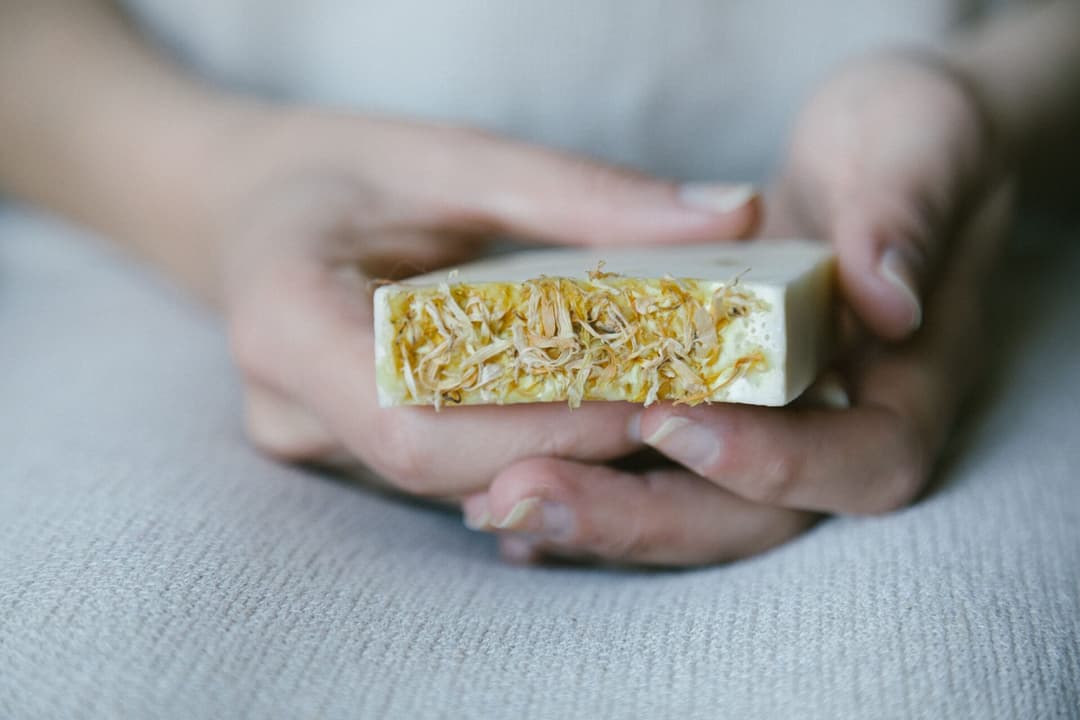
Calendula (Calendula officinalis) has been used in skincare for centuries, and for good reason. The petals are naturally rich in flavonoids and triterpenoids, compounds known for their anti-inflammatory and antioxidant effects. In soap, calendula brings three main benefits:
- Skin soothing properties. Calendula is gentle enough for sensitive, dry, or irritated skin. It's a popular choice for baby soaps and facial bars.
- Natural golden color. Calendula-infused oil gives your soap a warm, sunny yellow without any synthetic colorants.
- Visual texture. Dried petals sprinkled on top or mixed into the batter create a beautiful rustic appearance.
Unlike lavender buds (which turn black) or rose petals (which go brown), calendula petals are one of the rare flowers that survive the high pH of cold process soap and keep their color.
How to Make Calendula Infused Oil
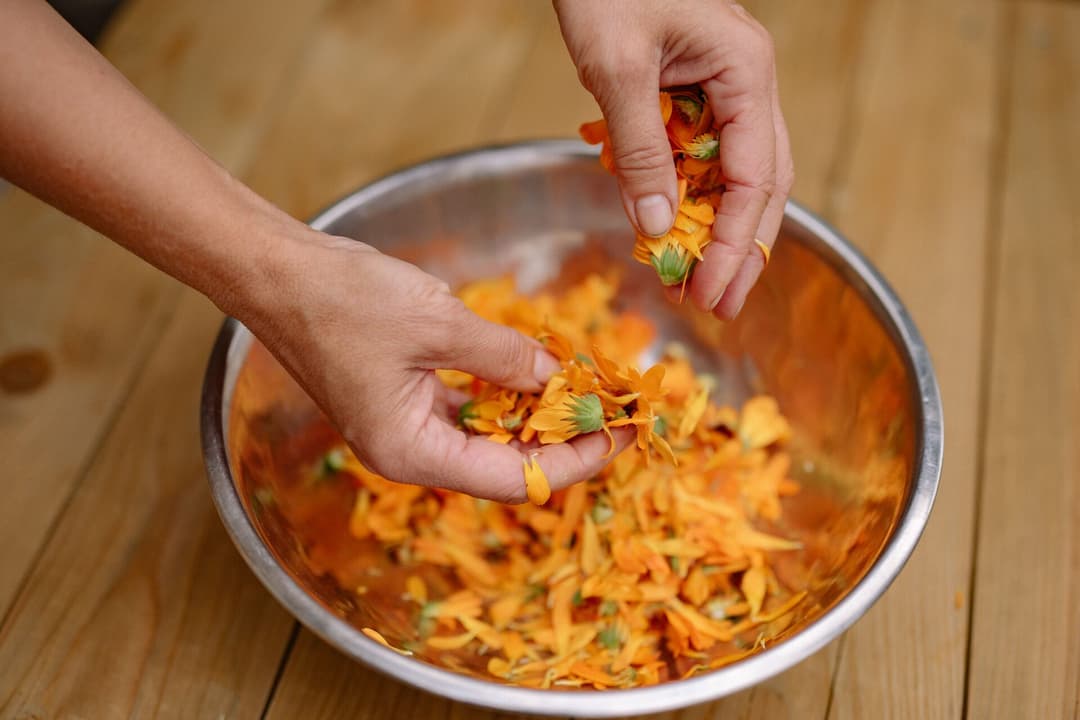
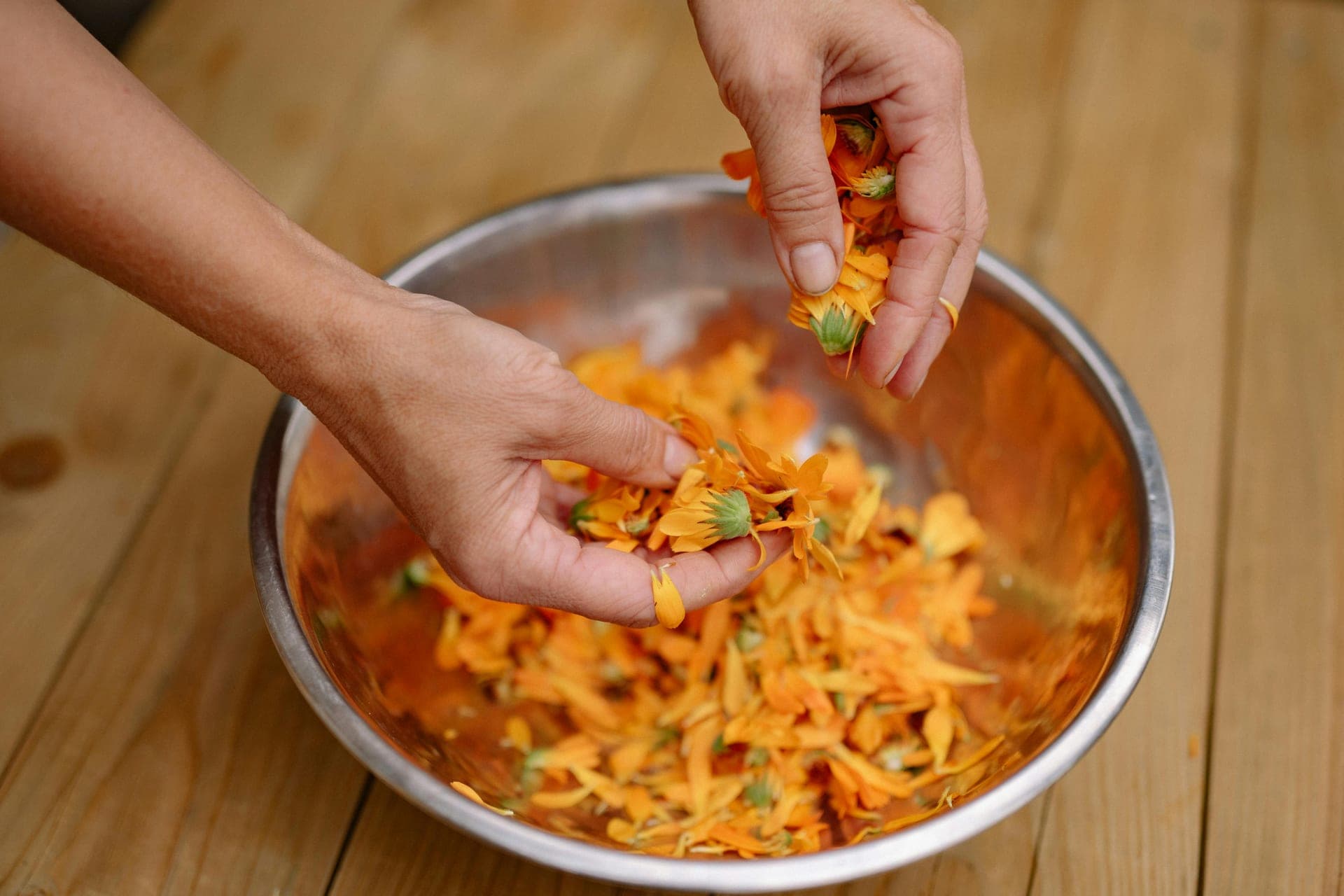
The secret to a great calendula soap starts weeks before you actually make the batch. You'll want to infuse your base oil with dried calendula petals to pull out the color and beneficial compounds.
Cold Infusion Method (Best Results)
- Fill a clean mason jar about halfway with dried calendula petals
- Cover completely with olive oil, leaving about an inch of oil above the petals
- Seal the jar and place it in a sunny windowsill
- Shake it every day or two
- After 4 to 6 weeks, strain through cheesecloth
This slow method extracts the most color and the most beneficial compounds. Plan ahead!
Quick Infusion Method (Same Day)
If you can't wait a month, try the double boiler method:
- Place dried calendula petals and olive oil in a heat-safe jar
- Set the jar in a pot of simmering water (double boiler setup)
- Heat on low for 2 to 3 hours, stirring occasionally
- Let it cool, then strain through cheesecloth
You'll get decent color but not quite as rich as the cold infusion. Either way, use our lye calculator to run the numbers before you start mixing.
Calendula Soap Recipe
Here's a tried-and-true recipe that produces a gentle, moisturizing bar with a warm golden hue:
| Ingredient | Percentage | For a 2 lb batch |
| ------------ | ----------- | ------------------- |
| Calendula-infused Olive Oil | 40% | 12.8 oz |
| Coconut Oil | 25% | 8 oz |
| Shea Butter | 20% | 6.4 oz |
| Sweet Almond Oil | 10% | 3.2 oz |
| Castor Oil | 5% | 1.6 oz |
| Superfat | 5% | |
| Lye Concentration | 33% |
Plug these percentages into the Soaply calculator to get your exact lye and water amounts. The calculator handles all the SAP value math so you don't have to.
Optional Additions
- 1 tablespoon dried calendula petals for topping the bars
- Calendula tea as a water replacement (see below)
- Essential oils: Try lavender (about 0.7 oz per pound of oils) or chamomile for a calming bar. Check our fragrance load calculator for exact amounts.
Step-by-Step Instructions
What You'll Need
- Digital scale (measure everything by weight)
- Stick blender
- Safety goggles and chemical-resistant gloves
- Two heat-safe mixing containers
- Silicone soap mold
- Infrared or digital thermometer
Step 1: Prep Your Workspace
Put on your safety gear. Lye is caustic and you don't want it on your skin or in your eyes. Work in a well-ventilated area and keep kids and pets out of the room. If you're new to working with lye, read our soap making safety guide first.
Step 2: Weigh and Melt Your Oils
Weigh your coconut oil and shea butter into a heat-safe container and gently melt them. Once melted, add the calendula-infused olive oil, sweet almond oil, and castor oil. Stir to combine and let the mixture cool to around 100 to 110°F.
Step 3: Make Your Lye Solution
Weigh your distilled water (or calendula tea) in a separate heat-safe container. Slowly add the lye to the liquid, stirring gently. Never add water to lye. The solution will heat up quickly. Set it aside to cool to about 100 to 110°F.
Step 4: Combine and Blend
When both your oils and lye solution are in the 100 to 110°F range, pour the lye solution into the oils through a strainer. Use your stick blender in short bursts until you reach a light trace. The batter should look like thin pudding.
Step 5: Add Extras
At light trace, stir in any essential oils. If you want petals throughout the bar, fold in about a tablespoon of dried calendula petals now.
Step 6: Pour and Decorate
Pour the batter into your mold. Tap the mold on the counter to release air bubbles. Sprinkle dried calendula petals on top for a gorgeous finish. They'll stick as the soap hardens.
Step 7: Insulate and Wait
Cover the mold with a towel or cardboard and let it sit for 24 to 48 hours. The soap needs this time to go through gel phase and firm up enough to unmold.
Step 8: Cut and Cure
Unmold and cut into bars. Place them on a drying rack with space between each bar for airflow. Cure for 4 to 6 weeks before using.
Can You Use Calendula Tea Instead of Water?
Yes, and it's a great way to get even more calendula goodness into your soap. Brew a strong tea by steeping 2 tablespoons of dried calendula petals in 16 oz of boiling water for at least 30 minutes. Strain well and let it cool completely before using it as your lye liquid.
A few things to keep in mind:
- The tea will darken when lye hits it. This is normal. The high pH changes the color of the plant compounds.
- Cool the tea completely before adding lye. Room temperature or even chilled is best.
- Strain very well. Any bits of petal in your lye solution can clog your strainer later.
- The final soap color won't be as golden as using infused oil alone, but you'll get more of the calendula compounds into the bar.
For the richest color and most benefits, use both calendula-infused oil and calendula tea in the same recipe.
Tips for Getting the Best Color
Getting that perfect golden yellow takes a bit of finesse:
- Use quality dried petals. Look for bright orange calendula petals, not pale or brownish ones. Dried calendula petals are available from most soap supply shops and Amazon.
- Don't overheat. High temperatures during saponification can dull the natural color. Soap at lower temperatures (around 100°F) for the best results.
- Skip titanium dioxide. Adding white colorant will wash out the subtle golden tone you're going for.
- Avoid fragrance oils with vanilla. Vanillin causes browning over time. Stick with essential oils or vanillin-free fragrance oils.
- Gel phase helps. Allowing your soap to go through gel phase (insulating the mold) tends to produce brighter, more translucent colors.
If you want to understand more about how different oils affect your final bar, check out our complete oils guide.
How Long Does Calendula Soap Need to Cure?
Like all cold process soap, calendula bars need 4 to 6 weeks of curing time. During this period:
- Excess water evaporates, making the bar harder and longer-lasting
- The pH drops as saponification completes fully
- The bar becomes milder and gentler on skin
You can test the pH with strips after 4 weeks. A well-cured bar should read between 8 and 10. For a deeper look at why curing matters, read our curing guide.
Don't skip the cure! Using soap too early can result in a soft, mushy bar that dissolves quickly and may irritate your skin.
Variations to Try
Once you've got the basic calendula soap down, try these twists:
- Calendula and honey: Add 1 tablespoon of honey at trace for extra moisturizing power. Check out our honey soap recipe for tips on working with honey in CP soap.
- Calendula and oatmeal: Blend colloidal oatmeal into the batter for a soothing exfoliant. Our oatmeal soap guide has the details.
- Calendula and chamomile: Replace half the infused oil with chamomile-infused oil for a double-soothing bar.
- Calendula and goat milk: Use goat milk instead of water for an extra creamy, nourishing bar.
💬 Frequently Asked Questions
Is calendula soap good for eczema?
Calendula has anti-inflammatory properties that can help soothe irritated skin, making it a popular choice for people with eczema. The key is using a high superfat (5 to 8%) and avoiding fragrance oils that might trigger sensitivity. It won't cure eczema, but many soapmakers report it helps calm flare-ups.
Do calendula petals turn brown in cold process soap?
No, calendula is one of the few botanicals that keeps its color in CP soap. The petals will darken slightly from bright orange to a warm amber, but they won't turn brown or black like most other flowers. That's what makes them so popular for decorating soap tops.
Can I use fresh calendula flowers instead of dried?
You can, but dried petals are safer and more predictable. Fresh flowers contain water, which can introduce mold if petals float above the oil line during infusion. If you use fresh flowers, keep them fully submerged and use the infused oil within a week. Dried petals are the better choice for beginners.
Where can I buy dried calendula petals for soap making?
You'll find dried calendula petals at most soap supply stores, herb shops, and on Amazon. Look for Calendula officinalis specifically. Buy organic if you can, since you'll be putting this on your skin. A 4-ounce bag is enough for several batches.
How much calendula-infused oil should I use in soap?
For noticeable color and benefits, use calendula-infused oil for at least 30 to 40% of your total oil weight. You can go higher (up to 100% of your olive oil portion), but going below 25% won't give you much visible color. Run your adjusted recipe through the Soaply calculator to make sure your lye amounts are correct.
Ready to calculate your own calendula soap recipe? Head over to our free soap calculator and plug in your oil percentages. It'll handle all the lye math so you can focus on creating beautiful, skin-soothing bars.
Ready to Try It?
Use our free soap calculator to create your perfect recipe with real-time property predictions.
Open Calculator