How to Make Lavender Soap: Recipes, Scent Tips, and Natural Color Ideas
Learn how to make lavender soap at home with cold process recipes, scent retention tricks, and natural purple coloring ideas. Includes beginner and advanced options.
This article contains Amazon links. As an Amazon Associate, Soaply earns from qualifying purchases at no extra cost to you.
Lavender is the most popular scent in handmade soap for good reason. It's calming, universally loved, and pairs beautifully with just about any recipe. But making lavender soap that actually smells like lavender after a full cure? That's where most people get tripped up.
- Why Lavender Soap Is So Popular
- Lavender Essential Oil vs Lavender Fragrance Oil
- How to Keep Lavender Scent from Fading
- Natural Ways to Color Lavender Soap Purple
- Beginner Lavender Soap Recipe
- Advanced Lavender Swirl Recipe
- Step-by-Step Instructions
- Can You Put Lavender Buds in Soap?
- Lavender Soap Gift Ideas
- Frequently Asked Questions
Why Lavender Soap Is So Popular
Lavender isn't just a pretty smell. It's one of the few essential oils with real research behind its skin benefits:
- Calming and relaxing. There's a reason lavender shows up in every "bedtime" product on the shelf.
- Gentle on skin. Lavender essential oil is one of the mildest EOs, safe for most skin types at proper usage rates.
- Antiseptic properties. It's been used traditionally for minor cuts and irritation.
- Universal appeal. Men, women, kids; almost nobody dislikes lavender.
For soap makers who sell at craft fairs or online, lavender is consistently a top seller. If you only make one scented soap, make it lavender.
Lavender Essential Oil vs Lavender Fragrance Oil
You've got two choices for scenting lavender soap, and they're quite different.
Lavender Essential Oil (EO)
- Distilled from real lavender flowers
- Complex, natural scent with floral and herbaceous notes
- Costs $4-8 per ounce depending on species and quality
- Fades in cold process soap (the biggest downside)
- Safe up to 5% in soap
- Can label as "naturally scented"
The most common species for soap making is Lavandula angustifolia (true lavender). Lavandin (Lavandula x intermedia) is cheaper, slightly more camphorous, and holds its scent a bit better in CP soap.
Lavender Fragrance Oil (FO)
- Lab-created to mimic lavender scent
- Consistent batch to batch
- Costs $1-3 per ounce
- Holds scent well through cure
- Wide variety of "lavender" profiles (pure lavender, lavender vanilla, lavender mint)
- Cannot label as "naturally scented"
Which Should You Pick?
| Priority | Best Choice |
| ---------- | ------------- |
| Natural/organic branding | Essential oil |
| Strongest scent after cure | Fragrance oil |
| Budget-friendly | Fragrance oil |
| Aromatherapy claims | Essential oil |
| Best of both worlds | Blend 50/50 EO + FO |
The 50/50 blend is actually a great compromise. You get the natural complexity of lavender EO anchored by the staying power of a lavender FO.
How to Keep Lavender Scent from Fading
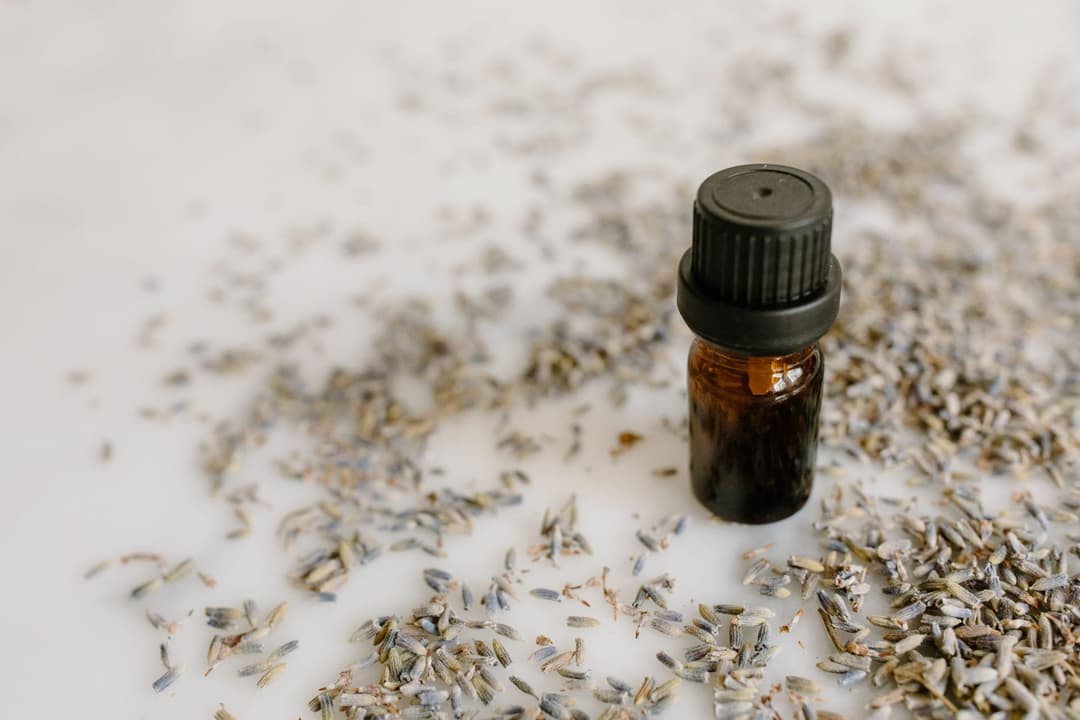
Lavender essential oil is notorious for fading during the cold process cure. Here are proven tricks to maximize scent retention:
1. Use the Maximum Safe Rate
For lavender EO, that's about 5% of your total oil weight (roughly 0.8 oz per pound of oils). Don't be shy with lavender; it's one of the safest EOs at higher usage rates.
2. Anchor It with a Base Note
Blend lavender with a heavier essential oil that acts as a fixative:
- Cedarwood (30% cedarwood, 70% lavender): woody, grounding
- Patchouli (20% patchouli, 80% lavender): earthy, rich
- Clary sage (25% clary sage, 75% lavender): herbal, deep
- Vanilla FO (30% vanilla, 70% lavender): sweet, warm
The base note slows evaporation and helps lavender stick around through cure.
3. Add Kaolin Clay as a Fixative
Mix 1 teaspoon of kaolin clay per pound of oils into your batter at trace. The clay particles absorb fragrance molecules and release them slowly over time. It also gives soap a slightly silkier feel.
4. Soap at Lower Temperatures
High temperatures accelerate fragrance evaporation. Mix your oils and lye at 90-100 degrees F instead of 110-120 degrees F.
5. Don't Over-Gel
If you're insulating your mold, keep an eye on temperature. Excessive heat during gel phase burns off volatile scent compounds. For lavender soap, consider skipping insulation entirely.
Use our fragrance calculator to get the exact amount of lavender oil you need for your batch size.
Natural Ways to Color Lavender Soap Purple
A lavender soap should look the part. Here are your options for getting purple tones naturally:
Alkanet Root (Best Natural Purple)
Infuse alkanet root in olive oil for 2-4 weeks before making soap. The infused oil turns deep purple and produces beautiful lavender-to-purple shades in cold process soap.
- Usage: Replace some or all olive oil with alkanet-infused olive oil
- Color range: Light lavender to deep purple depending on infusion strength
- Stability: Good; fades slightly over months but stays purple
Purple Brazilian Clay
- Usage: 1 teaspoon per pound of oils
- Color: Soft purple-gray
- Stability: Excellent
Ultramarine Violet (Not Fully Natural)
- Usage: 1/4 to 1/2 teaspoon per pound of oils
- Color: True purple
- Stability: Excellent
- Technically a mineral pigment, not plant-derived
What About Lavender Buds for Color?
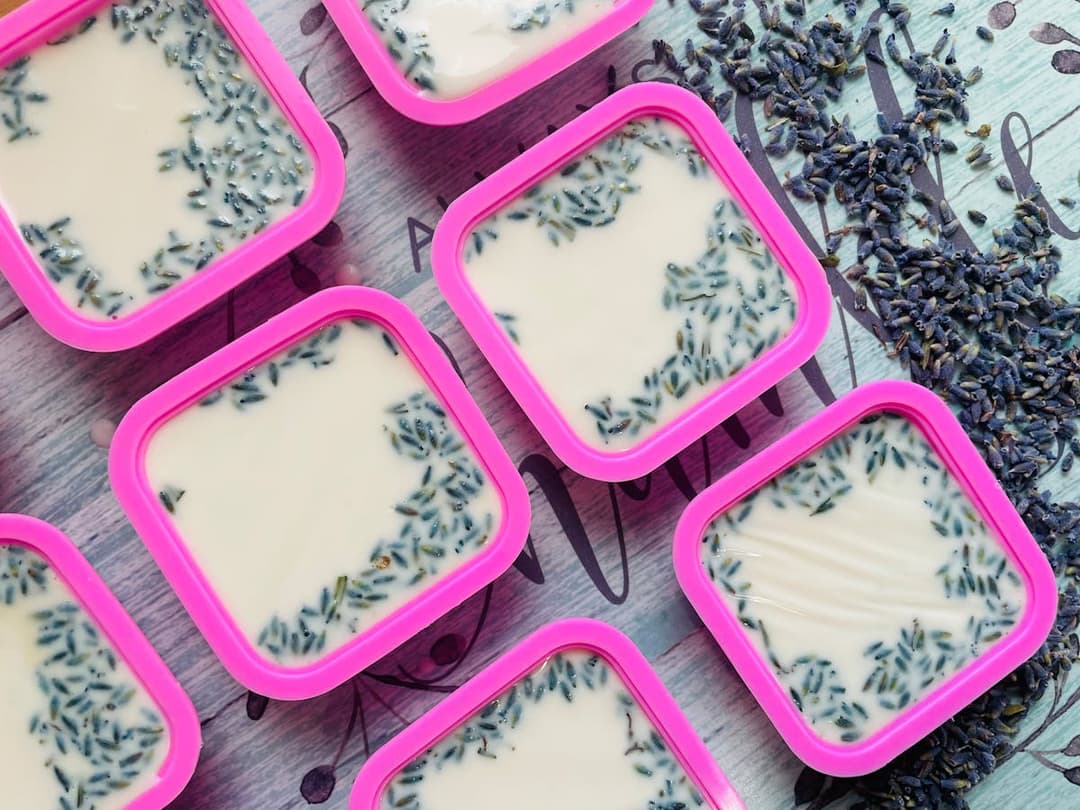
They won't work. Lavender buds turn brown-gray in cold process soap due to the high pH. Never rely on plant material for purple color in CP soap.
Beginner Lavender Soap Recipe
This recipe is forgiving, affordable, and produces a beautiful bar. Perfect for your first lavender soap.
| Oil | Percentage |
| ----- | ----------- |
| Olive Oil | 40% |
| Coconut Oil | 25% |
| Shea Butter | 15% |
| Lard (or Palm Oil) | 15% |
| Castor Oil | 5% |
Settings:
- Superfat: 5%
- Lye concentration: 33%
- Fragrance: Lavender EO at 5% of oil weight (or lavender FO at 6%)
- Color: 1 tsp purple Brazilian clay per pound of oils
- Additive: 1 tsp kaolin clay per pound of oils (scent fixative)
Plug these percentages into the Soaply calculator to get your exact lye, water, and oil weights.
What This Recipe Produces
- Hardness: Medium-high (good bar longevity)
- Lather: Balanced bubbly and creamy
- Conditioning: Very good thanks to olive and shea
- Scent: Noticeable lavender after cure, especially with the clay fixative
Advanced Lavender Swirl Recipe
For soap makers who want something more visually striking. This creates a two-tone purple and white swirl.
| Oil | Percentage |
| ----- | ----------- |
| Olive Oil (alkanet-infused, half) | 35% |
| Coconut Oil | 25% |
| Cocoa Butter | 15% |
| Shea Butter | 10% |
| Sweet Almond Oil | 10% |
| Castor Oil | 5% |
Settings:
- Superfat: 5%
- Lye concentration: 30% (lower for more working time)
- Fragrance: 60% lavender EO + 40% cedarwood EO at 5% total
- Scent fixative: 1 tsp kaolin clay per pound of oils
For the swirl:
- At light trace, split batter into two containers (60/40 split)
- Add 1 tsp titanium dioxide mixed in oil to the smaller portion (white)
- The larger portion gets its purple from the alkanet-infused olive oil
- Pour alternating layers, then run a chopstick through for a swirl pattern
The lower lye concentration gives you more time to work the swirl before the batter thickens.
Step-by-Step Instructions
Prep (Day Before, If Using Alkanet)
If you're using alkanet root for color, infuse it in your olive oil 2-4 weeks ahead. Strain through cheesecloth before using.
Making Day
1. Gear up. Safety goggles, gloves, long sleeves. Non-negotiable when working with lye.
2. Weigh everything. Use a digital scale and measure in grams for accuracy. Run your recipe through the Soaply calculator first.
3. Make the lye solution. Add lye to cold distilled water slowly, stirring until dissolved. Set aside to cool to about 100 degrees F.
4. Prepare oils. Melt solid oils (coconut, shea, cocoa butter) gently. Add liquid oils. Cool to 100 degrees F.
5. Combine. Pour lye solution into oils. Blend with a stick blender to light trace.
6. Add clay. Stir in kaolin clay (pre-mixed with a tablespoon of oil to prevent clumps).
7. Add fragrance. Pour in your lavender EO or FO blend. Stir by hand to avoid accelerating trace.
8. Add color. Stir in purple Brazilian clay or pour from your alkanet-infused oil batch. For swirls, split and color now.
9. Pour. Pour into your mold. Tap the mold on the counter a few times to release air bubbles.
10. Cover. Place a piece of cardboard or a cutting board on top. Do NOT insulate heavily for lavender soap (preserves scent).
11. Wait. Unmold after 24-48 hours. Cut into bars.
12. Cure. Place bars on a rack with space between them. Cure 4-6 weeks in a cool, dry area with good airflow.
Can You Put Lavender Buds in Soap?
This is one of the most common questions, and the honest answer is: you can, but you probably shouldn't in cold process soap.
Why Lavender Buds Don't Work Well in CP Soap
- They turn brown. The high pH (around 9-10) destroys the purple pigment within days.
- They can feel scratchy. Dried lavender buds on the surface become rough exfoliants that most people find unpleasant.
- They can harbor moisture. Plant material inside soap creates potential spots for mold.
Better Alternatives
- Press a few buds on top for decoration if you accept the browning. Some people like the rustic brown look.
- Use them in melt-and-pour soap where the pH is neutral and colors hold.
- Package dried lavender buds alongside your soap in a gift bundle instead of inside it.
- Make lavender sachets to tuck in with your soap for added scent.
Lavender Soap Gift Ideas
Lavender soap makes one of the best homemade gifts. Here are ways to package and present it:
Simple Wrap
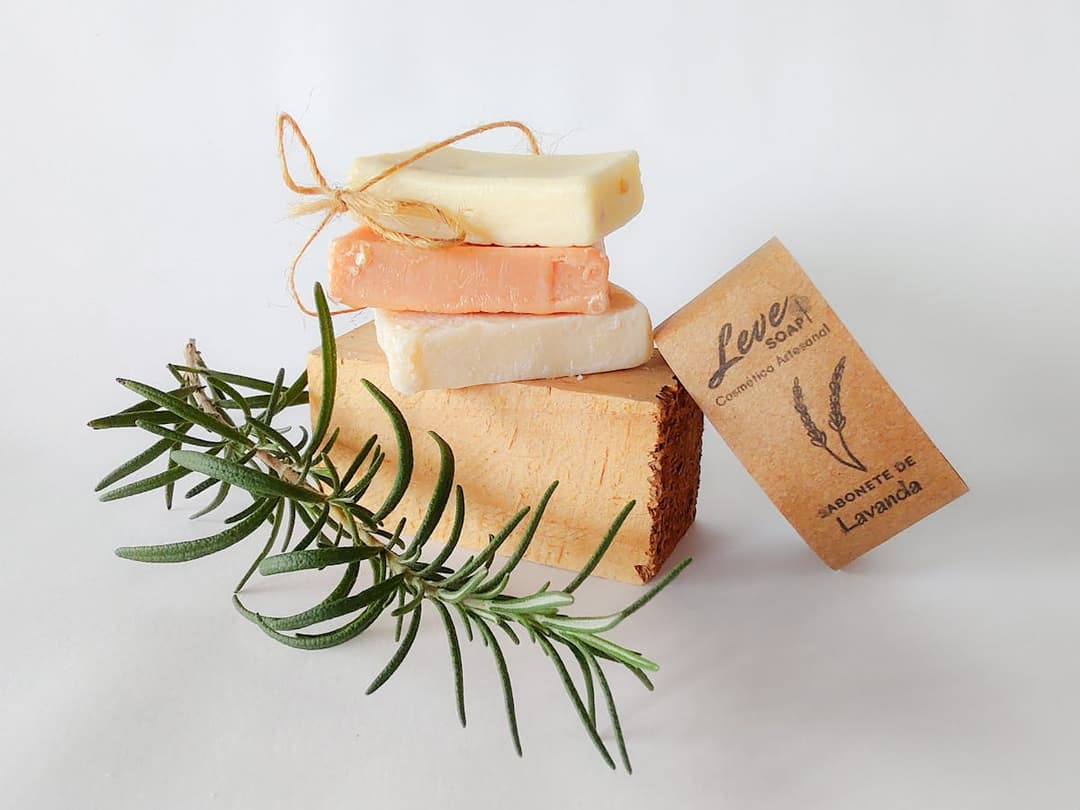
Wrap bars in kraft paper with a sprig of dried lavender tucked under twine. Clean, rustic, and Instagram-worthy.
Gift Sets
Bundle lavender soap with:
- A small bottle of lavender room spray
- A lavender-scented candle
- A cotton washcloth
- A dried lavender sachet
Wedding or Shower Favors
Cut bars into smaller sizes (2 oz instead of 4 oz). Wrap in fabric or paper with a custom label. Start making these 6-8 weeks before the event to allow full cure time.
Supplies for Packaging
- Kraft Soap Boxes - Professional presentation
- Dried Lavender Bundles - For gift wrapping accents
- Twine and Ribbon - Rustic finishing touch
Get Started
Lavender soap is one of the most rewarding recipes to master. Start with the beginner recipe above, plug it into the Soaply calculator, and you'll have beautiful, fragrant bars in about 6 weeks.
Once you're comfortable with the basics, try the advanced swirl recipe or experiment with different lavender EO blends. Check our essential oils vs fragrance oils guide if you're still deciding between EO and FO.
For more recipe ideas, explore our cold process beginner's guide or browse our complete oils guide to customize your lavender recipe further.
💬 Frequently Asked Questions
How much lavender essential oil do I need for soap?
Use lavender essential oil at about 5% of your total oil weight, which works out to roughly 0.8 oz per pound of oils. For a typical 2-pound batch, you'd need about 1.6 oz. Use the Soaply fragrance calculator to get exact measurements for your batch size.
Why does my lavender soap lose its scent after curing?
Lavender essential oil contains volatile compounds that evaporate during the 4-6 week cure. You can improve retention by adding kaolin clay as a fixative, blending with a base note like cedarwood, using the maximum safe usage rate, and avoiding excessive heat during gel phase.
What gives lavender soap its purple color?
The purple color comes from added colorants, not from lavender itself. The best natural option is alkanet root infused in olive oil, which produces true purple shades. Purple Brazilian clay and ultramarine violet also work well. Lavender essential oil is clear and won't color your soap.
Can you use dried lavender buds in cold process soap?
You can, but they'll turn brown within days due to the high pH of cold process soap. Most soap makers use lavender buds only as a top decoration (accepting the color change) or save them for melt-and-pour soap where the neutral pH preserves their purple color.
Is lavender soap good for sensitive skin?
Yes! Lavender is one of the gentlest essential oils and is generally safe for sensitive skin at proper usage rates. Pair it with a moisturizing recipe (high olive oil, 6-7% superfat) and skip any exfoliants for the most skin-friendly bar.
Ready to Try It?
Use our free soap calculator to create your perfect recipe with real-time property predictions.
Open Calculator