How to Make Solid Perfume (Beeswax Recipe and Ratios)
How to make solid perfume at home: the beeswax to oil ratio, a base recipe you can scale, how to blend notes, and fixes for perfume that is too hard or too soft.
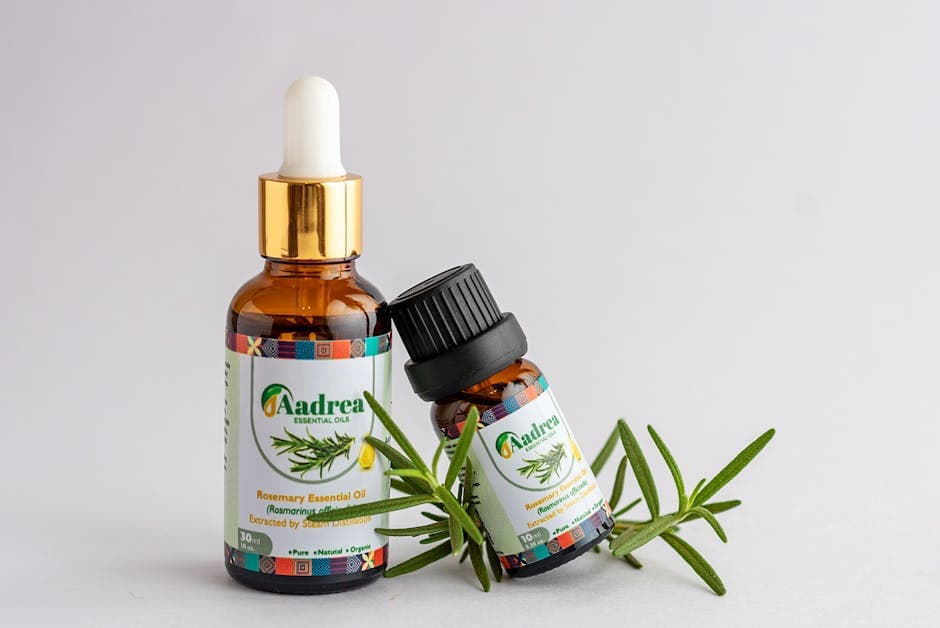
Solid perfume is a scent set into a wax-and-oil balm that you rub on with a fingertip. To make it, melt beeswax with a light carrier oil in roughly a one-to-two ratio, take it off the heat, stir in your fragrance, and pour it into a small tin. It sets in about twenty minutes. A 15 gram tin costs a couple of dollars, fits in a pocket, and won't leak or shatter in a bag.
Two things trip people up: the wax-to-oil ratio and when they add the scent. Too much wax and the balm turns hard and crumbly. Too much oil and it never firms up. Pour the fragrance in while the wax is scalding and half the scent boils off before it sets. This guide walks through the ratio, the carrier oil, how much fragrance is safe, and a base recipe you can resize in the Soaply solid perfume calculator.
- What Solid Perfume Is
- Solid Perfume vs Perfume Oil vs Spray
- What You Need to Make Solid Perfume
- The Beeswax to Oil Ratio
- Choosing a Carrier Oil
- Essential Oils or Fragrance Oils
- How Much Fragrance to Add
- A Base Solid Perfume Recipe
- How to Make Vegan Solid Perfume
- Blending Top, Middle, and Base Notes
- Why Your Solid Perfume Failed
- How Long Solid Perfume Lasts
- Frequently Asked Questions
What Solid Perfume Is
Solid perfume is fragrance carried in a soft wax balm instead of alcohol or straight oil. The base is a wax, almost always beeswax, melted with a carrier oil so the mix sets into something firm enough to hold its shape but soft enough to melt against warm skin. Press a fingertip to the surface and body heat loosens a thin film of scented oil that you dab onto pulse points.
Because there's no alcohol and no water in it, solid perfume stays close to the skin. It doesn't fill a room the way a spray does. It sits in a quiet halo around you, which is why a lot of people keep one for the office, for travel, or for touching up a scent through the day. The whole thing is about the size of a lip balm tin, so it goes in a bag without a second thought.
Solid Perfume vs Perfume Oil vs Spray
All three carry the same fragrance, just in different bases, and each one wears differently.
A spray is mostly alcohol. It throws scent into the air, projects across a room, then settles within an hour or so. A perfume oil is fragrance in a liquid carrier, dabbed or rolled on. It skips the alcohol, stays closer to the skin, and lasts longer than a spray. A solid perfume takes that same oil idea and firms it up with wax, so it can't spill, needs no glass bottle, and travels anywhere.
Reach for a solid when you want something pocketable and subtle, for touch-ups, or for a scent that won't overwhelm a shared space. Reach for a spray when you want a scent that fills a room, which our guide on how to make cologne covers. The oil sits in between.
What You Need to Make Solid Perfume
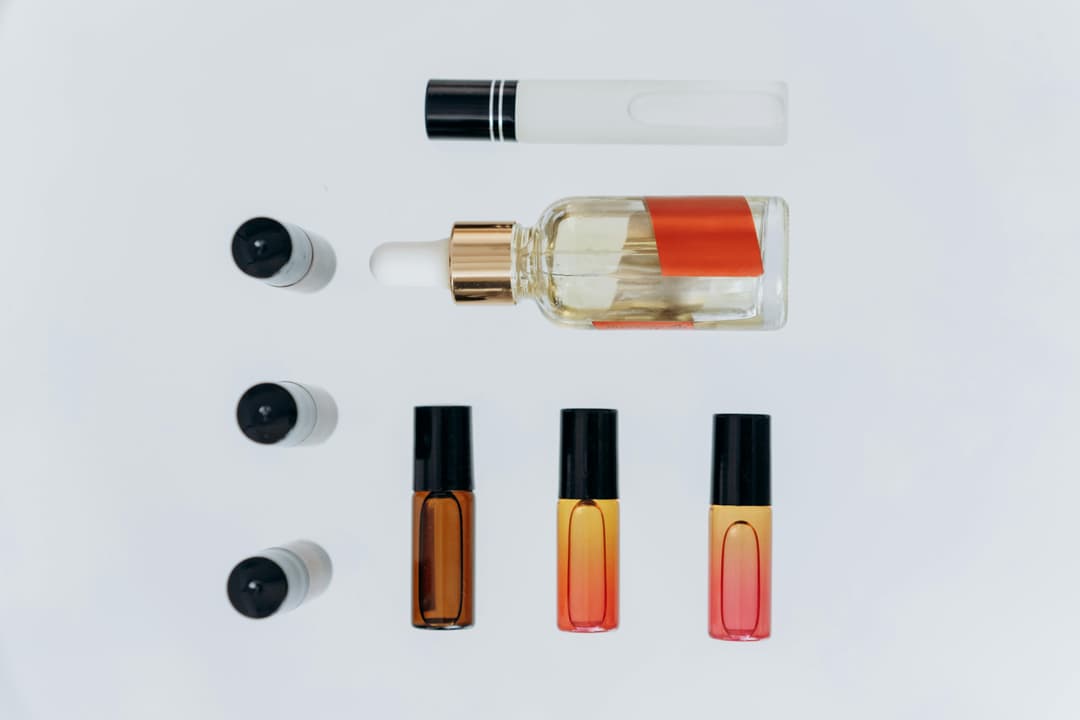
The kit is short, and it's mostly things you already have:
- Beeswax, pastilles or grated from a block, or candelilla wax for a vegan version
- A light carrier oil like jojoba or fractionated coconut
- Your fragrance, essential oils or a skin-safe fragrance oil
- A small tin, locket, or twist-up tube, usually 0.25 to 0.5 oz
- A digital scale, ideally one that reads to 0.1 g
- A small heatproof jar and a pan for a quick double boiler
A scale matters more than it looks. Beeswax and oil measured by the teaspoon drift from batch to batch, and once you find a blend you like, weight is the only way to make it again. This same beeswax-and-oil base shows up in other projects, so if you've made lip balm or lotion bars, it'll feel familiar.
The Beeswax to Oil Ratio
For a balm that holds its shape at room temperature but still melts on skin, aim for about one part beeswax to two parts carrier oil by weight. In percentages that lands near 30 percent beeswax, 60 percent carrier oil, and 10 percent fragrance. Shift within a range depending on how firm you want it and how warm your climate runs:
| Texture | Beeswax | Carrier oil | Fragrance | Best for |
| --- | --- | --- | --- | --- |
| Firm | 40% | 50% | 10% | twist-up tubes, hot climates, travel |
| Standard | 30% | 60% | 10% | a screw-top tin, most people |
| Soft | 25% | 65% | 10% | lockets, easy glide, cooler rooms |
Beeswax melts around 145°F (about 63°C), so a firmer balm shrugs off a warm pocket better than a soft one. If you live somewhere hot or carry the tin loose in a bag, lean toward the 40 percent wax mix. If your rooms stay cool and you want it to glide on, drop the wax and add oil.
Choosing a Carrier Oil
The carrier oil does two jobs. It softens the wax so the balm melts on skin, and it holds the fragrance. You want an oil that's light, close to odorless, and slow to go rancid, so it won't fight your scent or turn sour in the tin.
Jojoba is the top choice. It's technically a liquid wax, it has almost no smell, and it lasts for years without spoiling, which suits a perfume you'll keep on a shelf. Fractionated coconut oil is a close second: colorless, odorless, stays liquid, and cheaper. Sweet almond and grapeseed both work and feel light, though they have a shorter shelf life. Skip strong-smelling oils like olive or unrefined coconut, because their own scent muddies the blend. For more on jojoba's skin feel and shelf life, see our jojoba oil guide and the jojoba oil reference page.
Essential Oils or Fragrance Oils
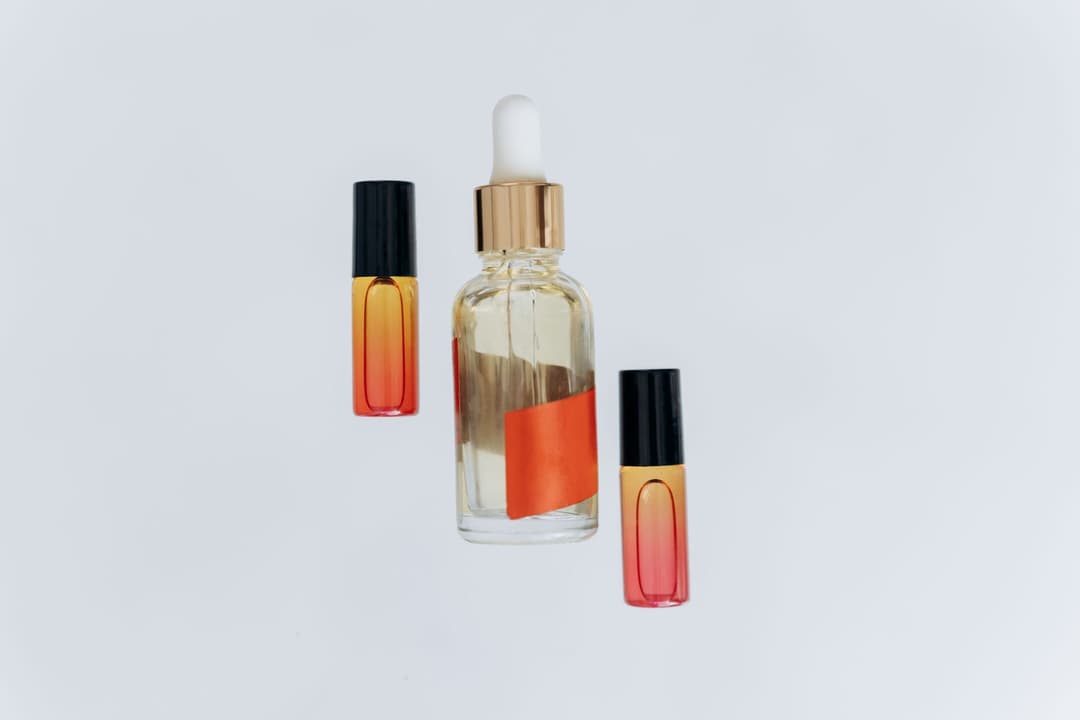
Either one works, and the choice sets the character of your perfume. Essential oils are distilled from plants, so they smell natural and layered, but they cost more, some fade fast, and a few carry skin cautions. Fragrance oils are blended in a lab, which lets them hold scents that don't exist as essential oils, like vanilla, fresh linen, or a clean cotton note, and they usually last longer on skin.
If you go the fragrance oil route, use one rated skin-safe for leave-on products, not a candle fragrance, which isn't tested for use on skin. Our breakdown of essential oils vs fragrance oils covers the trade-offs if you're on the fence.
How Much Fragrance to Add
For a balm you dab on small pulse points, most makers use 5 to 10 percent fragrance by weight. That's stronger than the 1 to 2 percent you'd use in a full-body lotion, and it's fine here because you're applying a dot, not coating your arms. In a 15 gram tin, 10 percent works out to about 30 to 40 drops of essential oil.
Start at the low end if your skin is sensitive, and go lighter still with a few specific oils. Expressed citrus oils like bergamot, lemon, and lime can make skin burn in sunlight, so keep those low or use steam-distilled versions. Hot oils like cinnamon and clove irritate at small amounts. Whatever blend you land on, patch test it on your inner arm and wait a day before you commit a whole batch.
A Base Solid Perfume Recipe
This makes one 0.5 oz (15 g) tin at the standard ratio.
- 4.5 g beeswax pastilles (30%)
- 9 g jojoba or fractionated coconut oil (60%)
- 1.5 g fragrance, about 30 to 40 drops of essential oil (10%)
Here's the method:
- Weigh the beeswax and carrier oil into a small heatproof jar or straight into a metal tin. A scale that reads to 0.1 g makes this painless.
- Set the jar in a shallow pan of simmering water and stir until the wax fully melts, a few minutes.
- Lift the jar out and let it cool for a minute, until it's warm but no longer steaming, roughly 140°F. Adding scent to scalding wax boils off the top notes.
- Stir in your fragrance and mix it through well.
- Pour into the tin and leave it undisturbed to set at room temperature, about twenty minutes. Cap it once it's firm.
No scale on hand? Use roughly 1 teaspoon beeswax pastilles to 1 tablespoon carrier oil, then 20 to 30 drops of essential oil. It's less precise, so the set can vary, but it's fine for a first try.
How to Make Vegan Solid Perfume
Swap the beeswax for a plant wax. Candelilla is the usual pick, and it's harder than beeswax, so use about a third less: where a recipe calls for 30 percent beeswax, start near 20 percent candelilla and adjust from there. Carnauba is harder still and can turn brittle, so blend it rather than using it alone. The carrier oil and fragrance stay the same. Candelilla sets with a slightly glossier, firmer feel, so if a vegan batch comes out too stiff, remelt it and add a little more oil.
Blending Top, Middle, and Base Notes
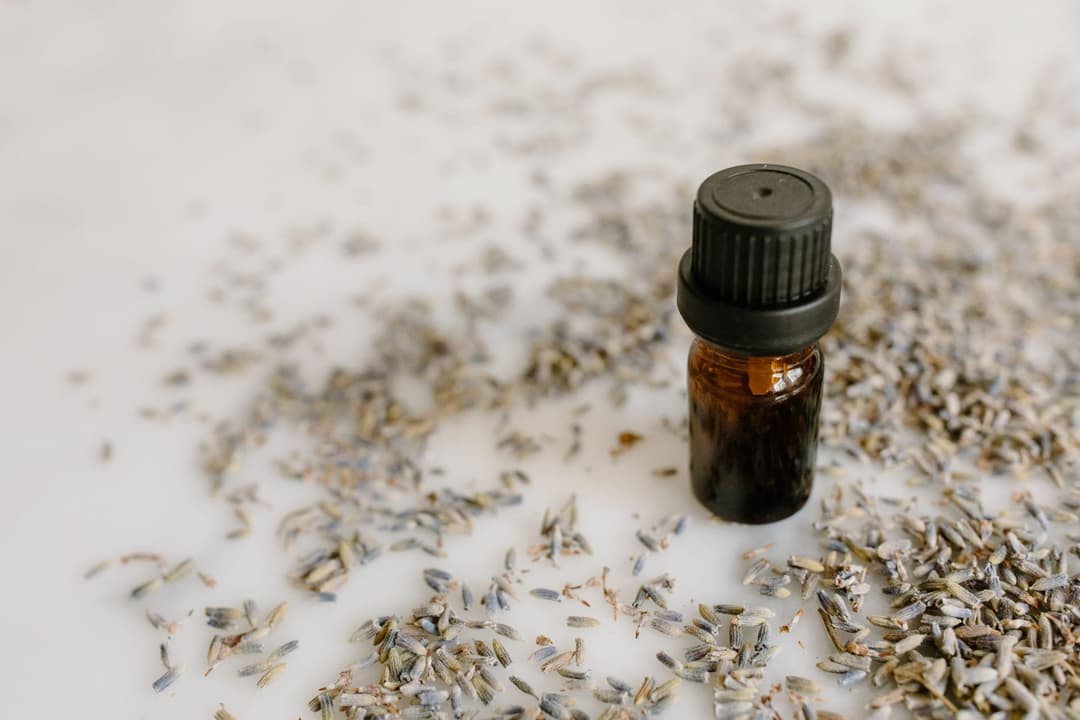
A scent built from a single essential oil tends to open bright and vanish by lunch. A blend that lasts is layered from three kinds of notes. Top notes are the first thing you smell and the fastest to fade: citrus, mint, light herbs. Middle notes are the body of the scent and carry for a few hours: lavender, rose, geranium, chamomile. Base notes are heavy and slow, and they anchor everything so it lingers: vanilla, sandalwood, patchouli, vetiver, cedarwood.
A simple starting split is a few drops of a base note, a few more of a middle, and a smaller amount of a top note, then adjust by smell. Base notes matter most in a solid perfume, since the wax already holds the oil close and slow. The same structure runs through liquid scents, and our guide on how to make perfume oil breaks the note ratios down further.
Why Your Solid Perfume Failed
Most problems trace back to the ratio or the pour temperature, and both are easy to fix by remelting.
- Too hard or crumbly. Too much wax. Remelt and stir in more carrier oil, a gram at a time, until it firms up soft.
- Too soft or greasy. Not enough wax, or a warm room. Remelt and add beeswax, or rebuild at the 40 percent firm ratio.
- Scent is faint. You added fragrance to wax that was too hot, or the blend was all top notes. Add scent below 140°F and build in base notes.
- Grainy or gritty set. Beeswax can set unevenly if it cools too slowly. Pour while it's fully liquid and let it set at room temperature, not in the fridge.
- Oil beading on top. The oil is separating from the wax, usually from too much oil for the amount of wax. Nudge the ratio back toward more beeswax.
How Long Solid Perfume Lasts
Two lifespans matter here. On your skin, a solid perfume usually holds for two to four hours, less for a citrus-heavy blend and longer for one anchored in base notes. Reapplying is a one-second dab, so that's rarely a problem.
In the tin, the balm lasts as long as its carrier oil stays fresh, because there's no water in it and nothing for bacteria to grow in. Jojoba is the standout, since it's a wax ester and barely goes rancid, so a jojoba-based perfume can keep for two years or more. Sweet almond and other true oils are closer to a year. A drop or two of vitamin E oil stretches that further. Store the tin closed and out of direct sun and it'll be good long past when you've used it up.
💬 Frequently Asked Questions
How much essential oil do I put in solid perfume?
Around 5 to 10 percent of the total weight, which is roughly 30 to 40 drops in a 15 gram tin. Start at 5 percent if your skin is sensitive, and go lighter with citrus or spice oils that can irritate.
Can I make solid perfume without beeswax?
Yes. Candelilla wax is the common vegan swap, used at about a third less than beeswax because it's harder. Carnauba works too but sets brittle, so blend it. The carrier oil and fragrance stay the same.
Why won't my solid perfume harden?
There's too much oil for the wax. Remelt the mix and add more beeswax, or rebuild it at the firm 40 percent wax ratio. Cool climates need a touch more wax than warm ones.
Does solid perfume expire?
It lasts as long as the carrier oil. A jojoba base keeps two years or more, while softer oils like sweet almond last about a year. No water means no preservative is needed, but rancid oil smells off, so store it closed and cool.
Is solid perfume better than a spray?
It's different, not better. A solid stays close to the skin, travels without leaking, and lasts a couple of hours per dab. A spray projects farther and hits harder up front. Pick the solid for subtlety and portability.
Scale Your Solid Perfume Recipe
Once you've settled on a ratio and a blend, scale it to whatever tin you're filling. Drop your batch size and percentages into the Soaply solid perfume calculator to get beeswax, carrier oil, and fragrance in grams for a single tin or a dozen. If you'd rather a scent that rolls on, start with how to make perfume oil; for an alcohol spray, see how to make cologne.
Ready to Try It?
Use the free Soaply solid perfume calculator to size your batch and get every ingredient in grams and percent.
Open Calculator