How to Make Perfume Oil (Roll-On Recipe and Blending Ratios)
How to make perfume oil at home: the right carrier oil, a 20 percent dilution, blending top, middle and base notes, and a simple roll-on recipe to scale.
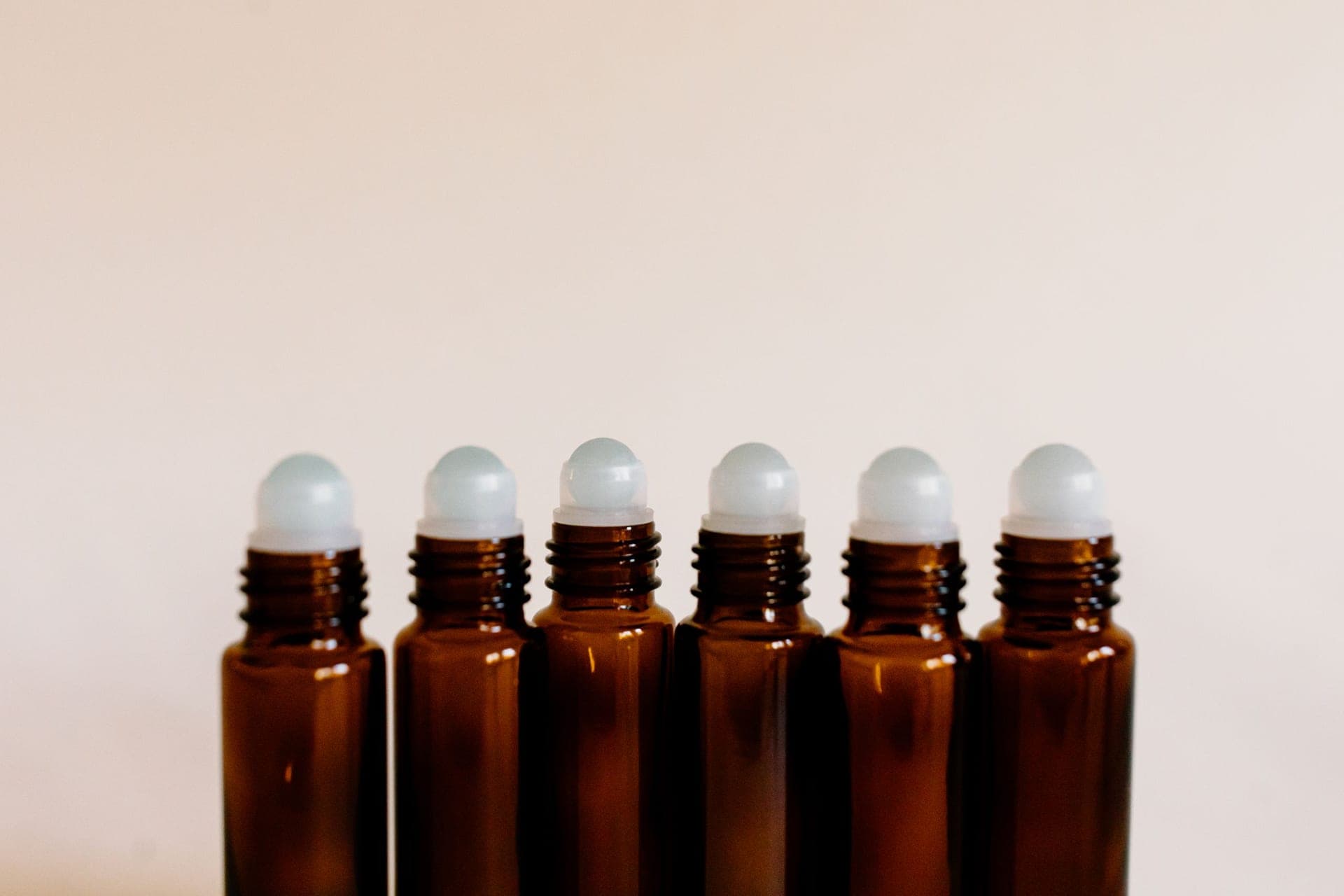
Perfume oil is fragrance diluted in a carrier oil, and you can mix a bottle in about ten minutes. Add your scent to jojoba or fractionated coconut oil at roughly 20 percent strength, cap the roller, and let it rest a day. There's no alcohol, no distilling, and no heat. A 10 mL roll-on you blend yourself costs a couple of dollars and skips the synthetic filler that pads out most drugstore bottles.
The tricky parts are the dilution and the blend. Too little fragrance and the scent fades before you leave the house. Too much and it can sting or irritate your skin. Get the note structure wrong and a promising blend goes flat by lunchtime. This guide walks through carrier oils, safe strength, and how top, middle, and base notes fit together, with a roll-on recipe you can resize in the Soaply perfume oil calculator.
- What Perfume Oil Is
- Perfume Oil vs Alcohol Perfume
- What You Need to Make Perfume Oil
- The Best Carrier Oil for Perfume Oil
- Essential Oils or Fragrance Oils
- How Strong Should Perfume Oil Be
- Top, Middle, and Base Notes
- A Simple Roll-On Perfume Oil Recipe
- How to Make Vanilla Perfume Oil
- How Long Perfume Oil Lasts
- Why Your Perfume Oil Faded
- Frequently Asked Questions
What Perfume Oil Is
A perfume oil is a scent suspended in oil instead of alcohol. You take a fragrance, essential oils, a skin-safe fragrance oil, or a blend of both, and you dilute it in a light carrier oil that has little smell of its own. The carrier does two jobs. It thins the concentrated fragrance down to a strength your skin can handle, and it slows how fast the scent evaporates, so an oil-based perfume tends to sit closer to the skin and last longer than a spray.
That closeness is the whole appeal. A perfume oil doesn't project across a room, it stays in a soft cloud around you, which a lot of people prefer for the office or for scent-sensitive spaces. You dab it on pulse points, the wrists, the neck, behind the ears, where the skin runs warm and lifts the fragrance through the day.
Perfume Oil vs Alcohol Perfume
The version you buy in a spray bottle is mostly alcohol. Perfumers dissolve the fragrance in a high-proof, odorless alcohol that flashes off your skin in seconds and throws the scent into the air as it goes. That's why a spray hits hard on first spritz and then settles. An oil has no alcohol to carry the scent outward, so it opens quieter and fades slower.
Which one you make comes down to what you want. Pick an oil if you like a scent that stays intimate, doesn't dry out your skin, and travels without a glass bottle that can shatter or set off a TSA bag check. Pick a spray if you want a scent that fills a room and lands the moment you walk in. If the alcohol route is what you're after, our guide on how to make cologne covers the spray method start to finish. This article stays with the oil.
What You Need to Make Perfume Oil
The supply list is short:
- A carrier oil, ideally one that stays liquid and barely smells
- Your fragrance, essential oils or a body-safe fragrance oil
- A small bottle, a 10 mL roll-on or a dab-on with a wand
- A dropper or pipette for measuring
- A small funnel if your bottle neck is narrow
That's the whole kit. You don't need heat, a scale, or any lab gear for a roll-on this size. A pipette matters more than it looks, because you'll be counting drops to hold the blend steady from batch to batch, and a splash poured by eye is impossible to repeat.
The Best Carrier Oil for Perfume Oil
The carrier makes or breaks a perfume oil, and the two things you want from it are a long shelf life and a faint smell. A carrier that goes rancid drags a sour note into your scent, and a carrier with a strong smell of its own muddies whatever you blend on top.
- Jojoba oil is the gold standard here. It's technically a liquid wax, so it resists oxidation for years, it's nearly odorless, and it sinks in without a heavy film. If you buy one carrier for perfume, buy this.
- Fractionated coconut oil is the budget pick that comes close. It's colorless, odorless, stays liquid at any temperature, and lasts a very long time. It feels a touch lighter than jojoba.
- Sweet almond oil works and it's cheap, but it has a mild nutty smell and a shorter shelf life, so use it up within a year and keep it out of the heat.
Skip olive, coconut that turns solid, and any of the delicate kitchen oils like hemp or grapeseed for this job. They either smell too much, set up in a cold bathroom, or turn before you finish the bottle. Jojoba and fractionated coconut are the two that just work.
Essential Oils or Fragrance Oils
Both make a fine perfume oil, and the choice is about the scent you're chasing, not quality.
Essential oils are distilled from plants, so they carry the real smell of lavender, orange, or rose, along with any therapeutic value you're after. The catch is that many natural scents are expensive or don't exist as a true essential oil at all. There's no such thing as a real strawberry or fresh-linen essential oil, and true rose and jasmine cost a small fortune per milliliter.
Fragrance oils are blended in a lab, which lets them copy almost any smell, including the ones nature can't hand you, and they usually cost less and hold their scent longer. The trade is that they're synthetic and some aren't rated for leave-on skin use. Only buy fragrance oils labeled skin-safe with an IFRA statement, and check the usage rate on the supplier's page. Our breakdown of essential oils vs fragrance oils goes deeper on the differences if you're torn.
How Strong Should Perfume Oil Be
Commercial perfume oils usually run somewhere between 15 and 30 percent fragrance. Because you dab an oil onto a small patch of skin rather than mist it over your whole body, it can carry more concentrated scent than a lotion or a body oil ever could.
For a homemade roll-on, 20 percent is a solid target and 15 percent is the gentle starting point for sensitive skin. In a 10 mL bottle that's 2 mL of fragrance to 8 mL of carrier at 20 percent, or 1.5 mL to 8.5 mL at 15 percent. Counting drops, figure about 20 drops to a milliliter, so 20 percent lands near 40 drops of fragrance in a 10 mL roller.
A few safety notes that matter more than the exact percentage:
- Patch test every new blend. Put a dab inside your elbow and wait 24 hours before you wear it.
- Go easy on the hot spices. Cinnamon, clove, and oregano oils are skin sensitizers with low safe limits, so keep them to a drop or two.
- Watch the citrus. Cold-pressed bergamot, lemon, lime, and grapefruit are phototoxic, meaning they can burn or stain skin that sees sunlight after you apply them. Wear those under sleeves, keep them off exposed skin in summer, or look for steam-distilled or "FCF" versions that have the reactive compound removed.
If you'd rather not do the arithmetic each time you change the strength or bottle size, the Soaply perfume oil calculator works out the carrier and fragrance amounts for any dilution you type in.
Top, Middle, and Base Notes
A scent that's built from one oil smells fine but fades all at once. A blend that lasts is layered, and perfumers sort those layers into three kinds of note that evaporate at different speeds.
| Note | What it does | Example oils |
| --- | --- | --- |
| Top | The first impression, gone in an hour | Citrus, peppermint, eucalyptus, light herbs |
| Middle (heart) | The body of the scent, lasts a few hours | Lavender, geranium, rose, chamomile, spices |
| Base | The anchor that lingers all day and slows the rest | Vanilla, sandalwood, patchouli, vetiver, cedarwood |
A base note does double duty. It's the smell that's still there at the end of the day, and it acts as a fixative, clinging to your skin and holding the lighter notes down so they don't flash off as fast. That's why a splash of straight citrus disappears in an hour while a citrus-and-sandalwood blend reads fresh for most of the afternoon. Our notes on making a scent last longer apply here too, since the same fixative idea drives fragrance longevity in soap.
A reliable starting split is roughly 30 percent top, 50 percent middle, and 20 percent base by drop count. On the 40-drop example above, that's about 12 top, 20 middle, and 8 base. Adjust from there once you smell how it dries down on your own skin.
A Simple Roll-On Perfume Oil Recipe
This makes one 10 mL roller at about 20 percent strength. Think of it as fresh and warm, citrus up top with a soft floral heart and a woody base.
Ingredients:
- 8 mL jojoba or fractionated coconut oil
- 12 drops sweet orange or bergamot (top)
- 20 drops lavender (middle)
- 8 drops sandalwood or cedarwood (base)
Method:
- Add the base note drops to the empty bottle first, then the middle, then the top.
- Pour in the carrier oil, leaving a little room for the roller ball.
- Cap it and roll it between your palms for a minute to mix. Don't shake it hard, you'll only whip in bubbles.
- Let it rest somewhere dark for 24 to 48 hours so the notes marry. The scent smooths out and deepens as it sits.
- Dab a little on your wrist and wear it for a day. Too weak, add a few drops of fragrance. Too sharp on top, add a couple of drops of base to round it.
Keep the recipe as your master and change one note at a time. Swap the lavender for geranium and it turns rosier, swap the orange for bergamot and it turns crisper. Log what you did so a blend you love is one you can make again.
How to Make Vanilla Perfume Oil
Vanilla is one of the most requested perfume scents, and it's a base note, so it anchors a blend beautifully and lasts for hours. One honest catch: a true vanilla "essential oil" barely exists. Real vanilla comes as an absolute, a CO2 extract, or an oleoresin, all of which are thick, dark, and pricey, or you reach for a skin-safe vanilla fragrance oil, which is what most people actually use.
For a warm vanilla roll-on in a 10 mL bottle:
- 8 mL fractionated coconut oil (its lightness lets the vanilla read cleanly)
- 20 drops vanilla fragrance oil or vanilla oleoresin (base)
- 12 drops sweet orange or a touch of benzoin (to lift and warm it)
- 8 drops sandalwood (to stretch it out)
Blend and rest it the same way as the recipe above. One heads-up: real vanilla and vanilla-heavy fragrance oils tend to darken over time and can tint the oil amber or brown. That's cosmetic, not spoilage, but keep it off light-colored clothing.
How Long Perfume Oil Lasts
Two clocks run on a perfume oil, and they don't tick at the same rate.
The carrier sets the shelf life. Blended in jojoba or fractionated coconut oil and kept capped in a cool, dark spot, a perfume oil stays good for one to two years. Sweet almond cuts that shorter, closer to six to twelve months, because it oxidizes faster. You'll know a carrier has turned when it smells sharp or crayon-like under the fragrance.
The scent runs on its own clock. Top notes lift and fade first, so a blend can smell brighter in month one and settle warmer by month six as the citrus quiets and the base takes over. That drift is normal and often pleasant. Heat and light speed both clocks up, so store the bottle in a drawer, not on a sunny windowsill, and it'll hold. If you're wondering whether your essential oils themselves are still good, our guide on whether essential oils expire covers the signs.
Why Your Perfume Oil Faded
The complaint you'll hear most is that a homemade oil vanishes too fast. It's almost always one of these:
- Too little fragrance. A perfume at 5 percent won't last. Bump it toward 20 percent.
- No base note. An all-citrus or all-herb blend has nothing to hold it down, so it flashes off. Add a woody or resinous base as a fixative.
- Dry skin. Oil clings better to moisturized skin. Dab your perfume oil onto skin that's still soft from lotion and it hangs on longer.
- Rubbing your wrists together. That friction heats the blend and burns off the top notes. Press, don't rub.
If a blend smells great in the bottle but disappears on skin, the fix is usually more base note or more overall strength, both of which are one number to change in the Soaply perfume oil calculator.
💬 Frequently Asked Questions
What oil is best for making perfume oil?
Jojoba oil is the top pick because it barely smells, feels light, and lasts for years without going rancid. Fractionated coconut oil is a close, cheaper second. Both stay liquid and let your fragrance come through clean, which is exactly what a carrier should do.
How much fragrance oil do I put in perfume oil?
Aim for 15 to 20 percent fragrance by volume. In a 10 mL roll-on that's about 1.5 to 2 mL of fragrance, or roughly 30 to 40 drops, topped up with carrier oil. Start at 15 percent for sensitive skin and patch test before you wear a new blend.
Is perfume oil better than alcohol perfume?
Neither is better, they're different. Perfume oil stays close to your skin, lasts longer, and won't dry it out, but it doesn't project far. Alcohol perfume fills a room and hits harder on first spray, then fades sooner. Pick the oil for a quiet, personal scent.
Can I make perfume oil with just essential oils?
Yes. Dilute your essential oils in a carrier at around 15 to 20 percent and you have a natural perfume oil. Just include a base note like sandalwood or vanilla so it lasts, and watch the phototoxic citrus oils if the blend will touch sun-exposed skin.
How long does homemade perfume oil last on the skin?
A well-built oil with a proper base note holds for four to eight hours, longer on moisturized skin. An all-top-note blend might fade in an hour or two. Reapply at the pulse points midday if you want it to carry from morning to night.
Start Blending
Perfume oil is one of the easiest scented products to make well, because there's no chemistry to get wrong, only a ratio and a blend to dial in. Start with 20 percent fragrance in jojoba, build around a base note, and let each batch rest before you judge it. When you're ready to scale a blend up to a bigger bottle or a whole gift set, run the numbers through the Soaply perfume oil calculator, and if you'd rather carry your scent as a balm you can rub on, take a look at the solid perfume calculator next.
Ready to Try It?
Use the free Soaply perfume oil calculator to size your batch and get every ingredient in grams and percent.
Open Calculator