How to Make Cologne at Home (Easy DIY Recipe With Essential Oils)
Learn how to make cologne at home with a simple recipe. Get the fragrance-note formula, an alcohol and an oil-based version, dilution rates, and aging tips.
This article contains Amazon links. As an Amazon Associate, Soaply earns from qualifying purchases at no extra cost to you.
Making cologne at home comes down to three things: a scent blend built from top, middle, and base notes, a base to carry it (either alcohol or a skin-safe oil), and a couple of weeks of patience while it ages. Get the blend balanced and the dilution right, and you can bottle a signature scent for a fraction of what a designer bottle costs, with no mystery ingredients and no phthalates. This guide walks through what cologne actually is, the exact supplies, how fragrance notes work, and two full recipes: a classic alcohol-based spray and an alcohol-free roll-on. You'll also get the dilution rates, the aging step most people skip, and tips to make the scent actually last on your skin.
Quick pick: For an alcohol-based cologne, perfumer's alcohol is the cleanest carrier. It's high-proof, scent-free, and made to dissolve fragrance evenly. High-proof grain alcohol works too if you can't find it.
What Cologne Actually Is
Cologne is a scented liquid made of three parts: aromatic oils for the smell, a base that carries and spreads them, and usually a little water to soften the blend. What separates a "cologne" from a "perfume" is mostly how concentrated the aromatic oils are.
The traditional term "eau de cologne" means a light fragrance with only about 2 to 5 percent aromatic oils, which is why classic colognes smell fresh but fade within a couple of hours. Most people who say "cologne" today just mean a personal fragrance spray, and a homemade one usually lands stronger than that so it lasts. Here's the standard ladder of strengths:
| Type | Aromatic oil % | How it wears |
| --- | --- | --- |
| Body splash | 1 to 3% | Very light, fades in about an hour |
| Eau de cologne | 2 to 5% | Fresh and clean, lasts around 2 hours |
| Eau de toilette | 5 to 15% | Everyday strength, 2 to 4 hours |
| Eau de parfum | 15 to 20% | Strong and long-lasting, 4 to 6 hours or more |
For a homemade cologne you can actually smell a few hours later, aim for the eau de toilette to eau de parfum range, somewhere around 10 to 20 percent. That's the sweet spot this guide builds toward.
What You Need to Make Cologne
You don't need special equipment, just a few clean tools and good ingredients. The single biggest factor in how your cologne smells is the quality of the fragrance you start with.
Equipment:
- A clean glass bottle with an atomizer (spray top) for an alcohol cologne, or a glass roller bottle for an oil version
- A small glass measuring cup or beaker
- A dropper or pipette for counting drops
- A funnel
- A label and a pen, so you remember your formula
Ingredients:
- A carrier base: perfumer's alcohol or high-proof grain alcohol for a spray, or jojoba or fractionated coconut oil for a roll-on
- Essential oils, or skin-safe fragrance oils, for the scent
- Distilled water (for the alcohol version only)
- Optional: a few drops of vegetable glycerin as a mild fixative
You can build a whole scent from a starter essential oil set, or use skin-safe fragrance oils for scents that essential oils can't make on their own, like fresh linen or true vanilla. If you go the synthetic route, look for phthalate-free fragrance oils, since phthalates are the solvents some cheaper fragrances use as a carrier. Our guide on essential oils vs fragrance oils breaks down when each one makes sense.
Understanding Fragrance Notes
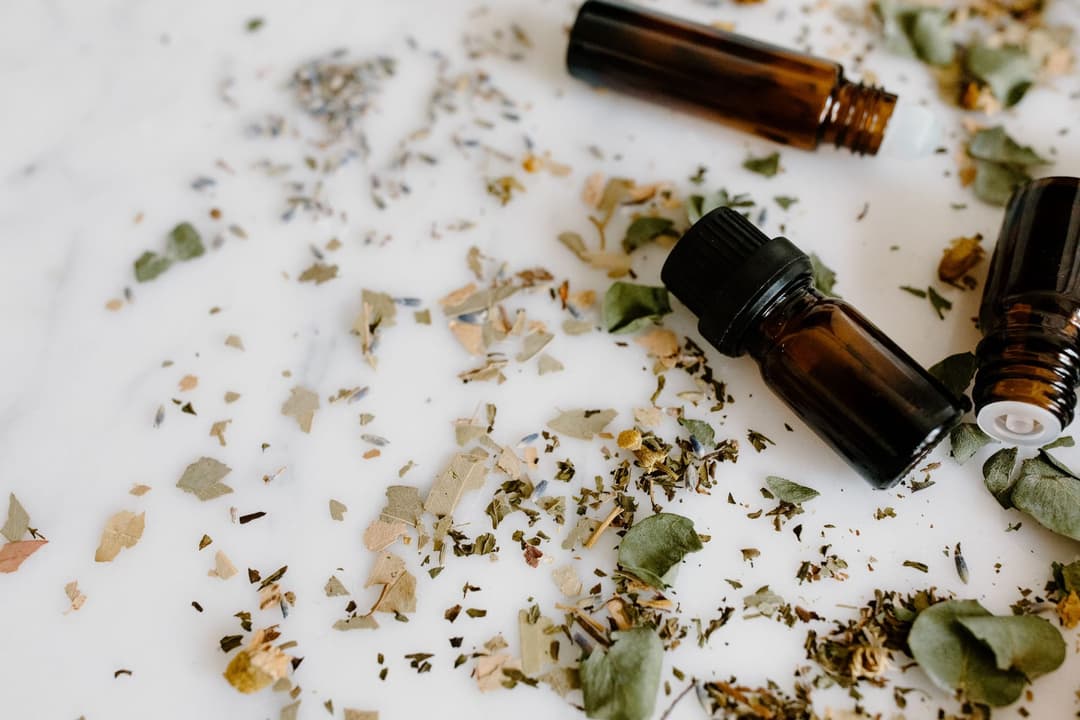
Every good cologne is built like a chord, with three layers that reveal themselves over time. Getting this balance right is what makes a scent feel finished instead of flat. Perfumers call the layers top, middle, and base notes.
- Top notes are the first thing you smell and the fastest to fade, usually gone within 15 minutes. They're bright and sharp: citrus like bergamot, lemon, and grapefruit, plus mint and eucalyptus.
- Middle notes, also called heart notes, are the body of the scent and carry it for a few hours. Think lavender, rosemary, geranium, clary sage, and warm spices like black pepper.
- Base notes are the deep, slow-evaporating scents that anchor everything and make it last. They also act as fixatives, slowing down the lighter notes. This is where cedarwood, sandalwood, patchouli, vetiver, frankincense, and vanilla live.
A balanced blend runs roughly 30 percent top notes, 50 percent middle, and 20 percent base. Base notes are strong, so a little goes a long way. If you want a scent that lingers, don't skimp on that base layer, because without it a citrus-heavy blend vanishes almost as fast as you spray it. For more on which oils hold their scent longest, see our roundup of the best essential oils for scent that lasts.
How to Make Cologne With Alcohol
This is the classic method and it gives you a proper spray cologne. Alcohol carries the scent, throws it into the air when you spritz, and then evaporates off your skin, leaving the fragrance behind. This recipe makes about 2 ounces (60 ml) at roughly a 10 percent concentration.
Fresh woody cologne (about 60 ml)
| Component | Amount |
| --- | --- |
| Perfumer's alcohol (or 190-proof grain alcohol) | 45 ml |
| Essential or fragrance oils | about 110 drops (6 ml) |
| Distilled water | 5 ml, added after aging |
| Vegetable glycerin (optional fixative) | 3 to 5 drops |
Here's a balanced starter blend for the 110 drops, a fresh-and-woody scent that suits most people:
| Note layer | Oils | Drops |
| --- | --- | --- |
| Top | Bergamot 30, grapefruit 15 | 45 |
| Middle | Lavender 20, rosemary 12, black pepper 8 | 40 |
| Base | Cedarwood 15, patchouli 10 | 25 |
Steps:
- Add the oils to the alcohol. Pour the perfumer's alcohol into your glass measuring cup, then add your fragrance blend drop by drop. Swirl gently. Doing it in this order lets the oils dissolve fully into the alcohol.
- Stir in glycerin, if using. A few drops help hold the scent a little longer. Swirl again.
- Funnel it into your bottle and cap it. Leave the distilled water out for now.
- Age it (covered in the aging section below). This is the step that turns a raw, alcohol-forward mixture into a smooth cologne.
- Add the water last. After aging, stir in the 5 ml of distilled water to round out the blend, then let it rest a few more days. If it looks cloudy, filter it through a coffee filter.
That's a full spray cologne. Adjust the blend to your taste on the next batch, and write down what you did so you can repeat a winner.
How to Make Alcohol-Free Cologne
Prefer to skip the alcohol? An oil-based roll-on is the easy answer. It sits closer to the skin, so it's more subtle than a spray, but it's gentle, travel-friendly, and never dries out your skin the way alcohol can. It's the same idea as a solid perfume, just in liquid form.
Roll-on cologne (10 ml)
| Component | Amount |
| --- | --- |
| Jojoba or fractionated coconut oil | fill the bottle, about 8 ml |
| Essential oils | 15 to 20 drops total |
Use the same top, middle, and base structure from your blend, scaled down. For 18 drops, that's roughly 8 top, 7 middle, and 3 base. Add the oils to a glass roller bottle, top it off with the carrier oil, cap it, and roll it between your palms to mix. Roll it onto pulse points: wrists, neck, behind the ears.
Jojoba is the best carrier here because it barely goes rancid, so your cologne stays fresh for close to a year. Fractionated coconut oil is a lighter, odorless second choice. Since this version stays on your skin instead of evaporating, keep the dilution reasonable, around 7 to 10 percent for spot application on pulse points, and lower it to 4 or 5 percent if you have sensitive skin. Want the same scent in a firmer format? Run your oils through the free Soaply solid perfume calculator to turn the blend into a balm you can carry in your pocket.
How Much Fragrance to Use
Concentration is where homemade cologne is won or lost. Too little and you can't smell it an hour later, too much and it's overpowering (and harder on skin). Drops are the easy way to measure, and about 20 drops equals 1 ml.
Here's how much total fragrance to add per 2 ounces (60 ml) of base:
| Target strength | Concentration | Drops per 60 ml |
| --- | --- | --- |
| Light cologne | 5% | about 60 drops |
| Everyday (eau de toilette) | 10% | about 120 drops |
| Strong (eau de parfum) | 15 to 20% | about 180 to 240 drops |
Start on the lower end, since you can always add more to the next batch but you can't pull it back out. If you'd rather skip the drop counting, the free Soaply perfume oil calculator turns a target concentration into exact fragrance and carrier amounts for whatever bottle size you're filling. A couple of skin-safety notes matter here: expressed citrus oils like bergamot, lemon, and lime are phototoxic, meaning they can react with sunlight and burn skin, so keep citrus in an alcohol spray you apply under clothes, or choose a bergapten-free (FCF) bergamot. Always do a patch test on your inner arm before wearing a new blend.
Aging and Storing Your Cologne
Aging, also called maceration, is the difference between a cologne that smells harsh and one that smells finished. When you first mix fragrance into alcohol, the notes are raw and the alcohol bites. Time lets the molecules settle and marry into one smooth scent.
Here's how to age an alcohol-based cologne:
- Cap the bottle tightly and keep it somewhere cool and dark, like a cupboard.
- Let it rest at least 2 weeks. Four to six weeks is better, and deeper, woodier blends improve the longest.
- Give it a gentle shake every few days.
- After aging, add the distilled water, rest it a few more days, and filter if it's cloudy.
Store the finished cologne in a dark glass bottle away from heat and sunlight, which break down fragrance over time. An amber or cobalt glass atomizer does this job and looks the part. Kept this way, an alcohol cologne stays good for one to two years or more, while an oil-based roll-on lasts six months to a year, limited by the shelf life of the carrier oil. Essential oils themselves don't spoil the same way food does, but they do change over time, as our guide on whether essential oils expire explains.
Tips for a Cologne That Lasts
A few working notes to get a longer-lasting, better-smelling result:
- Load the base notes. Fixative oils like cedarwood, sandalwood, patchouli, and vetiver slow evaporation and make the whole scent last. A blend with no base fades fast.
- Moisturize first. Cologne clings to hydrated skin far longer than dry skin. A light unscented lotion under your fragrance stretches its life.
- Hit the pulse points. Wrists, neck, and behind the ears are warm, which helps the scent radiate through the day.
- Don't rub it in. Rubbing your wrists together crushes the top notes and makes the scent fade faster. Dab or spray and let it dry.
- Keep good notes. Write down every drop count. A great accidental blend is worthless if you can't make it again.
- Try a fresh citrus twist like lemongrass in the top notes for a brighter, more energizing cologne.
Once you've nailed a personal scent, the same blend works across other products. Turn it into a room spray so your space matches your signature, or scent a batch of homemade soap with it.
💬 Frequently Asked Questions
How do you make homemade cologne?
Mix a fragrance blend of top, middle, and base notes into a carrier base, either high-proof alcohol for a spray or jojoba oil for a roll-on. For a 2-ounce spray, combine about 45 ml perfumer's alcohol with roughly 110 drops of essential or fragrance oils, age it two to six weeks in a cool dark spot, then add a splash of distilled water.
What is cologne made out of?
Cologne is made of three things: aromatic oils that create the scent, a carrier that spreads them (usually alcohol, sometimes a skin-safe oil), and often a little water. Commercial colognes use the same structure, though many add synthetic fixatives and phthalate solvents. A homemade version lets you skip those and control exactly what goes in.
How much essential oil do you put in cologne?
For an everyday-strength cologne, use about 10 percent fragrance, which is roughly 120 drops per 2 ounces (60 ml) of base. Go as low as 5 percent for a light splash or up to 15 to 20 percent for a long-lasting eau de parfum. Start light, since you can add more but can't remove it.
Can you make cologne without alcohol?
Yes. Fill a glass roller bottle with jojoba or fractionated coconut oil and add 15 to 20 drops of essential oils per 10 ml, then roll it onto your pulse points. An oil-based cologne is gentler and more subtle than an alcohol spray, and it won't dry your skin, though the scent sits closer and projects less.
How long does homemade cologne last?
An alcohol-based cologne keeps for one to two years or longer when stored in dark glass away from heat and light. An oil-based roll-on lasts about six months to a year, limited by the carrier oil, and jojoba lasts the longest. On your skin, expect a homemade cologne to hold for two to six hours depending on its concentration and base notes.
Bottle Your Own Signature Scent
Homemade cologne is really just a balanced scent blend, a good carrier, and a few weeks of patience. Build your top, middle, and base notes at roughly 30-50-20, pick alcohol for a spray or jojoba for a roll-on, dial the concentration to about 10 percent, and let it age before you judge it. Once you've got a scent you love, carry it further: turn the blend into a solid perfume for your pocket or a room spray for your home, and explore more scent ideas in our essential oils vs fragrance oils guide.
Ready to Try It?
Use the free Soaply perfume oil calculator to size your batch and get every ingredient in grams and percent.
Open Calculator