How to Make Essential Oils at Home: Methods, Yields, and What's Realistic
Real essential oils need a still. Here's how to make essential oils at home, plus 2 easier DIY methods, realistic yields, and how to use them in soap.
This article contains Amazon links. As an Amazon Associate, Soaply earns from qualifying purchases at no extra cost to you.
If you want to know how to make essential oils at home, here's the honest answer up front: a true essential oil comes from steam distilling a lot of plant material, and you'll need a still to do it. That's genuinely doable on a countertop with the right kit, but it isn't the "throw some herbs in oil" project a lot of tutorials pretend it is. The good news is there are three real methods, and which one you want depends on what you're actually after. You can steam distill for genuine essential oil, infuse a carrier oil for a gentle scented oil that's perfect for soap and salves, or capture a hydrosol as a bonus. This guide walks through all three, how much plant material each one needs, the plants that work best, and how to put your results to use.
Quick pick: A small countertop steam distillation kit with a glass or stainless condenser is the realistic way to make true essential oil at home. For everything else, a jar and a carrier oil will do.
What Essential Oils Actually Are
An essential oil is the concentrated, volatile aromatic compound pulled out of a plant, usually by steam. It's not the same thing as a carrier oil like olive or coconut, and it's not the same as an oil you've steeped herbs in. When you steam distill rosemary, the steam carries tiny droplets of the plant's aromatic oil up and over into a condenser, where it cools back into water plus a thin layer of true essential oil floating on top. That floating layer is the essential oil. Everything else you can make at home, like an herb-steeped oil, is technically an infused oil, not an essential oil.
That distinction matters because the two behave completely differently in a recipe. A few drops of real peppermint essential oil will scent a whole batch of soap. Peppermint-infused oil barely smells like anything by comparison. If you're still deciding which one belongs in your project, our guide to essential oils vs fragrance oils breaks down when each type earns its place.
Can You Make Essential Oils at Home?
Yes, but with a caveat. You can make small amounts of genuine essential oil at home if you're willing to use a still and a pile of fresh plant material. What you can't do is make essential oil with just a jar of oil and some herbs on a windowsill, no matter how many posts promise it. That method makes an infused oil, which is lovely and useful, just not an essential oil.
So the real question is what you want the finished product for:
- You want a true, concentrated essential oil to scent soap, candles, or a diffuser. You need steam distillation (Method 1).
- You want a gently scented, skin-loving oil for soap, salves, lotion bars, or massage. You want an infused oil (Method 2), which is faster, cheaper, and nearly foolproof.
- You want a light floral water for toner or a room spray. You're after a hydrosol (Method 3), which you get as a byproduct of distilling.
Method 1: Steam Distillation
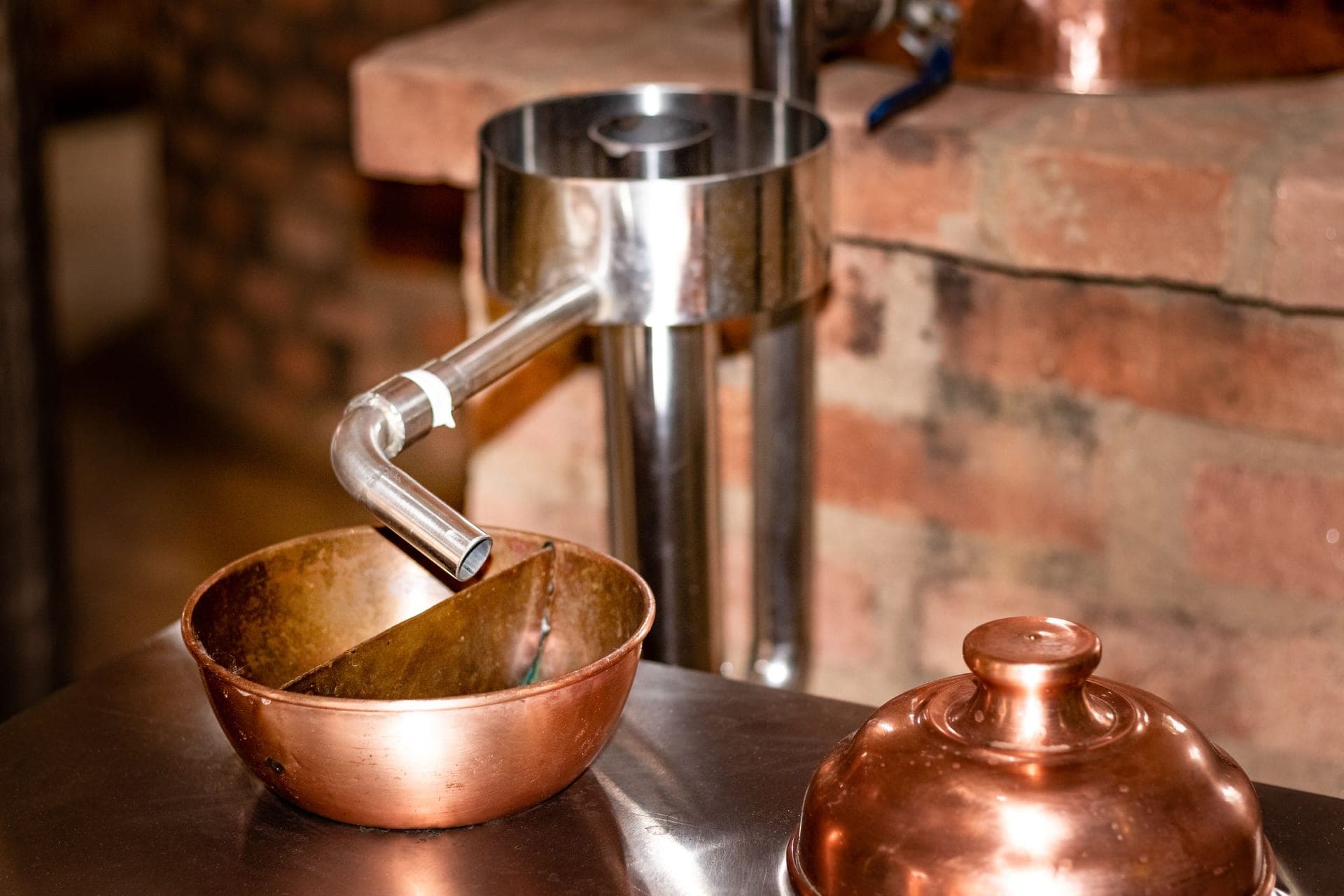
Steam distillation is how commercial essential oils are made, and a scaled-down version works on a stovetop or with a dedicated countertop still. Here's the basic process.
What you need:
- A still or distillation kit (a stovetop pot setup, or a small copper or stainless still with a condenser)
- A large amount of fresh plant material (leaves, flowers, or needles)
- Distilled water
- Ice for the condenser
- A small glass separator or narrow jar to collect the output
- Clean amber dropper bottles for storage
The steps:
- Pack your still or pot with fresh plant material. Don't crush it to a pulp, just fill the chamber.
- Add distilled water below the plant material so the steam rises through it. In a pot setup, the plants sit on a steamer basket above the water.
- Heat until the water simmers and produces steam. Keep it at a gentle simmer, not a hard boil, so you pull oil instead of just cooking the plant.
- The steam passes through the plants, picks up their aromatic oil, and travels into the condenser (a coiled tube surrounded by ice water), where it cools back to liquid.
- Collect the runoff. You'll get mostly hydrosol (scented water) with a thin film of essential oil on top.
- Separate the oil from the water. A separatory funnel makes this clean, but you can also let it settle and draw off the top layer with a pipette.
Expect a very small yield. A full pot of lavender might give you only a few milliliters of oil. That's normal, and it's exactly why real essential oils cost what they do.
Method 2: Infused Oils
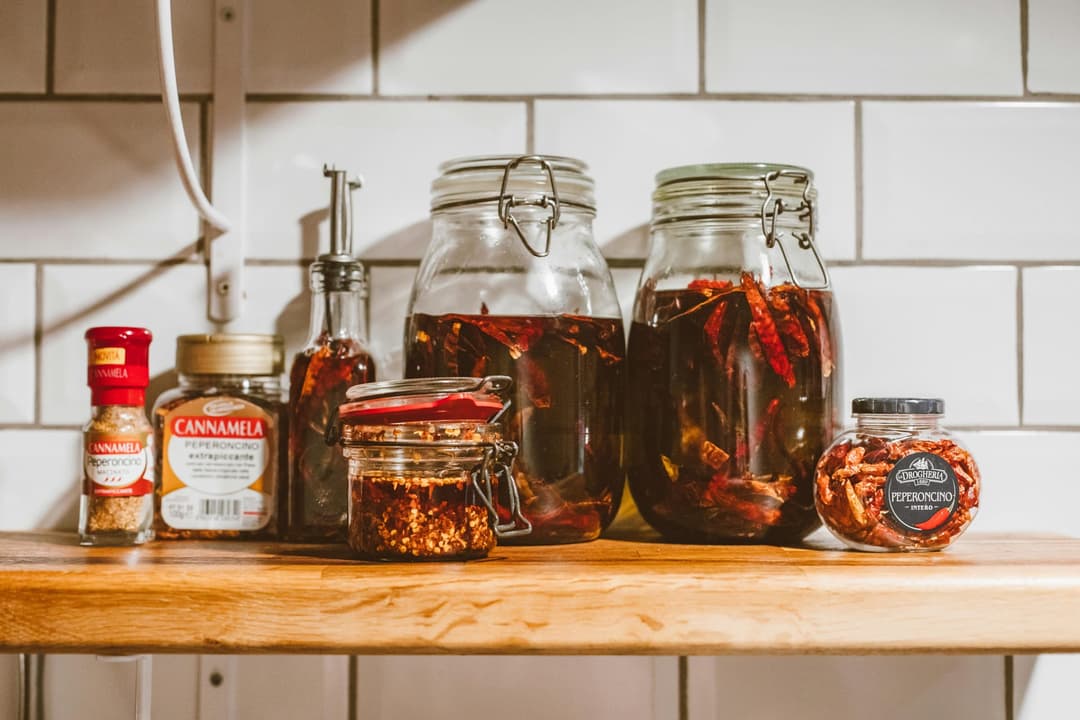
For most soap makers and skincare hobbyists, an infused oil is the method you actually want. It's simple, hard to mess up, and the result drops straight into soap, salves, and lotion bars. You're steeping dried herbs or flowers in a carrier oil so the oil picks up the plant's scent, color, and skin-friendly compounds.
Warm (fast) method:
- Fill a clean jar about halfway with dried herbs. Use dried, not fresh, since water in fresh plants can spoil the oil.
- Cover the herbs completely with a carrier oil like olive, sweet almond, or fractionated coconut oil.
- Set the jar in a warm water bath (a slow cooker on low with a towel in the bottom works well) and keep it gently warm for two to three hours.
- Cool, then strain through cheesecloth into a clean bottle.
Cold (slow) method:
- Fill a jar with dried herbs and cover with carrier oil.
- Cap it and set it in a sunny window or a warm spot for two to six weeks, shaking it every day or two.
- Strain and bottle.
We walk through both approaches in more detail, including which herbs hold their color, in our guide to infusing oils for soap making.
Method 3: Hydrosols and Flower Water
A hydrosol is the aromatic water left over after steam distillation. It carries a light version of the plant's scent plus water-soluble compounds, and it's gentle enough to use straight on skin. Lavender and rose hydrosols are popular as facial toners, linen sprays, and light room mists. If you distill for essential oil using Method 1, you get hydrosol automatically as the larger part of your runoff, so don't pour it out. Bottle it, keep it in the fridge, and use it within a few months, since it has no preservative.
What About Cold Pressing and Enfleurage?
Two other extraction methods come up, and it helps to know where they fit.
- Cold pressing is how citrus oils (orange, lemon, lime) are made, because the oil sits in the fruit's peel and would be damaged by heat. You can get a tiny amount at home by grating fresh peel and pressing it, but the yield is low and the oil doesn't keep long.
- Enfleurage is an old method for delicate flowers like jasmine that don't survive steam. It presses petals into a layer of solid fat that slowly absorbs the scent. It's beautiful and historic, but it's slow and gives you a scented fat, called a pomade, not a pourable oil.
For a first project, skip these and start with steam distillation or an infused oil.
How Much Plant Material You Really Need
This is where most people get surprised. Essential oils are concentrated, which means it takes a shocking amount of plant to make a little oil. The figures below are rough, commonly cited ranges, not precise promises, since yield swings with the plant, the season, and your setup.
| Plant | Roughly what it takes | Home yield |
| --- | --- | --- |
| Peppermint | A few pounds of fresh leaves | Higher yielding, a good starter |
| Lavender | A pound or two of fresh flowers | A few milliliters per batch |
| Rosemary | A few pounds of fresh sprigs | Small but reliable |
| Rose | Many pounds of fresh petals | Famously tiny, better as a hydrosol |
| Citrus peel | Peels from a bag of fruit | Small, cold pressed, short lived |
The takeaway: distilling your own essential oil is rewarding and genuinely doable, but it's rarely cheaper than buying, especially for low-yield plants like rose. Grow the plant yourself or have a big harvest on hand, and it starts to make sense.
Best Plants to Start With
Pick a plant that yields well and grows easily so your first distillation feels like a win. Good beginner choices:
- Peppermint and spearmint: high yield, fast growing, and forgiving.
- Rosemary: hardy, aromatic, and easy to grow in most climates. It's also a soap maker favorite, and you can turn a harvest into a fragrant rosemary soap using the infused oil.
- Lavender: the classic. Lower yield than mint, but the scent is worth it, and any extra becomes hydrosol. Pair it with our lavender soap recipe.
- Lemon balm, thyme, and oregano: all steam distill reasonably well and are easy to grow.
Start with what grows in your own garden. Fresh, local plant material distilled the same day it's cut gives you the best scent.
How to Use Your Oils in Soap and Skincare
Once you've got oil, using it correctly is its own skill. True essential oil is potent, so it goes into soap and skincare at small, measured amounts, never straight on skin. Infused oil is gentle and can make up a larger share of a recipe.
- In cold process soap: Add essential oil at trace, and dose it by weight, not by eye. Many essential oils go in around 3 percent of your oil weight, but the safe rate varies by oil. Run the numbers through the free Soaply calculators so your scent is strong enough to survive the cure without crossing a skin-safe limit. Our guide to calculating fragrance load explains the math.
- Which oils last: Some scents fade in soap and some stick. Before you commit a hard-won batch of homemade oil, check our list of the best essential oils for soap making to see which ones survive saponification.
- In salves and lotion bars: Infused oils shine here. Blend your calendula or lavender infused oil with beeswax for a simple, soothing balm.
Homemade oils don't last forever. Store them cool, dark, and tightly capped, and label every bottle with the plant and the date. If you're wondering how long they'll hold, our article on whether essential oils expire covers shelf life and storage.
💬 Frequently Asked Questions
Can you make essential oils without a distiller?
Not true essential oils, no. Without steam distillation (or cold pressing for citrus) you can only make an infused oil, which steeps herbs in a carrier oil. Infused oils are useful and gentle, but they're far less concentrated than a real essential oil and can't replace it drop for drop.
How much lavender do you need to make essential oil?
A lot. A rough, commonly cited figure is a pound or two of fresh lavender flowers to yield just a few milliliters of essential oil in a small home still. Yields vary with the variety and harvest, which is why lavender oil isn't cheap and why many home distillers keep the hydrosol too.
Can you make essential oils with just water and oil?
No. Simmering herbs in water and oil makes a scented, infused oil, not an essential oil. A real essential oil is separated out by steam distillation, where the aromatic compounds are captured and concentrated away from the water and any carrier oil.
How long do homemade essential oils last?
Stored in a dark glass bottle, tightly capped, and kept cool, a true essential oil can last one to several years depending on the type, with citrus oils fading fastest. Infused oils are shorter lived, usually up to a year, since the carrier oil itself can eventually go rancid. Always label with the date.
Are homemade essential oils as strong as store-bought?
Usually not quite. Commercial distillers use large, efficient equipment and carefully timed harvests, so their oils tend to be more concentrated and consistent. A home still still makes real, usable essential oil, just in smaller amounts and with a little more variation from batch to batch.
Start With One Plant and One Method
Making essential oils at home is real, but it rewards a clear goal. If you want true, concentrated oil, set up a small steam still and start with a high-yield plant like peppermint or rosemary. If you mostly want a scented oil for soap and salves, an infused oil gets you there today with nothing but a jar and a carrier. Either way, when you're ready to turn your oils into soap, run your recipe through the free Soaply calculators so every drop is measured, safe, and strong enough to last.
Ready to Try It?
Use our free soap calculator to create your perfect recipe with real-time property predictions.
Open Calculator