How to Scale Soap Recipes: Resize Any Batch Up or Down Safely
Learn how to scale soap recipes to fit any mold size. Step-by-step math, mold volume formulas, and tips for scaling cold process soap batches safely.
You found the perfect soap recipe online, but it makes 3 pounds and your mold only holds 2. Or maybe you've been making small test batches and you're ready to double up for a craft fair. Either way, you need to scale your recipe without messing up the chemistry.
Good news: scaling soap recipes is mostly simple multiplication. But there are a few critical details that can make or break your batch if you get them wrong.
- Why You Can't Just Eyeball It
- The Basic Math Behind Scaling
- How to Calculate Your Mold Volume
- Step-by-Step: Scaling a Recipe Up
- Step-by-Step: Scaling a Recipe Down
- Converting Recipes to Percentages
- What Changes When You Scale (Besides Amounts)
- Common Scaling Mistakes to Avoid
- Frequently Asked Questions
Why You Can't Just Eyeball It
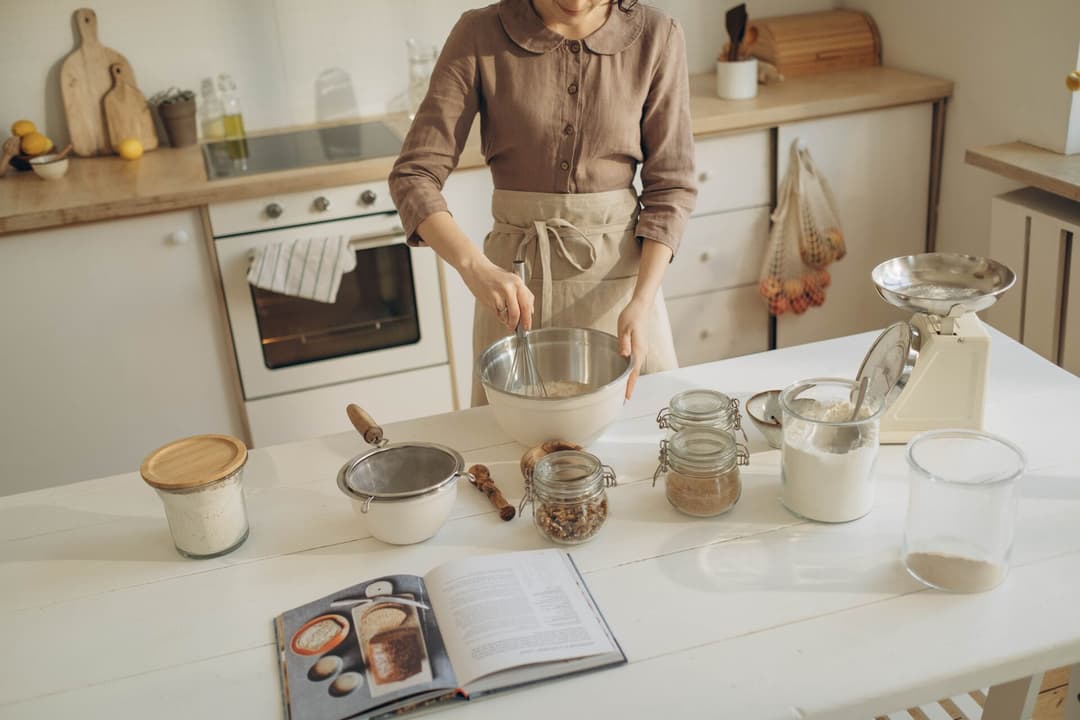
Soap making isn't like cooking where you can toss in "a little more" of something and call it good. The lye-to-oil ratio is a precise chemical equation. Too much lye and your soap will be caustic and dangerous. Too little and you'll end up with a soft, oily mess that never hardens.
When you scale a recipe, every single ingredient needs to change by the exact same proportion. That includes your oils, your lye, your water, and any additives measured by weight. The only things that don't scale linearly are temperature behavior and trace time, which we'll cover later.
This is why a soap calculator is so valuable. It handles all the math and gives you exact weights for any batch size you want.
The Basic Math Behind Scaling
The core concept is simple: find your scaling factor and multiply everything by it.
Scaling Factor = Desired Batch Size ÷ Original Batch Size
Let's say a recipe calls for 32 oz of total oils, and you want to make a batch with 20 oz of oils instead:
20 ÷ 32 = 0.625
That's your scaling factor. Multiply every ingredient in the recipe by 0.625:
| Original Ingredient | Original Amount | × 0.625 | New Amount |
| --- | --- | --- | --- |
| Olive Oil | 12.8 oz | × 0.625 | 8.0 oz |
| Coconut Oil | 9.6 oz | × 0.625 | 6.0 oz |
| Palm Oil | 6.4 oz | × 0.625 | 4.0 oz |
| Shea Butter | 3.2 oz | × 0.625 | 2.0 oz |
| Lye (NaOH) | 4.5 oz | × 0.625 | 2.81 oz |
| Water | 10.9 oz | × 0.625 | 6.81 oz |
Notice how the lye and water are calculated to three decimal places. That precision matters.
How to Calculate Your Mold Volume
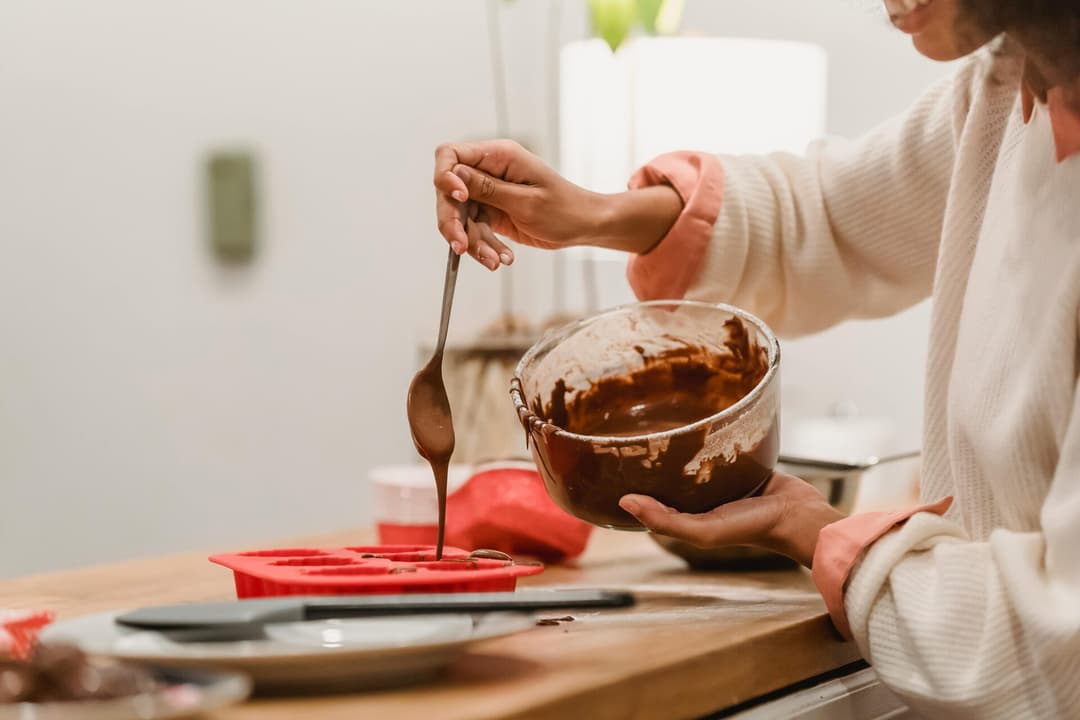
Before you can scale a recipe, you need to know how much soap your mold actually holds. Here's the formula:
For Rectangular Molds (inches)
Length × Width × Height × 0.40 = Total Oil Weight in Ounces
The 0.40 factor accounts for the fact that raw soap batter is about 40% oils by volume (the rest is water and lye solution). Some soapmakers use 0.38 for a slightly more conservative fill.
For Rectangular Molds (centimeters)
Length × Width × Height × 0.70 = Total Oil Weight in Grams
Example
Your mold is 9" long × 3.5" wide × 3" deep:
9 × 3.5 × 3 × 0.40 = 37.8 oz of oils
So you'd scale your recipe to use approximately 38 oz of total oils.
For Cylinder or Odd-Shaped Molds
Fill the mold with water, then pour it into a measuring cup. Multiply the fluid ounces of water by 0.40 to get your target oil weight in ounces.
Step-by-Step: Scaling a Recipe Up
Let's walk through a real example. You have a recipe that makes a 2-pound batch (32 oz total oils) and you want to fill a mold that needs 48 oz of oils.
Step 1: Find your scaling factor
48 ÷ 32 = 1.5
Step 2: Multiply each oil by 1.5
| Oil | Original | Scaled |
| --- | --- | --- |
| Olive Oil (40%) | 12.8 oz | 19.2 oz |
| Coconut Oil (30%) | 9.6 oz | 14.4 oz |
| Shea Butter (20%) | 6.4 oz | 9.6 oz |
| Castor Oil (10%) | 3.2 oz | 4.8 oz |
| Total Oils | 32 oz | 48 oz |
Step 3: Recalculate your lye and water
This is where I strongly recommend plugging your new oil amounts into the Soaply calculator rather than just multiplying. Here's why: if you rounded any oil amounts, your lye needs to be recalculated based on the actual oils you're using, not the theoretical amounts.
Each oil has its own SAP value (the amount of lye needed to saponify it), so the lye calculation isn't a simple multiplication when you've rounded anything.
Step 4: Adjust fragrance and additives
Fragrance oils and essential oils scale linearly based on total oil weight. If you use fragrance at 5% of oil weight:
48 oz × 0.05 = 2.4 oz fragrance oil
Colorants, exfoliants, and other additives measured by weight all scale the same way.
Step-by-Step: Scaling a Recipe Down
Scaling down follows the same logic, but there's one extra consideration: very small batches can be tricky to work with.
Minimum practical batch size: Most soapmakers find that anything under 16 oz of total oils is hard to stick blend properly and traces inconsistently. If you're doing test batches, 1 pound of oils is a good minimum.
Example: Scaling from 48 oz to 24 oz
Scaling factor: 24 ÷ 48 = 0.5
Multiply everything by 0.5. Done.
Tips for Small Batches
- Use individual cavity molds instead of a loaf mold
- Your stick blender can overheat small batches quickly, so pulse it rather than running it continuously
- Small batches reach trace faster because there's less thermal mass
- Measure in grams instead of ounces for better precision at smaller quantities
Converting Recipes to Percentages
The easiest way to scale any recipe is to first convert it to percentages. Once you have percentages, you can plug in any total oil weight and calculate exact amounts instantly.
To convert to percentages:
- Add up all your oil weights
- Divide each oil by the total
- Multiply by 100
Example
| Oil | Weight | Calculation | Percentage |
| --- | --- | --- | --- |
| Olive Oil | 14 oz | 14 ÷ 40 × 100 | 35% |
| Coconut Oil | 12 oz | 12 ÷ 40 × 100 | 30% |
| Palm Oil | 8 oz | 8 ÷ 40 × 100 | 20% |
| Shea Butter | 4 oz | 4 ÷ 40 × 100 | 10% |
| Castor Oil | 2 oz | 2 ÷ 40 × 100 | 5% |
| Total | 40 oz | 100% |
Now you can make this recipe at any size. Want a 30 oz batch? Multiply each percentage by 30 oz. Want 60 oz? Multiply by 60.
The Soaply calculator works in percentages by default, which makes it simple to resize any recipe to your exact mold dimensions.
What Changes When You Scale (Besides Amounts)
Here's what most scaling guides don't tell you: the physics of your batch change when you change the size, even if the chemistry stays the same.
Temperature Behavior
Larger batches retain heat longer. A 5-pound batch of soap will stay warm for hours and may even gel on its own without insulation. A 1-pound test batch will cool down rapidly and might need a heating pad to gel.
This means:
- Scaling up: You may need to soap at lower temperatures to avoid overheating and accelerated trace. Drop your soaping temp by 5-10°F for batches over 4 pounds.
- Scaling down: You might need to insulate more aggressively or use the oven method (CPOP) to force gel phase.
Trace Time
Bigger batches tend to reach trace faster because there's more thermal mass generating heat from the saponification reaction. If a recipe normally gives you 10 minutes of working time, a doubled batch might only give you 6-7 minutes.
Plan your design work accordingly. Complex swirls need more time at thin trace, so consider:
- Soaping cooler (90-100°F instead of 110-120°F)
- Skipping the water discount when making large batches with complex designs
- Having all colorants pre-mixed and ready before you start
Fragrance Behavior
Some fragrance oils accelerate trace. This problem gets worse in larger batches because of the extra heat. If you're scaling up a recipe with a fragrance that moves fast, test it in a smaller batch first before committing to a full-size pour.
Common Scaling Mistakes to Avoid
1. Rounding Lye Amounts
Never round your lye. If the calculation says 4.37 oz, measure 4.37 oz. Rounding up even slightly reduces your superfat, and rounding up by too much can make soap that's lye-heavy and unsafe. If you must round anything, round your oils up slightly (which increases superfat) rather than rounding lye.
2. Forgetting to Scale Water
It sounds obvious, but people do it. If you're using a water discount or specific lye concentration, that ratio needs to stay the same when you scale. A 33% lye concentration is 33% regardless of batch size.
3. Not Recalculating After Rounding
If you round your oils to nice numbers (12.8 oz becomes 13 oz), your lye amount is now wrong. Always recalculate lye after any rounding. The safest approach is to run your final oil amounts through a lye calculator one more time before you start.
4. Scaling Additives by Volume Instead of Weight
"One tablespoon of clay per pound of oils" works fine at the original batch size, but tablespoons don't scale linearly with weight for all ingredients. Stick to weight-based measurements (like "1 teaspoon per pound of oils" converted to grams) when scaling.
5. Using the Same Mold Setup for Different Batch Sizes
If you're scaling up from a small loaf to a large slab mold, remember that the thinner pour depth of a slab mold means less insulation from the soap itself. You'll get different gel behavior even with the same recipe at the same temperature.
Working Smarter: Let the Calculator Do It
You can do all this math by hand. But there's no reason to risk a miscalculation when free tools exist. The Soaply calculator lets you:
- Enter your oils as percentages
- Set your desired total batch weight
- Automatically calculate lye for any superfat level
- Adjust water amount or lye concentration
- See predicted bar properties before you pour
It takes about 30 seconds to plug in a recipe and scale it to any size. That's a lot faster (and safer) than doing long division with a lye-covered hand.
💬 Frequently Asked Questions
Can I just double all ingredients to double a soap recipe?
Yes, doubling works perfectly as long as you double everything, including lye and water. However, you should still verify your lye amount with a calculator after scaling, and keep in mind that a doubled batch will retain more heat and may trace faster than expected.
How do I know what size batch my mold needs?
Multiply your mold's internal dimensions: length × width × depth (in inches) × 0.40 to get total oil weight in ounces. For metric, use centimeters and multiply by 0.70 to get grams. You can also fill the mold with water and multiply the fluid ounces by 0.40.
Do I need to change my superfat percentage when scaling?
No. Your superfat percentage stays the same regardless of batch size. If you use 5% superfat in a 2-pound batch, you still use 5% in a 10-pound batch. The calculator handles this automatically since superfat is a ratio, not a fixed amount.
Is it safe to scale a recipe up for the first time without testing?
It's better to test at your target size with an unscented, uncolored batch first. Larger batches behave differently with heat and trace time. Once you know how the base recipe performs at the new size, you can add fragrance and color with confidence on the next batch.
What's the smallest batch I can realistically make?
Most soapmakers find 1 pound (16 oz) of oils is the practical minimum for cold process. Below that, it's hard to use a stick blender effectively, measurements need to be very precise, and the batch cools too fast to work with comfortably. Individual cavity molds work best for small test batches.
Scale With Confidence
Scaling soap recipes comes down to one rule: multiply everything by the same factor and never round your lye. Convert your favorite recipes to percentages, figure out your mold volume, and let the Soaply calculator handle the precision math. Once you're comfortable resizing batches, you'll never be limited by someone else's mold size again.
Ready to Try It?
Use our free soap calculator to create your perfect recipe with real-time property predictions.
Open Calculator