How to Make Aloe Vera Lotion (Homemade Recipe That Won't Spoil)
Learn how to make aloe vera lotion at home with a light, fast-absorbing recipe. Get exact percentages, the preservative rule, and fixes for separation.
This article contains Amazon links. As an Amazon Associate, Soaply earns from qualifying purchases at no extra cost to you.
Aloe vera lotion is a light, water-based cream that pairs the cooling feel of aloe with skin-softening oils, so it sinks in fast instead of sitting greasy on top. You can make a jar at home in about 45 minutes with an emulsifier, a preservative, and a few oils. This guide gives you exact percentages, the one rule that keeps a water-based lotion from growing mold, and simple fixes when a batch separates or turns thin.
Quick pick: The two things you can't skip are an emulsifier and a preservative. Grab a bag of emulsifying wax NF and a bottle of broad-spectrum preservative, and you can make aloe lotion all year.
- What Aloe Vera Lotion Is (and Why the Water Changes Everything)
- Fresh Aloe vs Aloe Gel vs Aloe Juice
- Ingredients You'll Need
- The Aloe Vera Lotion Recipe
- Step-by-Step Instructions
- Why You Can't Skip the Preservative
- How to Scent It Safely
- Troubleshooting Separation and Thin Batches
- Storage and Shelf Life
- Frequently Asked Questions
What Aloe Vera Lotion Is (and Why the Water Changes Everything) {#what-aloe-vera-lotion-is}
A lotion is an emulsion, which just means you've forced water and oil to stay mixed. Aloe vera lotion swaps most of that water for aloe, so you get the cooling, hydrating feel of aloe carried by moisturizing oils. The aloe brings the light, fresh finish. The oils and butter seal it in so your skin doesn't dry back out an hour later.
That water is also what makes this recipe different from a body butter or a lotion bar. Anything with water in it can grow mold, yeast, and bacteria, and aloe is basically food for microbes. A waterless whipped body butter or a solid lotion bar stays safe for months without any preservative because there's no water for anything to live in. The moment you add aloe, that changes. You need an emulsifier to hold the mix together and a preservative to keep it clean. Skip either one and you don't have lotion, you have a science experiment.
If that sounds like more than you want to take on for a first batch, start with one of the waterless options and come back to this once you've got the two key ingredients on hand.
Fresh Aloe vs Aloe Gel vs Aloe Juice {#fresh-aloe-vs-gel-vs-juice}
You've got three ways to get aloe into your lotion, and they aren't equal.
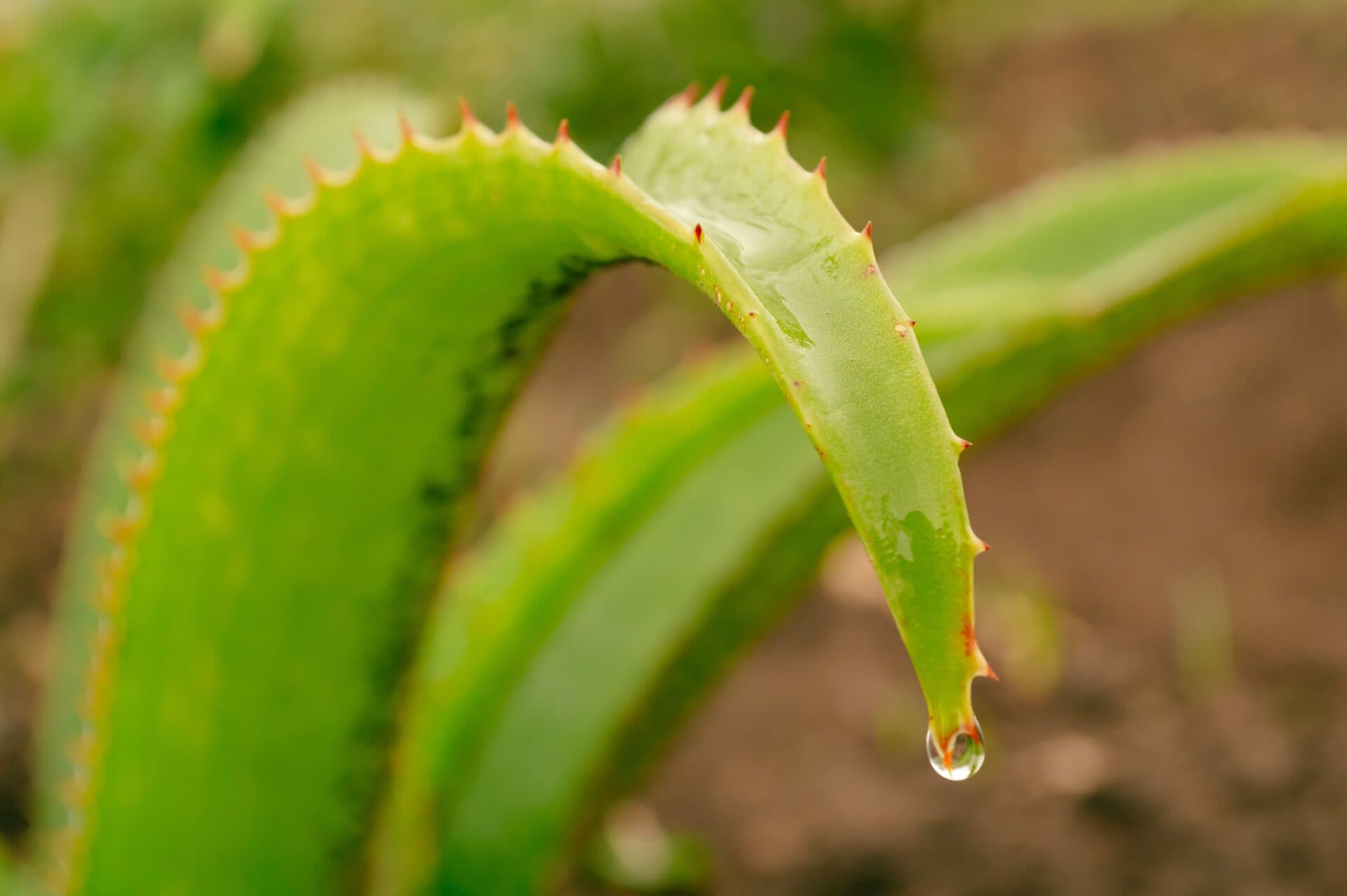
Fresh gel from the plant looks appealing, but it's the riskiest choice. The raw gel spoils within a day or two, its water content swings from leaf to leaf so your batch is never consistent, and the yellow layer just under the skin (the latex) can irritate skin if you don't rinse it off well. If you go this route, scoop only the clear inner gel, blend it smooth, and use it the same day.
Bottled aloe vera gel made for skin is more predictable. Read the label and pick one that's mostly aloe without a lot of added thickeners or color. A pure aloe vera gel with a short ingredient list works best.
Aloe vera juice is the thinnest option and blends into a water phase cleanly. It's my default because it measures like water and doesn't add gums that can mess with your emulsion.
Whichever you choose, treat the aloe as part of your water phase, not a bonus you stir in at the end. It gets heated and emulsified with everything else.
Ingredients You'll Need {#ingredients-youll-need}
Lotion is measured by weight, not by cups, because the percentages have to be exact for the emulsion and the preservative to work. A cheap kitchen scale that reads to 1 gram covers most of it, and a small 0.1 gram scale helps with the preservative and essential oil.
| Role | Ingredient | What it does |
| ------ | ----------- | -------------- |
| Water phase | Aloe vera juice or gel | Cooling hydration and the fresh feel |
| Water phase | Distilled water | Thins the mix so it spreads (never tap water) |
| Oil phase | Sweet almond oil | Light, fast-absorbing moisture |
| Oil phase | Shea butter | Richness and a protective seal |
| Emulsifier | Emulsifying wax NF | Locks water and oil into one cream |
| Cool down | Broad-spectrum preservative | Keeps mold and bacteria out |
| Cool down | Vitamin E oil | Slows the oils from going rancid |
Two notes worth reading twice. Use distilled water, not tap, because the minerals and stray microbes in tap water fight your preservative. And vitamin E is an antioxidant that protects the oils, not a preservative for the water. It does nothing to stop bacteria, so it never replaces the real preservative.
The Aloe Vera Lotion Recipe {#the-aloe-vera-lotion-recipe}
This makes about 250 grams, roughly an 8-ounce jar. Every amount is a percentage of the total batch weight, which is how you scale it up or down without breaking the emulsion.
| Phase | Ingredient | Percent | Grams (250 g batch) |
| ------- | ----------- | --------- | --------------------- |
| Water | Aloe vera juice or gel | 43% | 107.5 g |
| Water | Distilled water | 30% | 75 g |
| Oil | Sweet almond oil | 12% | 30 g |
| Oil | Shea butter | 7% | 17.5 g |
| Emulsifier | Emulsifying wax NF | 6% | 15 g |
| Cool down | Preservative | 1% | 2.5 g |
| Cool down | Vitamin E | 0.5% | 1.25 g |
| Cool down | Essential oil (optional) | 0.5% | 1.25 g |
If you want a lighter, faster-absorbing lotion, drop the shea butter to 4% and bump the aloe to 46%. For a richer winter cream, push the shea to 10% and the almond oil to 14%, trimming the aloe to match. Keep the emulsifier near 6% and the preservative at the rate its label calls for no matter how you adjust the rest.
To resize the batch to whatever jar you have, run the numbers through the Soaply lotion calculator. Enter your ingredients and target weight, and it converts the percentages to exact grams so you don't have to do the math by hand.
Step-by-Step Instructions {#step-by-step-instructions}
You'll heat the water and oil phases separately, then bring them together. This is called the heat-and-hold method, and it does two jobs: it melts the emulsifying wax and it pasteurizes the water phase.
- Weigh the water phase. Combine the aloe and distilled water in a heatproof jar or measuring cup. Set it in a pot of simmering water like a double boiler.
- Weigh the oil phase. In a second heatproof container, combine the almond oil, shea butter, and emulsifying wax. Set it in the same water bath.
- Heat and hold both to 158°F (70°C) and keep them there for 20 minutes. A cheap kitchen thermometer is all you need. This melts the wax fully and knocks back any stray microbes.
- Combine. Pour the oil phase into the water phase. It'll turn cloudy and milky right away. That's the emulsion forming.
- Blend. Use a small immersion blender or a mini mixer in short bursts for a minute or two. It'll thicken as it cools into a pourable cream.
- Cool to below 104°F (40°C). Now add the preservative, vitamin E, and essential oil. Adding them to a hot mix breaks down the preservative and burns off the scent.
- Blend once more, then jar it. Pour into a clean, sanitized container while it's still fluid. It keeps thickening for a few hours as it fully sets.
The whole thing takes about 45 minutes, most of it the 20-minute hold. Clean everything with hot soapy water and a wipe of alcohol before you start, since a spotless setup is half of what keeps a batch fresh.
Why You Can't Skip the Preservative {#why-you-cant-skip-the-preservative}
This is the part most homemade aloe lotion recipes get wrong, and it's the reason so many people end up with a jar that smells sour after two weeks.
Any product with water in it needs a broad-spectrum preservative, full stop. Aloe makes it worse because it's rich in the sugars and amino acids that mold and bacteria feed on. A jar of unpreserved aloe lotion can grow something within days, often before you can see or smell it. Rubbing that onto your skin, near your eyes, or onto a scrape is a real problem, not a hypothetical one.
Vitamin E, grapefruit seed extract, and vitamin C don't count. They're antioxidants that keep oils from going rancid, and they do nothing against microbes. A true preservative like Optiphen or a similar broad-spectrum blend is the only thing standing between you and a contaminated jar. Use it at the exact rate on the label, usually around 1%, and add it during the cool-down step. If you're not willing to use one, don't make a water-based lotion. Make the waterless whipped body butter instead, which stays safe because it has no water to spoil. The same logic that governs how long handmade soap and skincare last applies here, only lotion is far less forgiving.
How to Scent It Safely {#how-to-scent-it-safely}
Aloe lotion has a clean, faintly green smell on its own, and plenty of people leave it unscented. If you want a scent, essential oils are the natural route. Lavender, sweet orange, and peppermint all suit a cooling aloe lotion, and many of the same essential oils you'd use in soap work here too.
The rule is to keep the total low. For a leave-on lotion, stay at or below 1% of the batch weight so it's gentle on skin. For the 250-gram recipe above, that's about 2.5 grams, or roughly 40 to 50 drops. Add it during cool-down, never to the hot mix. If you're scaling the batch or blending oils and want the safe amount worked out for you, the fragrance and essential oil load calculator shows how to hit a skin-safe percentage every time.
Troubleshooting Separation and Thin Batches {#troubleshooting}
Water-based lotion is fussier than a body butter, so here's what tends to go wrong and how to fix it.
It separated into oil and water. Your emulsifier was off, either too little or not fully melted. Reheat the whole batch back to 158°F, blend hard, and cool it while stirring. Make sure you're using emulsifying wax NF, not beeswax, which doesn't hold a water-oil mix on its own.
It's too thin and watery. That's usually too much water phase or not enough of the thickening pieces. Next batch, nudge the shea butter and emulsifying wax up a point or two. A little more wax firms it noticeably.
It's grainy. The shea butter re-crystallized as it cooled too slowly. Reheat the batch, then cool it faster by setting the container in an ice-water bath while you stir. Quick cooling keeps the butter smooth.
It feels greasy. Your oil phase is too high or too heavy. Shift toward lighter oils like almond or jojoba and trim the total oils by a few points. Aloe lotion is meant to feel light, so lean water-heavy.
It's turning or smells off. If a lotion changes color, smells sour, or shows any specks, throw it out. That means the preservative wasn't enough, was skipped, or something got contaminated. Don't try to save it.
Storage and Shelf Life {#storage-and-shelf-life}
A well-preserved aloe vera lotion keeps for about three months. Store it somewhere cool and dark, away from the heat and steam of the shower, and write the date on the jar so you're not guessing later.
A pump bottle beats an open tub because it keeps your fingers, and the microbes on them, out of the product. If you do use a jar, scoop with a clean dry spatula rather than your fingers. Even with a solid preservative, keeping the lotion clean stretches how long it stays good. When in doubt, make smaller batches more often instead of one big jar you'll be dipping into for half a year.
💬 Frequently Asked Questions
Can you make lotion with pure aloe vera?
Not by itself. Pure aloe is watery and won't stay mixed with oils, and with no preservative it spoils fast. To turn aloe into a real lotion you need an emulsifier to bind it to the oils and a broad-spectrum preservative to keep it from growing mold.
Is aloe vera lotion good for your skin?
Aloe is hydrating and has a cooling feel that many people like after sun or on dry skin, and pairing it with oils in a lotion helps seal that moisture in. It's a leave-on product, so keep any added essential oils at or below 1% and always include a preservative.
How long does homemade aloe vera lotion last?
About three months when it's properly preserved and stored cool and dark. Without a real preservative it can spoil within days because the water and aloe feed bacteria and mold. Label the jar with the date and toss it at the first sign of a change in smell, color, or texture.
Do I really need a preservative for aloe vera lotion?
Yes, no exceptions. Anything with water in it needs a broad-spectrum preservative, and aloe's natural sugars make it especially prone to growing microbes. Vitamin E and grapefruit seed extract are antioxidants, not preservatives, so they don't count. If you'd rather skip it, make a waterless body butter instead.
Can I use fresh aloe straight from the plant?
You can, but it's the least reliable choice. Fresh gel spoils within a day or two, its water content varies leaf to leaf, and the yellow latex under the skin can irritate. If you use it, take only the clear inner gel, blend it smooth, and make the lotion the same day.
Start Your Batch
Aloe vera lotion comes down to three moves: emulsify the aloe and oils, preserve it so the water stays clean, and keep the scent gentle. Nail those and you've got a light, cooling cream that beats most of what's on a store shelf for a fraction of the price.
When you're ready to mix, the free Soaply lotion calculator turns these percentages into exact grams for whatever jar size you're filling. If you'd rather start with something that can't spoil, the whipped body butter recipe and the hemp seed oil lotion guide are the natural next steps, and the same aloe makes a soothing cold process aloe vera soap if you want to build a full shelf of handmade skincare.
Ready to Try It?
Use the free Soaply lotion calculator to size your batch and get every ingredient in grams and percent.
Open Calculator