How to Make Liquid Soap From Scratch (KOH Method)
Learn how to make liquid soap from scratch using potassium hydroxide (KOH). Complete guide covering formulation, cooking, dilution, and troubleshooting.
This article contains Amazon links. As an Amazon Associate, Soaply earns from qualifying purchases at no extra cost to you.
Liquid soap might seem like a completely different craft from bar soap, but the chemistry is surprisingly similar. Instead of sodium hydroxide (NaOH), you use potassium hydroxide (KOH) to create a soft soap paste that dissolves into a pourable liquid.
It takes more patience than cold process bar soap, but the result is a natural, customizable liquid soap you can use for hand wash, body wash, or even dish soap.
How Liquid Soap Differs From Bar Soap
The key difference comes down to the alkali:
| Bar Soap | Liquid Soap | |
| --- | ---------- | ------------- |
| Alkali | NaOH (sodium hydroxide) | KOH (potassium hydroxide) |
| Result | Hard solid bar | Soft paste → diluted to liquid |
| Method | Cold or hot process | Hot process (cooked) |
| Cure time | 4-6 weeks | None (usable after dilution) |
| Clarity | Opaque | Can be clear or opaque |
Potassium hydroxide creates softer, more water-soluble soap molecules. That's why KOH soap dissolves into a liquid while NaOH soap stays solid.
Equipment You'll Need
You'll need most of the same gear as bar soap making, plus a few extras:
Essential Equipment
- Slow cooker / crock pot - Your soap will cook for 3-4 hours
- Digital scale - Precision is even more critical with liquid soap
- Stick blender - For initial emulsification
- Safety goggles and gloves - KOH is just as caustic as NaOH
- Heat-safe containers - Glass or heavy plastic
- pH test strips - To verify your soap is safe to use
- Large pot or jar for dilution - You'll need double the volume of your paste
Helpful Extras
- Potato for clarity testing
- Spray bottle of distilled water
- Patience (seriously)
Choosing Your Oils
Oil selection matters more for liquid soap than bar soap. You want oils that produce a clear liquid soap:
Best Oils for Clear Liquid Soap
- Coconut oil (40-60%) - Strong lather, good cleansing, helps clarity
- Olive oil (20-30%) - Conditioning, but too much creates cloudy soap
- Castor oil (5-10%) - Boosts lather significantly
- Sunflower oil (10-20%) - Light, conditioning, good clarity
Oils to Avoid (or Limit)
- Shea butter, cocoa butter - Create cloudy, thick soap
- Palm oil - Can make soap cloudy
- Animal fats - Very cloudy results
For a detailed breakdown of oil properties, check our complete guide to soap making oils.
Beginner Liquid Soap Recipe
Here's a reliable starter recipe:
| Oil | Percentage |
| ----- | ----------- |
| Coconut Oil | 50% |
| Olive Oil | 25% |
| Sunflower Oil | 15% |
| Castor Oil | 10% |
| Superfat | 3% |
| Lye (KOH) | Use Soaply calculator |
A lower superfat (1-3%) works better for liquid soap. Higher superfat can make it cloudy and more prone to separation.
Use the Soaply calculator with KOH selected to get exact lye and water amounts for your batch size.
Step-by-Step Process
Step 1: Prepare Your Lye Solution
- Weigh your distilled water (use the amount from the calculator)
- Weigh your KOH flakes
- Slowly add KOH to water, stirring until dissolved
- KOH dissolves faster than NaOH but still generates significant heat
⚠️ Follow all lye safety precautions. KOH is just as dangerous as NaOH.
Step 2: Heat Your Oils
- Melt solid oils (coconut oil) in your slow cooker on LOW
- Add liquid oils once solids are melted
- Heat oils to approximately 160°F (71°C)
Step 3: Combine and Blend
- Slowly pour the lye solution into the oils
- Use your stick blender to bring it to trace
- Liquid soap trace looks different from bar soap : it will become thick and gluey rather than creamy
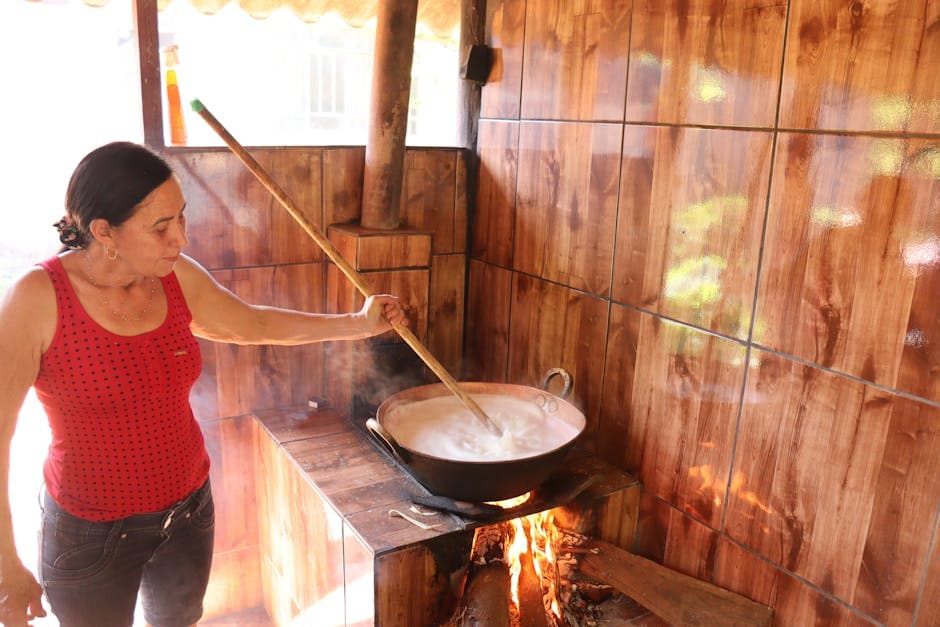
Step 4: Cook the Paste (3-4 Hours)
This is where liquid soap diverges from cold process. You cook the paste in the slow cooker:
- Cover and set to LOW
- Stir every 30 minutes: the paste goes through several stages:
- Applesauce (45 min) - Chunky, translucent texture
- Taffy (1-2 hours) - Thick, sticky, pulls like taffy
- Vaseline (2-3 hours) - Smooth, translucent, gel-like
- Done (3-4 hours) - Uniformly translucent paste
- Test with a potato: Dissolve a small piece of paste in boiling water. Slice a raw potato and drop it in. If the potato turns pink/green, there's still unreacted lye : keep cooking. If it stays white, you're done.
- Check pH: Dissolve a bit of paste in distilled water and test with pH strips. Target pH is 8-10. Below 8 is acidic (unlikely), above 10 means more cooking needed.
Step 5: Dilution
This is where paste becomes liquid soap:
- Weigh your paste
- Heat distilled water: start with a 1:1 ratio (equal weight of water to paste)
- Add hot water to paste in the slow cooker
- Stir gently: don't create foam
- Let it sit: some people leave it overnight to dissolve fully
- Add more water if needed: liquid soap should pour easily but not be watery
The ideal dilution ratio varies by recipe, usually between 1:1 and 1:2 (paste to water). Start low and add more.
Step 6: Sequester and Clarify
After dilution:
- Let the soap sit for 1-2 weeks: any excess fat will float to the top as a thin layer
- Skim off the fat layer if it appears
- Strain through cheesecloth if you see particles
- Check clarity: it should be translucent to clear
Step 7: Add Extras
Once your soap is diluted and clarified:
- Essential oils or fragrance - Add at 1-2% of total liquid soap weight
- Preservative - Liquid soap has high water content; consider a preservative for long-term storage
- Salt solution - A small amount of dissolved table salt (2-3%) can thicken liquid soap
- Color - Liquid dyes or natural colorants (water-soluble ones)
Use our fragrance calculator to determine safe fragrance amounts.
Troubleshooting Liquid Soap
Soap is Cloudy
- Too much superfat (keep it at 1-3%)
- Used oils that don't produce clear soap (butters, palm)
- Not enough cooking time
- Fix: Sometimes cloudiness settles over time. Let it sit for a week.
Soap is Too Thin
- Over-diluted
- Fix: Add a salt water solution (dissolve 1 oz salt in 2 oz water, add slowly) or cook down some water
Soap is Too Thick
- Under-diluted
- Fix: Add more warm distilled water gradually
Soap Separated After Dilution
- Can happen if superfat is high or oils separate
- Fix: Heat gently and stir. If fat separates on top, skim it off.
Stringy or Snotty Texture
- Common with high olive oil recipes
- Fix: Reduce olive oil percentage, increase coconut oil. Adding a bit of borax (0.5% of total weight dissolved in water) can help.
pH is Too High (Above 10)
- Paste wasn't cooked long enough
- Fix: Return paste to slow cooker and cook another hour, then re-test
Tips for Success
- Be patient with cooking: rushing the paste stage is the most common mistake
- Use distilled water: minerals in tap water can cause cloudiness
- Keep superfat low: 1-3% for clarity
- The potato test works: trust it over visual cues
- Dilution is adjustable: you can always add more water, but you can't take it out
- Make a big batch: liquid soap takes the same effort whether you make 16 oz or 64 oz
Liquid Soap vs. Commercial Body Wash
Commercial "liquid soaps" are usually synthetic detergents (sodium lauryl sulfate, etc.), not true soap. Handmade KOH liquid soap is genuine soap : it's gentler, biodegradable, and free of synthetic detergents.
The tradeoff is that true liquid soap may look different from commercial products (slightly cloudy, different viscosity) and has a higher pH. That's normal and perfectly safe for skin.
Cost Considerations
Liquid soap uses more raw materials per wash than bar soap because of dilution. However, you can control the concentration. Check our guide on how to price handmade soap if you're selling.
KOH is typically more expensive per pound than NaOH, so factor that into your costs. Use the Soaply calculator to plan your batch economics.
Ready to Get Started?
Liquid soap is a rewarding project that expands your soap making skills. Once you master the basic technique, you can create custom hand soaps, body washes, and even pet shampoos.
Start with the beginner recipe above, set aside an afternoon for the cooking process, and use the Soaply calculator to get your KOH amounts exactly right. Switch to KOH mode and enter your oils : the calculator handles the rest.
Ready to Try It?
Use our free soap calculator to create your perfect recipe with real-time property predictions.
Open Calculator