How to Make Tallow Soap: Rendering, Recipe, and Step-by-Step Guide
Learn how to make beef tallow soap from scratch. Covers rendering tallow, a tested cold process recipe, troubleshooting, and tips for getting white, odorless bars.
This article contains Amazon links. As an Amazon Associate, Soaply earns from qualifying purchases at no extra cost to you.
Beef tallow makes some of the hardest, longest-lasting soap bars you can produce at home. Tallow was the primary soap-making fat for centuries before plant oils became widely available, and soapmakers are rediscovering it for good reason: it's inexpensive, produces a dense creamy lather, and creates bars that hold up in the shower far longer than most plant-based recipes.
This guide covers everything from rendering raw beef fat into clean white tallow to a tested cold process recipe that produces firm, mild bars.
- Why Use Tallow in Soap?
- Where to Get Beef Fat
- How to Render Tallow
- Purifying Tallow for Soap
- Tallow Soap Recipe
- Step-by-Step Soap Making Instructions
- Troubleshooting
- Tips for Better Tallow Soap
- Frequently Asked Questions
Why Use Tallow in Soap?
Tallow's fatty acid profile is well suited to soap making:
- High in palmitic and stearic acids (40-50% combined), which create a very hard bar
- Good oleic acid content (around 40%), providing conditioning and moisturizing
- Low in polyunsaturated fats, meaning longer shelf life and less chance of rancidity
- Produces a stable, creamy lather that's not as fluffy as coconut oil lather but is gentle and long-lasting
- Affordable: beef suet costs $1-3/lb from a butcher, and you can often get it free
The fatty acid profile of beef tallow is actually similar to human skin lipids, which is why many people find tallow soap particularly gentle and non-drying.
Where to Get Beef Fat
The best fat for soap making is leaf fat (also called suet), which surrounds the kidneys. It renders into the whitest, cleanest tallow with the least beefy smell.
Sources:
- Local butcher shop: Ask for beef suet or leaf fat. Many shops give it away or sell it for under $2/lb since there's low demand
- Farmers' markets: Grass-fed beef vendors often have suet available if you ask
- Grocery stores: Some carry pre-packaged suet in the meat section
- Online: Grass-fed suet ships frozen from various farms
- Hunters: Deer tallow also works, though it's harder and has a slightly different fatty acid profile
Avoid trimmings from muscle meat if possible. They render into darker tallow with a stronger smell. Leaf fat is worth seeking out for the cleanest final product.
| Fat type | Where it comes from | Quality for soap |
| --- | --- | --- |
| Suet or leaf fat | Around the kidneys | Best: whitest tallow, mildest smell |
| Back fat | Along the spine | Good, with a little more odor |
| Cooking drippings | Roasts and ground beef | Usable after straining and a double render |
Lard (rendered pig fat) works the same way in soap and renders with the same methods. It makes a slightly softer bar than beef tallow but is just as mild. If you'd rather start there, the lard soap guide covers it.
How to Render Tallow
Rendering is the process of slowly melting the raw fat to separate the pure fat from the connective tissue and protein.
Crockpot Method (Easiest)
- Chop or grind the suet into small pieces (1/2 inch or smaller). Smaller pieces render faster. Some butchers will grind it for you if you ask
- Place in a slow cooker on LOW setting
- Add 1/4 cup of water per pound of fat. This prevents scorching at the start before the fat melts
- Cook on low for 8-12 hours, stirring occasionally. The fat will slowly melt and the connective tissue (cracklings) will float or sink
- Strain through cheesecloth or a fine mesh strainer into a heat-safe container
- Let it cool and solidify at room temperature or in the refrigerator
Stovetop Method (Faster)
- Chop suet into small pieces
- Place in a heavy-bottomed stockpot over the lowest heat setting
- Add a splash of water to prevent initial scorching
- Stir every 15-20 minutes
- Cook for 2-4 hours until all solid pieces have melted or turned into crispy cracklings
- Strain through cheesecloth
The stovetop method requires more attention but finishes faster. Either way, you want the lowest heat possible. High heat produces darker, smellier tallow.
Purifying Tallow for Soap
First-render tallow often has a yellowish color and a faint beefy smell. For white, odorless soap bars, purify the tallow by re-melting and washing it with water.
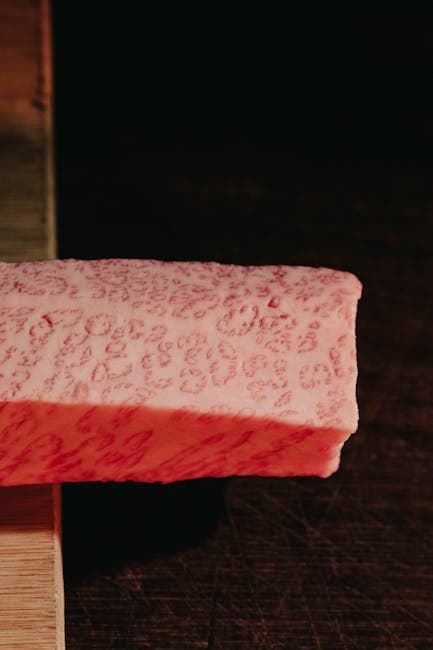
Water-washing method:
- Melt the rendered tallow in a pot
- Add an equal volume of water and 1 tablespoon of salt per quart of water
- Stir well and bring to a gentle simmer for 10 minutes
- Pour into a container and refrigerate overnight
- The tallow will solidify on top. Flip it over and scrape off any brown residue from the bottom
- Repeat 2-3 times until the tallow is white and has no smell
Each wash removes more impurities, proteins, and odor. Three washes typically produce tallow that's snow white and nearly odorless. This extra effort pays off in the final soap quality.
Tallow Soap Recipe
This recipe makes about 2.5 lbs of soap (8-10 bars).
| Ingredient | Weight | Percentage |
| ----------- | -------- | ----------- |
| Beef Tallow | 350g (12.3 oz) | 50% |
| Olive Oil | 175g (6.2 oz) | 25% |
| Coconut Oil (76 degree) | 140g (4.9 oz) | 20% |
| Castor Oil | 35g (1.2 oz) | 5% |
| Total Oils | 700g (24.7 oz) | 100% |
| Sodium Hydroxide (NaOH) | Calculate in Soaply | |
| Distilled Water | Calculate in Soaply |
Recommended calculator settings:
- Superfat: 5%
- Water: "Water % of Oils" at 33%
Why this blend works:
- Tallow (50%) provides hardness, creaminess, and long bar life
- Olive oil (25%) adds conditioning and mildness
- Coconut oil (20%) contributes cleansing and big bubbles that tallow alone lacks
- Castor oil (5%) boosts lather and stabilizes bubbles
Plug these oil weights into the Soaply calculator for exact lye and water amounts. The calculator shows you the bar properties so you can see the hardness, cleansing, and conditioning balance before you start.
100% Tallow Soap (Simple Version)
If you want the simplest possible recipe, you can make soap with 100% tallow. Use 700g of tallow, run it through the calculator at 5% superfat, and follow the same process. Pure tallow soap is very hard and mild, but the lather will be low and not very bubbly. Adding even 15-20% coconut oil dramatically improves the lather.
Step-by-Step Soap Making Instructions
Step 1: Prepare Your Workspace
Put on safety goggles, gloves, and long sleeves. Have vinegar nearby (not to neutralize lye burns, but for cleanup). Work in a well-ventilated area. Read our soap making safety guide if this is your first time working with lye.
Step 2: Weigh Ingredients
Use a digital scale for everything. Weigh your tallow, oils, lye, and water separately. Accuracy with lye is critical for a safe bar.
Step 3: Make the Lye Solution
Slowly add lye to cold distilled water (never water to lye). Stir until dissolved. The solution will heat up to around 200 F (93 C). Set aside to cool.
Step 4: Melt and Combine Fats
Melt the tallow and coconut oil gently. Add the olive oil and castor oil. Let the combined oils cool to about 100-110 F (38-43 C).
Step 5: Combine and Blend
When both the lye solution and oils are around 100-110 F, pour the lye solution into the oils. Use an immersion blender in short bursts (5 seconds on, 5 seconds stir) until you reach light trace.
Tallow soap tends to reach trace faster than all-plant-oil recipes. Watch carefully and don't over-blend, or you may end up with a thick batter that's hard to pour.
Step 6: Add Fragrance (Optional)
At light trace, add fragrance or essential oil. For usage rates, check our fragrance load guide. Good scents for tallow soap:
- Cedarwood and pine (woodsy, masks any residual tallow scent)
- Lavender
- Tea tree and eucalyptus
- Peppermint
Step 7: Pour and Mold
Pour into your prepared mold. Tap the mold on the counter a few times to release air bubbles. Smooth the top with a spatula.
Step 8: Insulate and Wait
Cover with a towel or cardboard. Tallow soap gels easily due to its high saturated fat content. You can force gel phase (wrap in towels) for a smoother, slightly more translucent bar, or leave it alone for a matte finish.
Unmold after 24-48 hours. Tallow soap unmolds earlier than many recipes because it's so hard.
Step 9: Cut and Cure
Cut into bars and cure on a rack with good airflow for 4-6 weeks. Tallow bars improve significantly with a longer cure. Many soapmakers report that tallow soap keeps getting better for 3-6 months.
Troubleshooting
| Problem | Cause | Fix |
| --------- | ------- | ----- |
| Beefy smell in finished bars | Tallow not purified enough | Re-render and water-wash 2-3 more times before next batch |
| Yellow or tan colored bars | Impurities in tallow | Use leaf fat, purify more thoroughly |
| Soap traced too fast | Tallow accelerates trace | Work at lower temperatures, use a whisk instead of stick blender initially |
| Soft bars after 48 hours | Normal for high-olive recipes with tallow | Give it an extra day. Tallow bars are often hard as a rock by day 3-4 |
| DOS (dreaded orange spots) | Rancidity in the tallow | Use fresh tallow, store bars in a cool dry place, add ROE (rosemary oleoresin extract) at 0.1% of oils |
| Crumbly or dry feeling bars | Too much lye (lye heavy) | Double-check your calculator inputs and scale accuracy |
Tips for Better Tallow Soap
Render twice if the first pass smells beefy. The water-wash above is the single biggest thing you can do for a whiter bar with no scent, and it costs nothing but time.
Grass-fed suet is nice but not required. Some makers prefer it for the feel of the finished bar. Conventional butcher suet makes fine soap, so don't let sourcing hold up your first batch.
Keep temperatures modest. Tallow accelerates trace, and a fast fragrance oil on top of that can leave you with a batter you can't pour. Soap around 100 to 110 F and pick a fragrance known to behave.
Sodium lactate helps with unmolding. Tallow bars are already hard, but 1 teaspoon of sodium lactate per pound of oils, stirred into the cooled lye solution, gives a cleaner release from silicone molds.
Let gel phase happen. Tallow soap gels readily and the bars come out a little smoother and harder for it. Insulate the mold unless you're working with milk or sugar additives.
Give it the full cure. The 4 to 6 week cure matters more with tallow than with most oils. The bar keeps hardening and the lather keeps improving for months.
💬 Frequently Asked Questions
Does tallow soap smell like beef?
Not if you purify the tallow properly. Water-washed tallow that's been cleaned 2-3 times produces soap with no detectable meat smell. The saponification process also changes the fat chemically, so even moderately clean tallow loses most of its scent after curing.
Is tallow soap good for your skin?
Tallow soap is one of the mildest soap options available. Its fatty acid profile closely resembles human skin lipids, which means it's less likely to strip natural oils from your skin. People with eczema and sensitive skin often prefer tallow-based soap.
Can I use lard instead of tallow?
Yes. Lard (pig fat) works the same way and produces similar results. Lard soap tends to be slightly softer than tallow soap but equally mild. Use the same recipe percentages and run it through the Soaply calculator since lard has a slightly different SAP value.
Where does tallow fall in the soap properties spectrum?
Tallow creates bars that are high in hardness, moderate in conditioning, and low in cleansing. That's why pairing it with coconut oil (which adds cleansing and lather) makes such a balanced recipe. Use the bar properties display in the Soaply calculator to see exactly how your blend performs.
How long does tallow soap last?
A well-made tallow bar will outlast most plant-based bars by 2-3x in the shower. The high saturated fat content means it dissolves slowly in water. Many users report a single 4oz tallow bar lasting 4-6 weeks of daily use.
Can I use tallow from other animals?
Deer tallow, lamb tallow, and bison tallow all work. Each has a slightly different fatty acid profile, so run them through the calculator as "Tallow, Beef" (closest match) and use 5-6% superfat to account for small variations. Lamb tallow is softer than beef; deer tallow is harder.
Can I use tallow from cooking drippings?
You can, but it needs extra processing. Drippings carry salt, seasonings, and browned meat particles, all of which cause off smells and specks in soap. Strain them hot through cheesecloth, then run them through the water-washing method above at least twice. If the result is still tan or smells like dinner, it's better spent on the frying pan than on a batch of soap.
How does tallow compare to palm oil in soap?
Beef tallow and palm oil have similar SAP values and give bars similar hardness and longevity, which is why tallow is the most common palm substitute. Tallow leans toward a creamier, denser lather while palm's is a touch fluffier, and tallow soap usually feels a little more conditioning. Swapping one for the other is a like-for-like change in most recipes, but rerun the calculator since the lye amount shifts slightly.
Start Your First Tallow Batch
Tallow soap connects you to centuries of soap-making tradition. It's economical, it produces outstanding bars, and once you've rendered a batch of clean white tallow, the actual soap-making process is no different from any cold process recipe.
Grab some suet from your local butcher, render and purify it, then plug your oil weights into the Soaply calculator for exact lye and water amounts. For more recipe ideas, check out our complete guide to soap making oils or the palm-free soap recipes collection.
Ready to Try It?
Use our free soap calculator to create your perfect recipe with real-time property predictions.
Open Calculator