How to Make a Sugar Scrub (Basic Ratio and Two Recipes)
How to make a sugar scrub at home with the right sugar-to-oil ratio. Two recipes, an oil-based one and an emulsified one, plus scent and shelf-life tips.
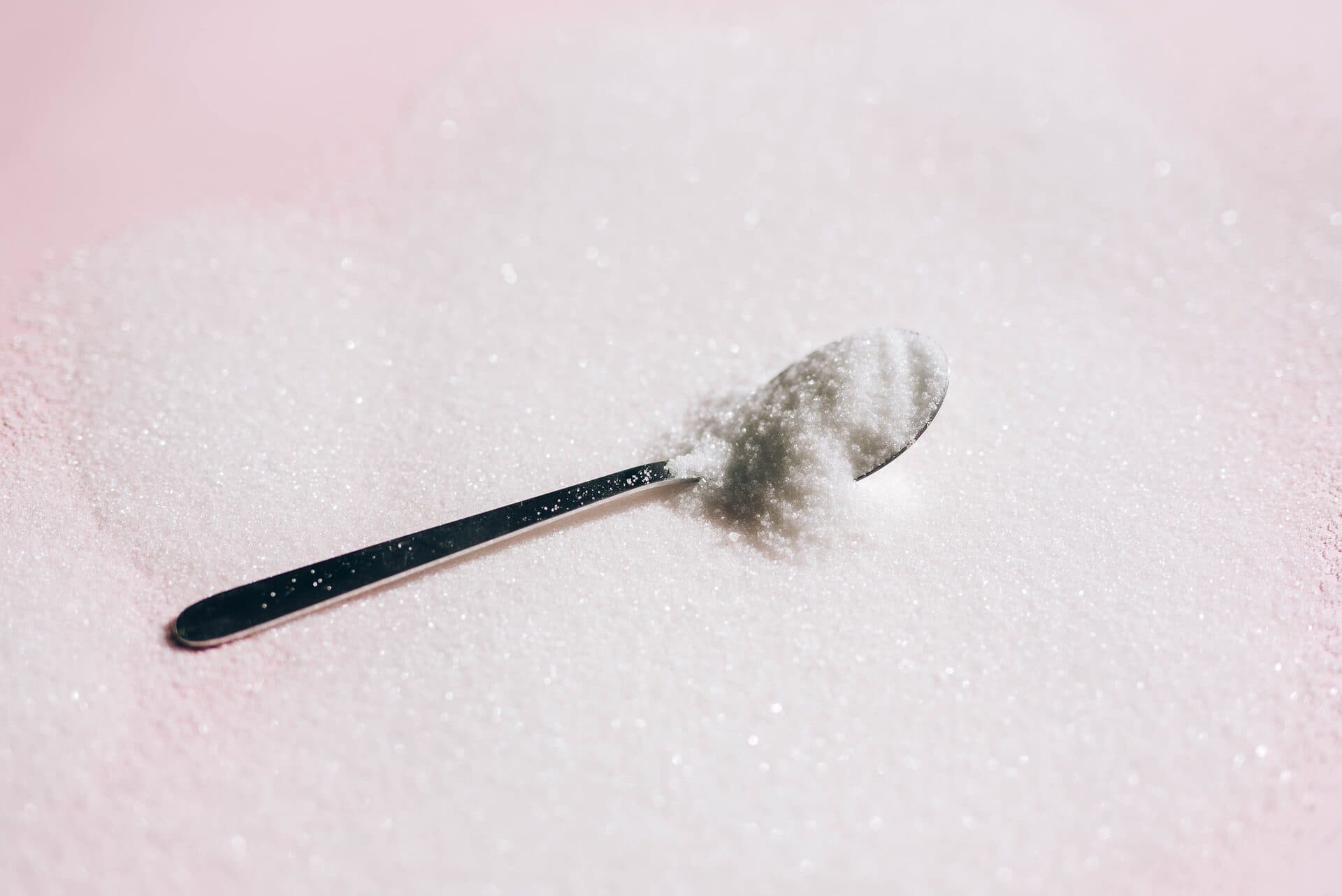
To make a sugar scrub you stir two parts sugar into one part oil, add a few drops of scent, and spoon it into a jar. That's it. A jar of granulated white sugar, half a cup of sweet almond oil, and a little essential oil gives you a scrub that costs under a dollar and works as well as the $18 version at the store. The mixing takes five minutes and needs no heat, no lye, and no special gear.
The part people get wrong is the ratio and the shelf life. Too much oil and the scrub slumps into a puddle, too little and it crumbles off the spoon. Skip the right kind of oil and the batch goes rancid before you finish the jar. This guide gives you a simple oil-based recipe, an emulsified version that rinses clean instead of leaving a slick tub, and the numbers you need to resize either one with the Soaply sugar scrub calculator.
- Why Make Your Own Sugar Scrub
- What a Sugar Scrub Is Made Of
- The Sugar to Oil Ratio
- Which Sugar to Use
- The Best Oils for a Sugar Scrub
- A Simple Oil-Based Sugar Scrub Recipe
- An Emulsified Sugar Scrub Recipe
- Adding Scent Safely
- How Long a Sugar Scrub Lasts
- Why Your Sugar Scrub Failed
- Frequently Asked Questions
Why Make Your Own Sugar Scrub
Price is the easy answer. A small jar of body scrub runs $12 to $20, and most of what you're paying for is sugar and cheap oil with a fragrance on top. Mix it yourself and the same jar costs a dollar or two. Buy the oil in a decent size and you can make five or six jars from one bottle.
Control is the reason that keeps people making their own. You pick the oil, so nothing greasy sits on your skin if you don't want it to. You pick the scent and the strength, so a scrub for sensitive skin can go unscented while a gift jar gets a real dose of vanilla or citrus. You skip the plastic microbeads and synthetic dye that show up on a lot of drugstore labels, and you know the batch is fresh because you made it last week.
There's a crossover payoff too. The sweet almond and jojoba you buy for a scrub also belong in body butter and lip balm, so nothing you buy sits in the cupboard going stale. If you'd rather scrub with mineral grit than sugar, the same method works with salt, and the Soaply salt scrub calculator handles those ratios.
What a Sugar Scrub Is Made Of
A sugar scrub is simpler than the jar makes it look. At its core it's two ingredients: sugar and oil.
The sugar is the exfoliant. Its edges lift dead skin and it dissolves under warm water, so it rinses away instead of clogging the drain. The oil is the carrier. It binds the grains into a scoopable paste and leaves a thin conditioning layer once the sugar washes off.
From there you can add two optional things. A scent, usually essential oil or a skin-safe fragrance oil, at a low dose. And, if you want the scrub to rinse clean rather than coat the tub, an emulsifier plus a preservative. Those two upgrades turn a basic scrub into an emulsified one, which the second recipe below covers. Everything else you see on a commercial label, the vitamin E, the exotic butter, the botanical extract, is a nice-to-have, not a requirement.
The Sugar to Oil Ratio
Start at two parts sugar to one part oil by volume. Two cups of sugar to one cup of oil, or two tablespoons to one, whatever size batch you want. That ratio holds its shape on a spoon, spreads without dripping, and rinses off without a heavy film.
From there, adjust to taste. Want a wetter, more spreadable scrub that glides more? Move toward a 1.5 to 1 blend. Want a drier, grittier scrub that feels firmer in the jar? Push toward 3 to 1. Neither is wrong, they're preferences, and the only way to find yours is to make a small test jar and try it in the shower.
Two things throw the ratio off. Fine sugar packs tighter than coarse sugar, so it soaks up more oil and a batch made with caster sugar feels drier than the same recipe with turbinado. And oils that are solid at room temperature, like unrefined coconut, firm the whole scrub as it cools, so a blend that looked right while you stirred it can set up stiff overnight. If you're scaling a recipe up or down and don't want to redo the math by hand, drop your numbers into the Soaply sugar scrub calculator and it keeps the ratio locked while it resizes the batch.
Which Sugar to Use
Any edible sugar works, and the grain size is what changes the feel:
| Sugar | Grain | Best for |
| --- | --- | --- |
| Caster (superfine) | Very fine | Face, sensitive skin |
| Granulated white | Medium | All-purpose body scrub |
| Turbinado (raw) | Coarse | Feet, elbows, rough spots |
| Brown sugar | Fine, soft | Gentle body scrub, softer feel |
Granulated white is the safe default and it's already in your kitchen. Caster sugar, or granulated whizzed a few seconds in a blender, is gentle enough for the face. Turbinado and other raw sugars are coarse and scratchy, which is what you want on heels and elbows but too rough for anywhere thin-skinned. Brown sugar dissolves fastest and feels the softest because the molasses in it holds a little moisture, so it's a good pick for a milder scrub.
One rule holds across all of them: sugar dissolves in water, so it's kinder than salt on freshly shaved or broken skin. If your skin stings after a scrub, the grain is too coarse for that spot, not the sugar itself.
The Best Oils for a Sugar Scrub
The oil does two jobs, binding the sugar and conditioning your skin, so you want one that spreads well and doesn't go rancid fast. These are the reliable ones:
- Sweet almond oil is the classic scrub oil. It's light, cheap, spreads easily, and suits most skin.
- Fractionated coconut oil stays liquid at any temperature and lasts for years, so it's the pick if you want a scrub that never sets up stiff or turns.
- Jojoba oil is technically a wax ester, which is why it resists rancidity longer than most oils and feels less greasy going on.
- Grapeseed oil is the lightest of the group and absorbs fast, good for anyone who hates a slick finish.
- Avocado oil is richer and heavier, better for dry or winter skin than for an everyday scrub.
Skip the delicate kitchen oils. Unrefined hemp, flax, and walnut go rancid in weeks and they'll take your scrub down with them. Plain olive oil works but feels heavy and slow to absorb. If you only buy one bottle, make it sweet almond or fractionated coconut and you're covered.
A Simple Oil-Based Sugar Scrub Recipe
This is the five-minute version, no heat and no preservative. It makes about one small jar.
Ingredients:
- 1 cup granulated white sugar
- 1/2 cup sweet almond or fractionated coconut oil
- 10 to 15 drops essential oil (optional)
Method:
- Put the sugar in a bowl.
- Pour in the oil and stir until every grain is coated and the mix holds together like wet sand.
- Add the essential oil and stir again.
- Check the texture. Too dry, add oil a teaspoon at a time. Too wet, add a spoon of sugar.
- Spoon into a clean, dry jar and press it down.
That's a finished scrub. Because it has no water in it, it doesn't strictly need a preservative, but it does need to stay dry. Scoop with a dry spoon rather than wet fingers, because every drop of shower water you introduce is a chance for mold to start. Keep the jar closed between uses.
An Emulsified Sugar Scrub Recipe
An oil-based scrub leaves a slick on the tub and a film on your skin. An emulsified scrub fixes both. You melt an emulsifier into the oil, and when the scrub hits water in the shower it turns milky and rinses clean, the way a store-bought scrub does. This version needs a scale and a broad-spectrum preservative, because the emulsifier will pull shower water into the jar over time.
By weight, for roughly a 250 gram batch:
- 150 g sugar (about 60%)
- 60 g liquid carrier oil (about 24%)
- 30 g emulsifying wax NF (about 12%)
- 8 g stearic acid, optional, for a firmer scoop (about 3%)
- 2 to 3 g broad-spectrum preservative (about 1%)
- fragrance or essential oil to about 1%
Method:
- Weigh the carrier oil, emulsifying wax, and stearic acid into a heatproof jug and melt them together in a water bath until clear.
- Take the jug off the heat and let it cool to about 40 to 45 C (105 to 115 F).
- Stir in the preservative and fragrance, then fold in the sugar until it's fully coated.
- Spoon into jars while it's still soft. It firms as it cools.
The emulsifying wax is the ingredient that does the work, and it's the same class of ingredient that holds a lotion together. If emulsifiers are new to you, the Soaply lotion calculator and its emulsifying wax guide explain how they behave. Use the Soaply sugar scrub calculator to scale this recipe to the jar size you're actually filling, so the percentages stay right whether you make 100 grams or a kilo.
Adding Scent Safely
Essential oils are concentrated, so a little goes a long way and too much irritates skin. For a body scrub, keep the total scent at or under 1 percent of the batch weight, which lands around 10 to 15 drops in the small oil-based recipe above. For anything used on the face, halve that.
Citrus oils smell great in a scrub but some, like cold-pressed lime and bergamot, are phototoxic and can make skin burn in sunlight. Use steam-distilled or bergapten-free versions if you'll be out in the sun, or save citrus scrubs for the evening. Skin-safe fragrance oils are fine too, just confirm the supplier rates them for leave-on or rinse-off skin use, not only for candles. Never scent a scrub with a flavoring extract from the baking aisle, since those aren't formulated for skin.
How Long a Sugar Scrub Lasts
Shelf life comes down to one question: is there water in it?
An anhydrous scrub, meaning oil and sugar with no water, keeps for about three to six months. What limits it is the oil going rancid, not bacteria, so a long-lasting oil like fractionated coconut or jojoba stretches that window. Store the jar somewhere cool and dark, and keep water out with a dry scoop.
An emulsified scrub, or any scrub that gets water splashed into it, needs a broad-spectrum preservative and still lasts only as long as that preservative holds, usually a few months. Without a preservative, a scrub that meets water can grow mold or bacteria you can't always see, so don't gift or sell an unpreserved scrub that people will use with wet hands. If you spot fuzz, an off smell, or a color change, throw the jar out. When in doubt, make small batches and use them up.
Why Your Sugar Scrub Failed
A few problems come up again and again:
It separated into oil on top. That's normal for an oil-based scrub. The oil floats and the sugar settles. Just stir it before each use. If you want it to stay mixed, you want the emulsified recipe.
It's too dry and crumbly. Too much sugar for the oil. Add oil a teaspoon at a time until it clumps like wet sand.
It's a soupy puddle. Too much oil, or a fine sugar that dissolved a little. Add sugar until it holds a scoop.
It set up rock hard. You used an oil or butter that's solid at room temperature, like unrefined coconut. Switch to a liquid oil, or warm the jar in your hands before you scoop.
It went cloudy or smells off. Water got in and something started growing. If there's no preservative, toss it and start over with a dry scoop and a dry jar.
Most of these trace back to the ratio or to water sneaking in, which is why a locked ratio and a dry scoop solve the majority of scrub complaints before they start.
💬 Frequently Asked Questions
What is the ratio of sugar to oil in a sugar scrub?
Start with two parts sugar to one part oil by volume, such as one cup of sugar to half a cup of oil. Move toward 1.5 to 1 for a wetter, glidier scrub or 3 to 1 for a drier, grittier one. Fine sugar soaks up more oil than coarse sugar, so adjust after the first test jar.
Do I need a preservative in a sugar scrub?
Only if water gets into it. A pure oil-and-sugar scrub is anhydrous and doesn't strictly need one, as long as you keep it dry with a clean scoop. An emulsified scrub, or any scrub used with wet hands, needs a broad-spectrum preservative because water lets mold and bacteria grow.
Can I use a sugar scrub on my face?
Yes, but use the finest sugar you have, like caster or blended granulated, and a light hand. Coarse sugars such as turbinado are too rough for facial skin. Keep any added scent under half a percent, and skip scrubbing over active acne or broken skin.
Which is better, a sugar scrub or a salt scrub?
Sugar is gentler and dissolves faster, so it suits the face and freshly shaved skin. Salt is coarser and more mineral-rich, better for rough feet and heels. They use the same method, so try both. The Soaply salt scrub calculator handles the salt version.
Why does my sugar scrub feel greasy?
Usually too much oil for the sugar, or an oil-based recipe with no emulsifier. Add sugar to shift the ratio, switch to a lighter oil like grapeseed, or make the emulsified version, which rinses clean instead of leaving a film.
Make Your Batch the Right Size
A sugar scrub is one of the few skincare projects with almost no way to go wrong once you have the ratio, so the only real decision left is how much to make. Lock your sugar-to-oil ratio, pick an oil that lasts, keep water out of the jar, and you'll have a scrub that beats the store version for a fraction of the price. When you're ready to size a batch to the jars you actually have, run the numbers through the Soaply sugar scrub calculator and it'll scale everything for you.
Ready to Try It?
Use the free Soaply sugar scrub calculator to size your batch and get every ingredient in grams and percent.
Open Calculator