Pink Himalayan Salt Scrub: Which Grain to Buy and How to Make One
How to make a pink Himalayan salt scrub: which grain size to buy, what the minerals really do, the salt-to-oil ratio, and a coconut oil recipe you can scale.
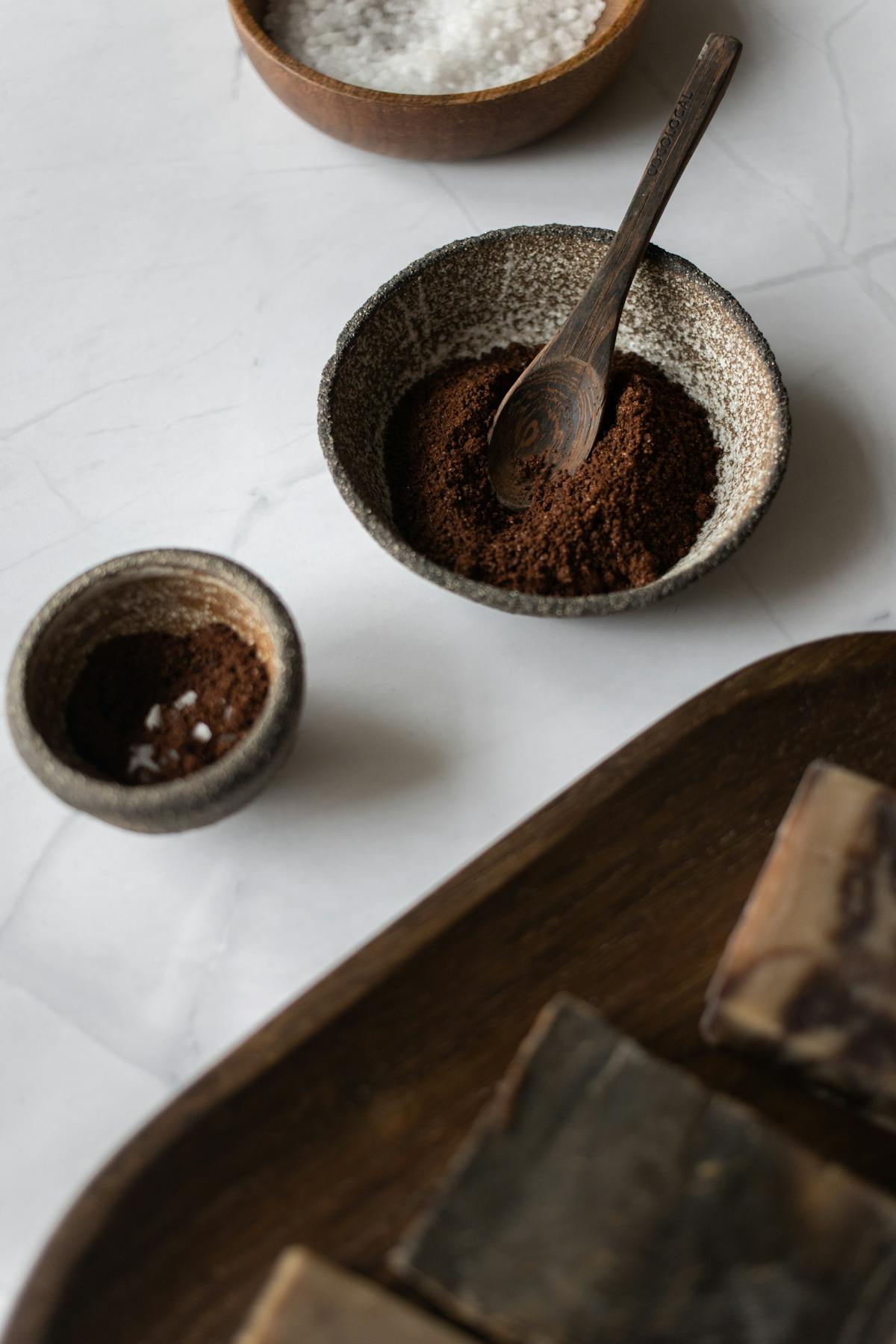
A pink Himalayan salt scrub is just pink rock salt stirred into a carrier oil until it looks like wet, rosy sand. You rub it over damp skin in the shower, the grains lift off dead skin, and the oil stays behind to soften. The whole thing takes five minutes to mix and costs a fraction of the $20 jars at the counter. The two decisions that actually matter are which grain of salt you buy and how much oil you pair it with.
Most people get tripped up on the salt, not the recipe. Pink Himalayan salt comes in everything from a powder to chunks the size of a pea, and the grind you grab decides whether the scrub feels like a gentle polish or like sandpaper. This guide covers what makes the pink salt different, whether the mineral claims hold up, which grain suits which part of your body, and a coconut oil recipe you can resize in the Soaply salt scrub calculator.
- What Makes Pink Himalayan Salt Different
- Is a Pink Himalayan Salt Scrub Good for Your Skin?
- Do the Minerals Actually Do Anything?
- Pink Himalayan vs Sea Salt vs Table Salt
- Which Grain Size to Buy
- Food Grade or Cosmetic Grade?
- The Salt to Oil Ratio
- A Pink Himalayan Salt Scrub Recipe
- An Emulsified Version That Rinses Clean
- Where Not to Use It
- How to Use and Store It
- Frequently Asked Questions
What Makes Pink Himalayan Salt Different
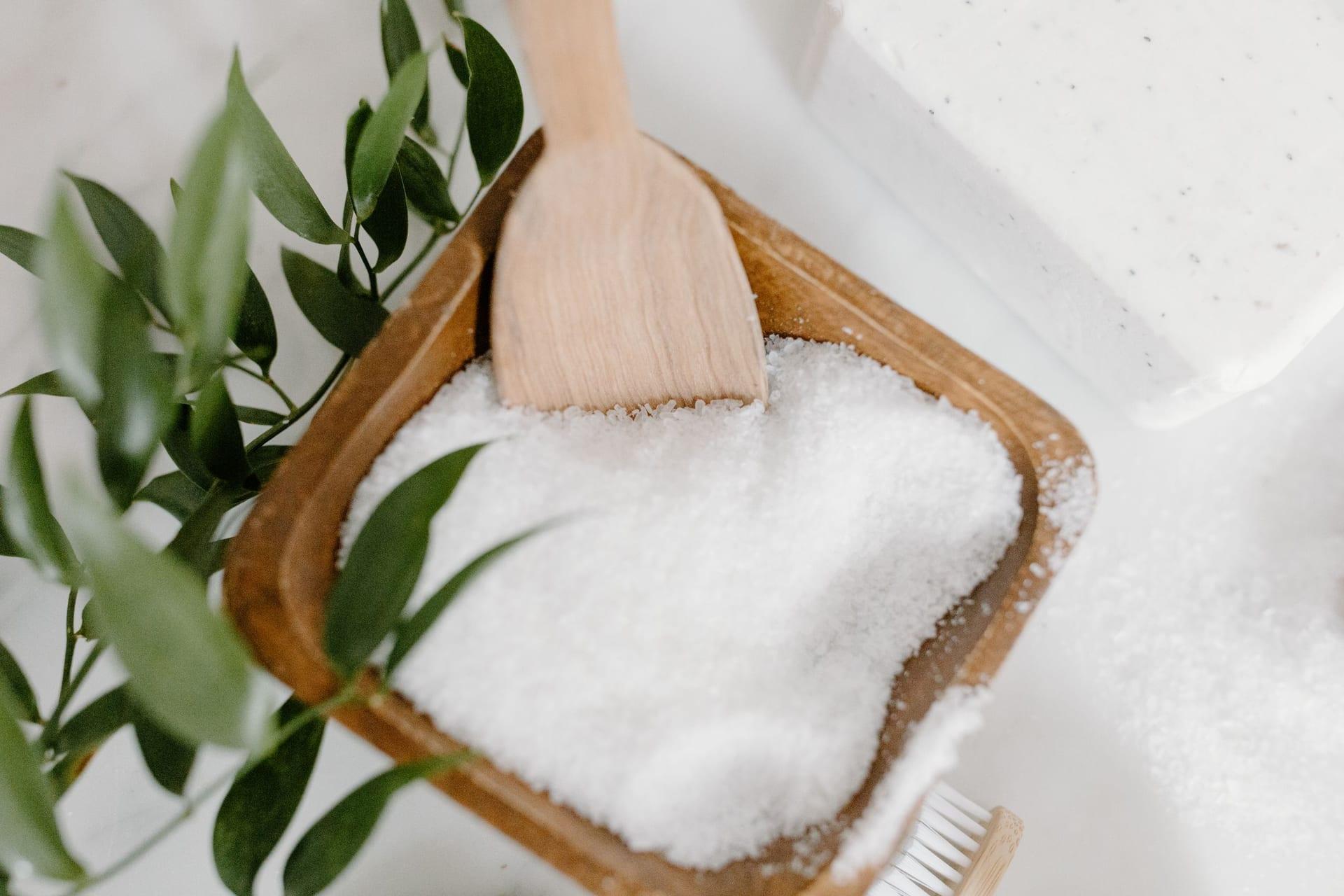
Pink Himalayan salt is rock salt mined at the Khewra mine in the Punjab region of Pakistan, not from the Himalayas themselves despite the name. It formed from an ancient sea that dried up hundreds of millions of years ago and has been sitting underground ever since. That's why it comes out of the ground in hard, crystalline chunks rather than the flat flakes you get from evaporated seawater.
The pink color comes from trace iron oxide, which is rust in everyday terms. The more iron, the deeper the blush, so a bag can run from pale rose to a strong salmon. The color has nothing to do with how well it exfoliates. It's just what tells you at a glance that you're holding Himalayan salt and not plain sea salt.
For a scrub, the thing that counts is that it's a hard, dense crystal. It holds its shape in oil instead of dissolving on contact the way very fine salt can, and the edges stay firm enough to do the scrubbing. That hardness is the real reason people reach for it over softer salts.
Is a Pink Himalayan Salt Scrub Good for Your Skin?
For exfoliation, yes. A salt scrub works by physical abrasion: the grains knock loose the flaky, dead cells sitting on the surface, and the oil you mixed in coats the fresh skin so it doesn't feel tight afterward. People use it on rough spots like elbows, knees, heels, and the backs of the arms, where skin builds up and a washcloth doesn't cut it.
Salt also pulls a little water, so a scrub can leave skin feeling clean in a way a sugar scrub doesn't. That same quality is why the oil matters so much. Skip it or skimp on it and the salt can leave you dry and tight. Pair it with a generous amount of a conditioning oil and you get the polish without the parched feeling.
What a salt scrub won't do is anything deeper than the surface. It's a mechanical exfoliant and nothing more. It doesn't feed your skin, detox anything, or treat a condition. If you see a claim that sounds medical, it's marketing.
Do the Minerals Actually Do Anything?
This is where the sellers and the evidence part ways. Pink Himalayan salt is often sold on the strength of its "84 trace minerals," and that number gets repeated everywhere. The minerals are genuinely in there, at tiny concentrations, and they're part of what gives the salt its color and faint flavor.
The leap happens when a label implies your skin soaks those minerals up and benefits from them. There's no good evidence that happens in a rinse-off scrub you use for thirty seconds. The minerals are present in trace amounts, your skin is a barrier built to keep things out, and the scrub goes down the drain. Treat the mineral story as a nice side effect of using a natural salt, not a reason to expect a result. The benefit you can actually feel is the exfoliation and the oil.
I'd rather say that plainly than sell you on something that won't hold up in the shower. If a product's whole pitch rests on mineral absorption, that's a flag.
Pink Himalayan vs Sea Salt vs Table Salt
All three are mostly sodium chloride. The differences that matter for a scrub are grain shape, hardness, and what else is in the bag.
Sea salt comes from evaporated seawater and tends toward flatter, softer crystals that can dissolve a bit faster. It makes a fine scrub, and our general salt scrub guide walks through using it. Pink Himalayan is harder and denser, so the grains stay intact longer in oil and give a firmer scrub. The choice between them is mostly feel and looks, and the pink is prettier in a jar, which matters if you're giving it as a gift or selling it.
Table salt is the one to leave in the kitchen. It's ground extra fine, which makes it sharp rather than smooth, and most brands carry anti-caking agents and added iodine you don't want sitting on scrubbed skin. If table salt is all you have, make a sugar scrub instead.
Which Grain Size to Buy
Pink Himalayan salt is sold in grinds from fine to extra coarse, and matching the grain to where you'll use it is the difference between a scrub you love and one you flinch at.
| Grain | Feels like | Best for |
| --- | --- | --- |
| Fine | damp sand | hands, shins, anyone new to salt scrubs |
| Medium | coarse sugar | the all-purpose body grain for arms, legs, back |
| Coarse | small gravel | heels, elbows, knees, calluses |
| Extra coarse | pea gravel | foot scrubs and rough callus work only |
If you're buying one bag to do everything, get the medium grind. It's rough enough to clear buildup on arms and legs but not so sharp it tears. For heels and calluses, step up to coarse, which is the same logic behind a dedicated foot scrub, where the thick skin on your soles can take a grain that would be too much anywhere else.
Food Grade or Cosmetic Grade?
Pink Himalayan salt is sold as food grade for the kitchen and as a coarser cosmetic or bath grade aimed at scrubs and soaks. For a body scrub, either works, as long as it's clean salt with nothing added. Food-grade fine or medium grind from the grocery store is cheap and perfectly good, so buy a bag that lists salt as the only ingredient.
What a cosmetic-grade bag mainly buys you is a consistent coarse grain sized for scrubs, which saves you grinding or sifting. If you want a finer grain than you can find, pulse coarse salt in a clean coffee grinder in short bursts and sift out the powder.
The Salt to Oil Ratio
A scrub is salt plus enough oil to coat every grain and bind it into a paste. A good starting point is roughly two parts salt to one part oil by weight for a firm, gritty scrub, moving toward equal parts for a softer, more conditioning one. Less oil means more scrub and a drier feel; more oil means a gentler, more moisturizing scrub that can make the tub slick.
Measuring by weight beats measuring by the cup, because salt and oil pack differently and a jar you nailed once is hard to repeat by eye. Punch your jar size into the Soaply salt scrub calculator and it scales the salt and oil to fill it, with room left for the oil to settle. For the full breakdown of oil-based versus emulsified scrubs, the salt scrub guide goes deeper than we will here.
A Pink Himalayan Salt Scrub Recipe
This makes about an 8 oz jar. It's an oil-based scrub, the simplest kind, with no emulsifier.
- 1 cup (about 250 g) fine-to-medium pink Himalayan salt
- 1/2 cup (about 110 g) fractionated coconut oil or sweet almond oil
- 10 to 15 drops essential oil
- 1 tsp vitamin E oil, optional, to slow the oil going rancid
Put the salt in a bowl. Pour in the oil and stir until every grain is wet and the mix looks like damp pink sand. If it looks dusty, add oil a teaspoon at a time; if it pools, add a little more salt. Stir in the essential oil and the vitamin E last, then spoon it into a clean, dry jar and press it down.
Fractionated coconut oil stays liquid and pourable, which keeps the scrub soft and scoopable year round. Sweet almond and jojoba work the same way and feel a touch richer. Regular coconut oil is fine too, but it sets hard below about 76F, so your scrub will firm up in a cold bathroom and soften in a warm one.
An Emulsified Version That Rinses Clean
An oil-based scrub leaves a film, which is lovely on your skin and less lovely on the floor of the tub. An emulsified scrub swaps part of the oil for an emulsifying wax so the whole thing rinses off with water and leaves skin soft instead of slick.
To convert the recipe, replace about a quarter of the oil weight with emulsifying wax, not beeswax, which won't emulsify. Melt the wax with the oil until clear, take it off the heat, stir in the salt and the essential oil, and let it set. It's a little more work and a lot less slippery underfoot. If you've made lotion you've already handled emulsifying wax, and the same idea carries over here.
Where Not to Use It
Salt is too harsh for some places, and pink Himalayan salt is no gentler than any other salt just because it's pink.
- Your face. Facial skin is thin and salt grains are coarse, so a salt scrub can scratch it. Use a fine sugar scrub there instead.
- Freshly shaved skin. Salt on a fresh shave stings and burns. Scrub before you shave, not after.
- Broken, cracked, or sunburned skin. Salt will find every cut and let you know about it.
- Sensitive or very dry skin, unless you patch test first and lean on a fine grain with extra oil.
If you have a skin condition like eczema or psoriasis, check with a dermatologist before scrubbing. And whatever your skin type, a patch test on your inner arm a day ahead saves you from a bad surprise on a bigger area.
How to Use and Store It
Use it in the shower on damp, not soaking, skin. Scoop a small amount, massage it in circles over the rough areas, then rinse. Go gently, since the salt does the work and you don't need to press. Two or three times a week is plenty for most people, and once a week is better for dry or sensitive skin. Over-scrubbing leaves skin raw, not smoother.
Keep the jar closed and away from water. The enemy of a scrub is a wet spoon or wet fingers, which drip water in and can turn the surface slushy or let something grow over time. Scoop with a dry spoon, or give everyone their own small jar. With clean handling and that bit of vitamin E, an oil-based scrub keeps for around three months. If it smells off or the oil goes sour, toss it.
One safety note: oil on a shower floor is slippery. Rinse the tub after, especially if anyone shares it.
💬 Frequently Asked Questions
Is a pink Himalayan salt scrub good for your face?
Not really. Salt grains are too coarse for the thin skin on your face and can leave tiny scratches. Keep salt scrubs to the body and use a fine sugar scrub on your face, where the softer, rounder grains are gentler.
Can you use table salt in a body scrub?
You can, but it's the weakest choice. Table salt is ground very fine, which makes it sharp, and most brands add anti-caking agents and iodine. Sea salt or pink Himalayan salt makes a smoother, cleaner scrub.
How often should you use a salt scrub?
Two to three times a week works for most skin. Drop to once a week if your skin is dry or sensitive. Scrubbing every day tends to leave skin irritated rather than smoother, since you're removing skin faster than it rebuilds.
Does pink Himalayan salt really have skin benefits from its minerals?
The minerals are there in trace amounts, but there's no solid evidence your skin absorbs them from a rinse-off scrub. The benefit you can feel comes from the exfoliation and the oils, not the minerals. Enjoy the color and don't count on more.
What's the best oil for a salt scrub?
A liquid carrier oil that doesn't go rancid fast. Fractionated coconut oil, sweet almond, and jojoba are all easy picks and keep the scrub scoopable. Add a little vitamin E to stretch the shelf life.
Make It Yours
A pink Himalayan salt scrub is one of the cheapest, fastest things you can make in your kitchen, and the only real skill is matching the grain to your skin and the oil to your taste. Buy a medium grind for everyday use, a coarse one for heels, keep the oil generous, and skip the mineral hype.
Ready to fill a specific jar? Run your salt and oil through the Soaply salt scrub calculator so the batch comes out right the first time, then try a sugar scrub for the areas salt is too rough on.
Ready to Try It?
Use the free Soaply salt scrub calculator to size your batch and get every ingredient in grams and percent.
Open Calculator