How to Make Eucalyptus Soap (Cold Process Recipe With Spa-Quality Scent)
Eucalyptus soap recipe and step-by-step guide. Learn the right essential oil dose, best species to use, and how to keep the scent strong through a full cure.
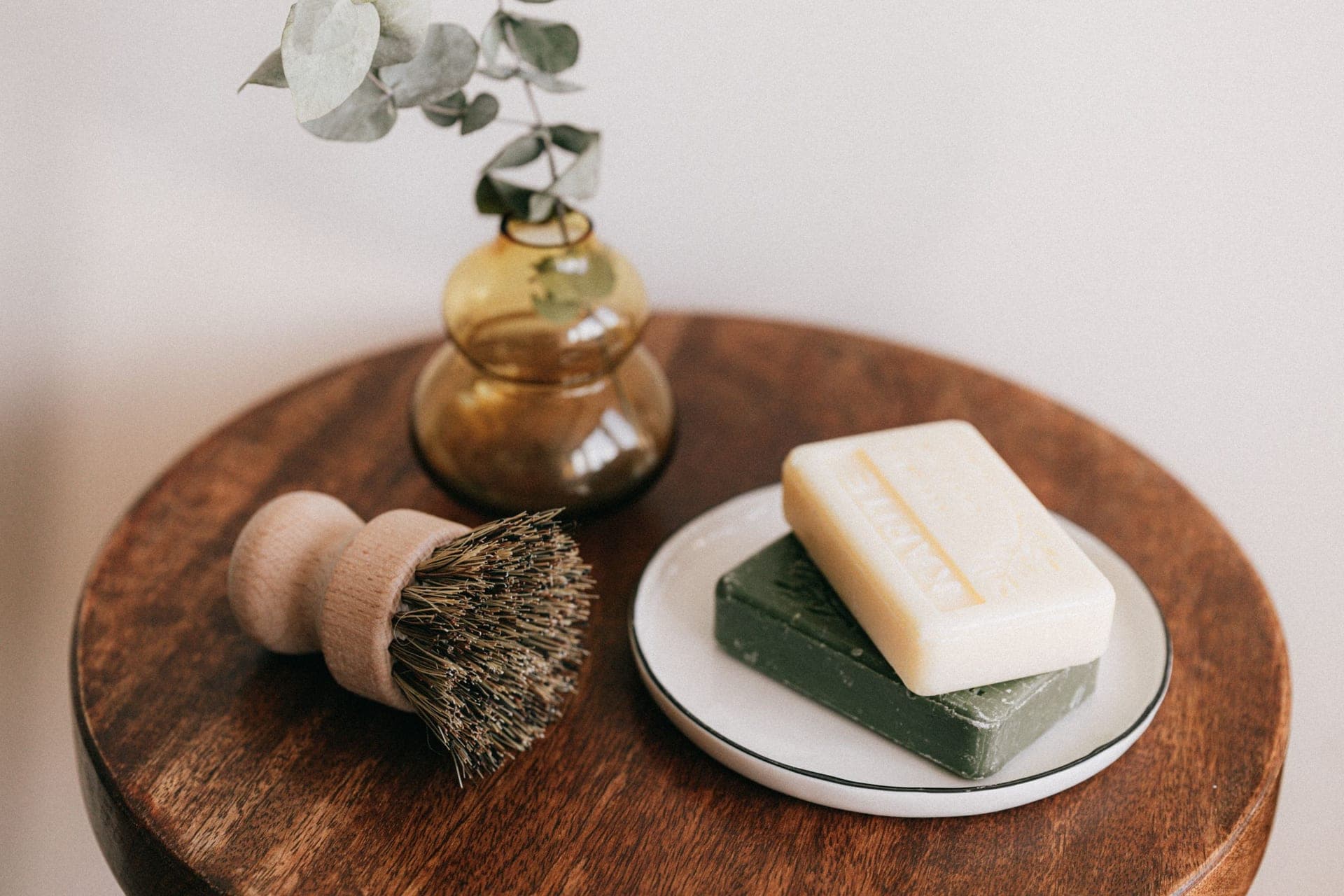
Eucalyptus soap is a cold process bar scented with eucalyptus essential oil at 3 to 4 percent of your oil weight, giving the finished bar a sharp, camphorous, spa-like scent that holds up well through cure. The recipe itself is forgiving, but the species of eucalyptus oil you pick and the way you blend it determine whether your bar smells like a sauna shelf or like floor cleaner.
People reach for eucalyptus soap for the same reason they buy shower steamers and steam room oils: that bracing, clearing scent that feels good during a cold, a workout cooldown, or a sleepy morning. Done right, a homemade eucalyptus bar smells more authentic and lasts longer than most store-bought versions, since you control the oil quality and dose.
- Why Eucalyptus Performs Well in Cold Process
- Eucalyptus Species: Which One to Buy
- How Much Eucalyptus Oil to Use
- Eucalyptus Soap Recipe
- Step-by-Step Instructions
- Natural Color Options for Eucalyptus Soap
- Scent Blends That Pair Well With Eucalyptus
- Common Mistakes and How to Avoid Them
- Frequently Asked Questions
Why Eucalyptus Performs Well in Cold Process
Eucalyptus essential oil holds its scent through saponification better than most herbal oils. The reason is its main active compound, 1,8-cineole (also called eucalyptol), which makes up 60 to 90 percent of most eucalyptus oils depending on species. Cineole is stable in the high-pH soap environment and survives gel phase heat without breaking down.
That's why a peppermint or eucalyptus bar still smells strong six months out while a lavender or lemongrass bar will have faded noticeably. If you want an essential-oil-only soap that actually lasts on the shelf, eucalyptus belongs near the top of the list.
The cooling sensation is mild compared to peppermint, but real. Cineole has a slight cooling effect on skin and a strong opening effect on sinuses, which is why eucalyptus soap is popular with anyone who wants a shower bar that does double duty during cold and allergy season.
Eucalyptus Species: Which One to Buy
This is where most beginners get it wrong. "Eucalyptus essential oil" isn't one thing. There are dozens of species, and the scent profile varies enough that you can buy two bottles labeled eucalyptus and get two completely different bars.
The four you'll see for sale are:
Eucalyptus globulus. The standard, sometimes called blue gum. Sharp, camphorous, slightly medicinal. High cineole content (70 to 85 percent). This is the scent most people associate with eucalyptus and the safest pick for soap. Runs $4 to $10 per ounce.
Eucalyptus radiata. Softer, sweeter, less harsh than globulus. Cineole around 60 to 75 percent. Some makers prefer it because it blends better with florals and citrus without overpowering them. Roughly the same price as globulus.
Eucalyptus citriodora (lemon eucalyptus). Smells more like citronella than traditional eucalyptus. Used in bug-repellent products, not great if you want classic spa scent. Skip this one unless you specifically want a citronella-leaning bar.
Eucalyptus dives. High in piperitone, low in cineole. Smells minty and slightly peppery. Less common, mostly used in aromatherapy blends.
For a first eucalyptus soap, buy globulus. It's the scent customers expect, it holds up best in cold process, and it costs less than the niche species.
How Much Eucalyptus Oil to Use
The usage rate for eucalyptus essential oil in cold process soap is 3 to 4 percent of the oil weight, with 4 percent being the recommended max for skin safety. For a 1,000 gram batch of oils, that works out to 30 to 40 grams of eucalyptus oil.
Going under 3 percent leaves a faint, soapy scent that fades within weeks. Going over 4 percent crosses into skin irritation territory, since cineole at high concentrations can cause sensitization in some people. Stick within the range.
If you want a bigger scent throw without pushing the percentage up, blend eucalyptus with a complementary essential oil (more on that below). A 50/50 blend of eucalyptus and another mid-volatility oil reads as stronger because the brain registers it as a more complex scent.
For the math on how to dose any fragrance correctly for your batch size, the fragrance calculator guide walks through usage rates, IFRA limits, and how to scale fragrance for different recipes.
Eucalyptus Soap Recipe
This recipe makes about 1,000 grams of soap, which fills a standard 10 inch silicone loaf mold and yields 8 to 10 bars.
| Ingredient | Amount | Percentage |
| ------------ | -------- | ------------ |
| Olive Oil | 350g | 35% |
| Coconut Oil (76 degree) | 300g | 30% |
| Shea Butter | 150g | 15% |
| Castor Oil | 100g | 10% |
| Sweet Almond Oil | 100g | 10% |
| Distilled Water | 270g | 33% lye concentration |
| Sodium Hydroxide (Lye) | calculated by Soaply | |
| Eucalyptus globulus Essential Oil | 35g | 3.5% of oil weight |
| Superfat | 6% |
The base recipe is balanced for a mild, well-lathering bar. Olive provides conditioning, coconut handles bubbly lather, shea butter softens the bar's skin feel, castor boosts the lather longevity, and sweet almond rounds out the conditioning value.
Run your numbers through the Soaply calculator before you measure. The lye amount changes if you swap any oils, and you'll want a verified fatty acid breakdown to confirm the bar is in the right range for hardness and cleansing.
Step-by-Step Instructions
Step 1: Gear Up and Prep
Safety goggles, gloves, long sleeves, well-ventilated space. Measure all ingredients by weight, not volume. Have your mold lined or ready, your stick blender within reach, and your eucalyptus oil pre-measured in a small dish so you can add it fast at trace.
Step 2: Make the Lye Solution
Slowly add sodium hydroxide to your distilled water while stirring with a stainless steel spoon. Never pour water onto lye. The solution will heat to around 180 to 200 degrees F. Set it aside in a safe spot to cool to about 100 to 110 degrees F. This takes 30 to 45 minutes.
Step 3: Melt and Blend the Oils
Weigh your solid oils (coconut and shea) and melt them on low heat. Add your liquid oils (olive, castor, sweet almond) and stir to combine. Let the oil blend cool to roughly the same temperature as your lye solution, ideally within 10 degrees of each other and both under 110 degrees F.
Step 4: Combine and Stir to Light Trace
Pour the lye solution into the oils through a fine mesh strainer. Use a stick blender in short pulses, alternating with hand stirring. Stop at light trace, where the batter is roughly the consistency of thin pudding and leaves a faint trail when drizzled over itself.
Step 5: Add the Eucalyptus Oil
At light trace, pour in your pre-measured eucalyptus essential oil. Stir by hand or pulse the blender once or twice to incorporate. Eucalyptus essential oil does not accelerate trace significantly, so you have time to mix it in properly.
If you're adding color, this is the moment. Pre-mixed mica or green clay slurry goes in now, before the batter thickens too far.
Step 6: Pour and Insulate
Pour the batter into your mold. Tap the mold gently on the counter to release air bubbles. Cover with cardboard or a light towel if your room is cool. Eucalyptus soap goes through gel phase fine, and gel phase deepens the color of any natural green you've added.
Let the soap sit undisturbed for 24 to 48 hours before unmolding.
Step 7: Cut and Cure
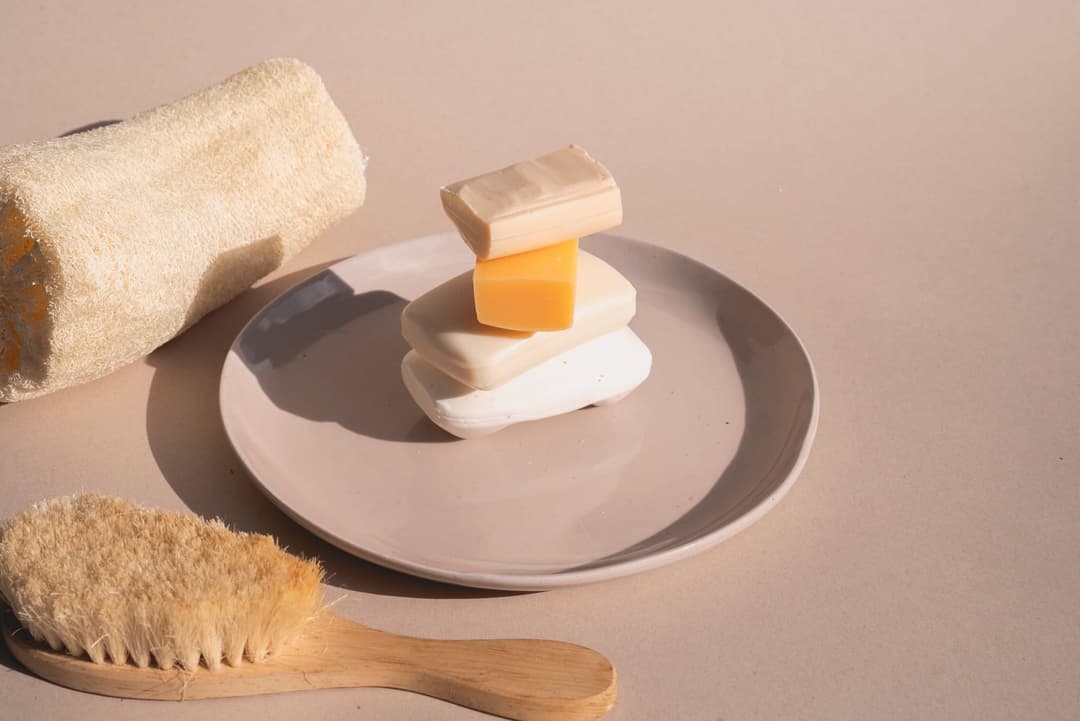
Once the loaf is firm to the touch and pulls cleanly out of the mold, cut into bars. A standard 10 inch loaf cuts into 8 to 10 bars depending on thickness.
Cure on a rack with airflow for 4 to 6 weeks. Eucalyptus scent actually strengthens slightly during the first two weeks of cure as the lye reaction fully completes and the soap pH drops. Don't judge the final scent until at least the 3-week mark.
Natural Color Options for Eucalyptus Soap
Eucalyptus bars look great in muted greens, soft greys, and natural off-white. Skip neon greens unless you want the bar to read as artificial.
French green clay. A teaspoon per pound of oils gives a soft, dusty sage color and a silky drag in the shower. Premix the clay in a tablespoon of distilled water or oil before adding to the batter.
Spirulina powder. Produces a deeper green but can fade over time, especially if the bar gets sun exposure. Use a quarter to a half teaspoon per pound of oils.
Indigo and chlorella. For more dramatic greens. Both work in cold process but require careful dosing to avoid uneven streaking.
No color. A clean cream-white bar with eucalyptus oil looks deliberately minimalist and lets the scent do the heavy lifting. Many spa-style soapmakers skip color entirely for eucalyptus.
For a deeper dive on plant-based colorants, the natural colorants guide covers dosing and behavior in detail.
Scent Blends That Pair Well With Eucalyptus
Eucalyptus is bold enough to stand alone but pairs naturally with several other essential oils. Common blends:
- Eucalyptus and peppermint. Doubles down on the cooling, opening sensation. Use a 60/40 split favoring eucalyptus to avoid the bar reading as too mint-forward.
- Eucalyptus and rosemary. Herbal, fresh, slightly camphorous. Good for a morning bar or shaving soap. Roughly 50/50.
- Eucalyptus and lavender. The lavender softens the medicinal edge of eucalyptus and adds a calming undertone. 50/50 or 60/40 lavender-leaning.
- Eucalyptus and tea tree. Reinforces the clean, antiseptic association. 70/30 favoring eucalyptus.
- Eucalyptus and lemongrass. Sharper, brighter, more citrus-forward. 60/40 eucalyptus.
Keep total essential oil at the same 3 to 4 percent of oil weight regardless of how many oils you blend.
Common Mistakes and How to Avoid Them
Buying the wrong eucalyptus species. If your soap smells like bug spray, you bought citriodora. For traditional eucalyptus scent, you want globulus. Read the Latin name on the bottle, not just the front label.
Underdosing the essential oil. A 1 or 2 percent dose looks reasonable on paper but produces a barely-there scent that disappears within a month. Don't go below 3 percent of oil weight.
Adding the oil to hot batter. Trace temperatures should be well under 120 degrees F when you add fragrance. Hotter batter can flash off the top notes of any essential oil. Eucalyptus is hardier than most, but the rule still applies.
Using cheap or old oil. Eucalyptus oil oxidizes over time, especially after the bottle has been opened. An old bottle produces a flat, off-smelling bar. Buy from a supplier with high turnover and use within a year of opening.
Skipping the cure. Eucalyptus scent develops over the cure window. A bar cut yesterday smells different than the same bar at week 4. Don't make scent decisions before a proper cure.
💬 Frequently Asked Questions
Is eucalyptus essential oil safe in soap?
Yes, when used at 3 to 4 percent of the oil weight in cold process soap. That dose is well within IFRA guidelines for rinse-off products. Going above 4 percent can cause skin sensitization in some people. Eucalyptus is not recommended for soap intended for children under 10 or for people with sensitive respiratory conditions, since cineole can be irritating to young airways.
What does eucalyptus soap do for skin?
Eucalyptus soap is a normal cleansing bar with the added scent and mild cooling effect of cineole. The scent has a clearing effect on sinuses and pairs well with hot showers, which is why it shows up in spa and steam-room products. It is not a medical treatment and won't replace actual skincare for any specific condition.
Can you use dried eucalyptus leaves in soap?
You can, but they don't add much scent. Dried eucalyptus leaves are mostly decorative when embedded in or sprinkled on top of a bar. For actual eucalyptus scent in the finished soap, the essential oil is what works. Decorative leaves on top will brown over time in contact with soap, so use them on bars meant to be sold quickly rather than aged.
How long does eucalyptus soap scent last?
A bar made with 3.5 to 4 percent eucalyptus globulus essential oil holds its scent for 12 to 18 months in normal storage. Cineole is one of the more stable essential oil compounds in cold process, which is why eucalyptus outlasts most florals and citrus scents on the shelf.
Can you blend eucalyptus with fragrance oil?
Yes. Some makers blend pure eucalyptus essential oil with a small percentage of a stabilizing fragrance oil to extend scent life or to add a complementary note. Keep total scent load at 3 to 4 percent of oil weight regardless of the blend ratio.
Run the Numbers Before You Pour
The recipe above is a solid starting point, but if you want to scale it up, swap an oil, or change your superfat, you have to recalculate. Plug your final oil weights, superfat, and water amount into the Soaply calculator before you measure anything. You'll get the precise lye amount and a fatty acid breakdown that confirms your bar is balanced for hardness, lather, and conditioning.
Once the numbers check out, the rest is just measuring carefully, blending to light trace, and letting the bars cure long enough for the eucalyptus to do its job.
Ready to Try It?
Use our free soap calculator to create your perfect recipe with real-time property predictions.
Open Calculator