How to Make Cocoa Butter Soap: Recipes, Tips, and Formulating Guide
Learn how to make cocoa butter soap with 2 cold process recipes. Covers usage rates, refined vs unrefined, troubleshooting, and why 5-15% is the sweet spot.
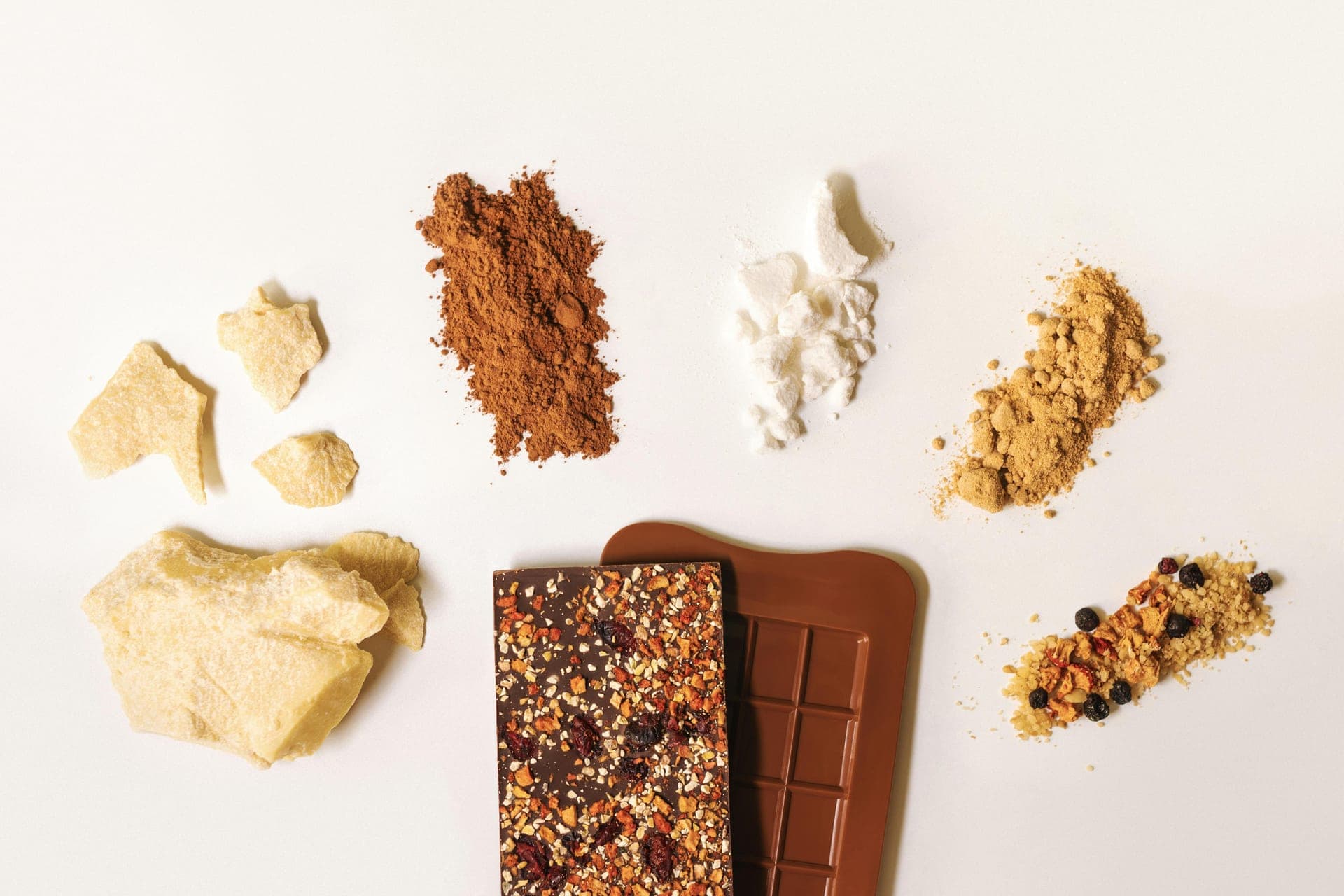
Cocoa butter makes soap harder, smoother, and more moisturizing. It's one of the most popular butters in cold process soap making, and for good reason. At 5-15% of your oil blend, it produces a firm bar with a creamy lather and a subtle chocolate scent (if you use the unrefined version). Here's everything you need to know to use it well.
- Why Use Cocoa Butter in Soap?
- Refined vs Unrefined Cocoa Butter
- How Much Cocoa Butter Should You Use?
- Basic Cocoa Butter Soap Recipe
- Step-by-Step Instructions
- Chocolate Lover's Cocoa Butter Soap Recipe
- What Does Cocoa Butter Do to Soap Properties?
- Common Mistakes with Cocoa Butter Soap
- Tips for Working with Cocoa Butter
- Frequently Asked Questions
Why Use Cocoa Butter in Soap?
Cocoa butter (Theobroma cacao) is a hard, brittle fat extracted from cocoa beans. It's been used in skincare for centuries, and it brings some real advantages to your soap recipe:
- Hardness. Cocoa butter is about 60% saturated fat (primarily stearic and palmitic acids), which makes bars firm and long-lasting.
- Moisturizing. The oleic acid content (about 35%) contributes to a conditioning, skin-friendly lather.
- Stability. Its high saturated fat content means cocoa butter soap resists rancidity better than bars heavy in soft oils.
- Skin protection. Cocoa butter forms a protective barrier on skin, locking in moisture. That's why it's so popular in lotions and stretch mark creams.
- Natural scent. Unrefined cocoa butter carries a warm chocolate aroma that some soapmakers love.
For the skin benefits alone, it's worth adding to your rotation. But the real value for soapmakers is how it firms up a recipe without making it dry or stripping.
Refined vs Unrefined Cocoa Butter
This is the first decision you'll make, and it affects your finished soap more than you might think.
Unrefined (Natural) Cocoa Butter
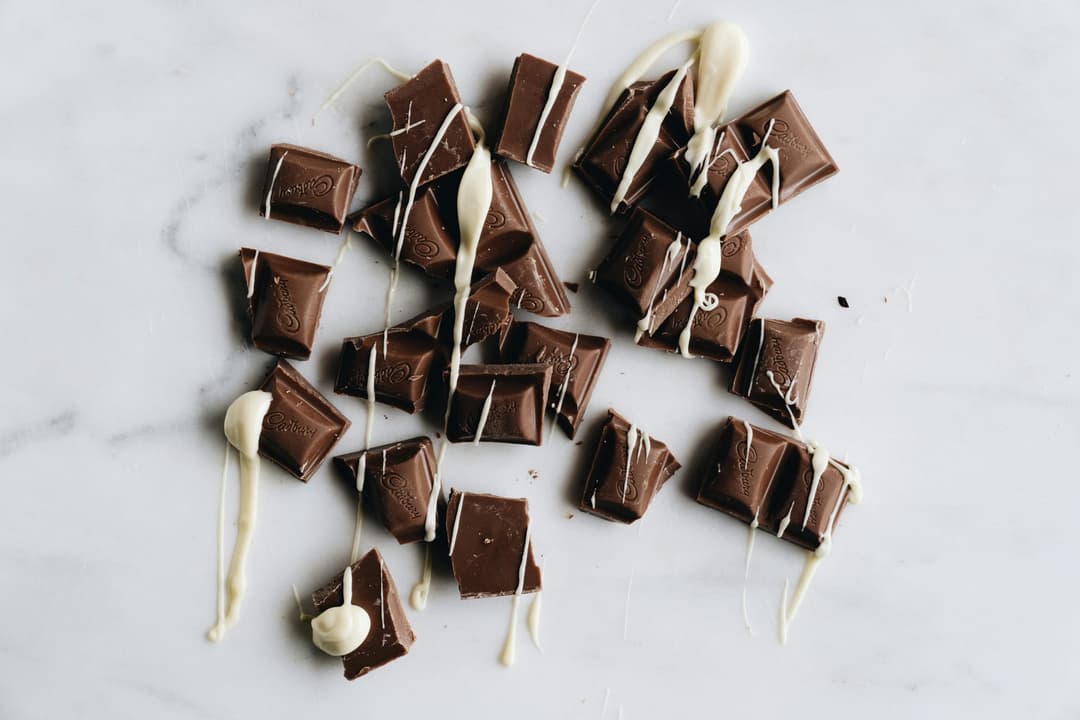
Unrefined cocoa butter is ivory to pale yellow and smells distinctly like chocolate. It retains all of its natural antioxidants, polyphenols, and vitamins. In soap, the chocolate scent does carry through, though it fades over time. If you're making a chocolate-themed soap or want that warm, bakery aroma, unrefined is your pick.
The downside? It can discolor your soap slightly and it doesn't play well with every fragrance. Floral or fruity scents mixed with chocolate undertones can get weird.
Refined (Deodorized) Cocoa Butter
Refined cocoa butter is white and odorless. The refining process strips out the color and scent while keeping the fat composition intact. Use this when you want cocoa butter's hardening and conditioning benefits without the chocolate smell interfering with your fragrance blend.
For most soap recipes, refined cocoa butter is the safer choice. It won't compete with your essential oils or fragrance oils, and it won't affect the color of your design. Save unrefined for specialty chocolate or unscented bars.
Food Grade vs Cosmetic Grade
You'll see both labels online. For soap making, either works. They have the same fatty acid profile. Food grade has stricter purity standards for eating, but cosmetic grade is perfectly fine for a product that gets washed off. Buy whichever is cheaper.
How Much Cocoa Butter Should You Use?
This is where a lot of new soapmakers go wrong. Cocoa butter is powerful stuff, and more isn't always better.
The sweet spot is 5-15% of your total oils. Here's what happens at different levels:
| Percentage | Effect on Soap |
| ----------- | ---------------- |
| 5% | Subtle hardness boost, slight conditioning. A safe starting point for any recipe. |
| 10% | Noticeable firmness, creamier lather. The most popular usage rate among experienced soapmakers. |
| 15% | Very hard bar, rich feel. This is the upper limit most soapmakers recommend. |
| 20%+ | Risk of cracking, waxy feel, reduced lather. Not recommended unless you're very experienced. |
Going above 15% tends to create problems. The bar gets so hard that it can crack as it cures, and the high stearic acid content can make the lather feel draggy or reduce bubbles. You'll also reach trace faster, which limits your time for swirls and designs.
Use the Soaply lye calculator to plug in your exact percentages and see how cocoa butter shifts your bar's predicted hardness, conditioning, and lather scores.
Basic Cocoa Butter Soap Recipe
This is a solid all-purpose recipe that works for beginners. It makes a hard, creamy bar with good lather and a mild, clean scent. Run these percentages through the Soaply calculator to get your lye and water amounts for your batch size.
| Ingredient | Percentage | Purpose |
| ------------ | ----------- | --------- |
| Olive Oil | 35% | Conditioning, mildness |
| Coconut Oil (76 degree) | 25% | Hardness, big bubbles |
| Cocoa Butter | 15% | Firmness, creaminess |
| Sweet Almond Oil | 15% | Gentle, skin-loving |
| Castor Oil | 10% | Lather boost, bubbles |
| Superfat | 5% | |
| Lye Concentration | 33% |
Additives
| Additive | Amount | When to Add |
| ---------- | -------- | ------------- |
| Essential Oil (your choice) | 0.5 oz per lb oils | At light trace |
| Kaolin Clay (optional) | 1 tsp per lb oils | Mix into oils before lye |
This recipe scores well on all fronts. The olive oil and sweet almond oil keep it gentle. The coconut oil provides cleansing power and big, fluffy bubbles. The cocoa butter adds firmness and a silky feel. Castor oil ties the lather together with dense, stable foam.
Step-by-Step Instructions
What You'll Need
Equipment:
- Digital scale (accuracy to 0.1 oz)
- Stick blender
- Two heat-safe mixing containers
- Silicone soap mold
- Thermometer
- Safety goggles and gloves
Safety note: Always wear goggles and gloves when working with lye. Mix lye in a well-ventilated area or under a range hood.
Step 1: Prepare Your Workspace
Clear your counter and lay down newspaper or a silicone mat. Get all your ingredients measured and ready before you touch the lye. This is called "mise en place" and it'll save you from scrambling mid-batch.
Step 2: Melt the Hard Oils
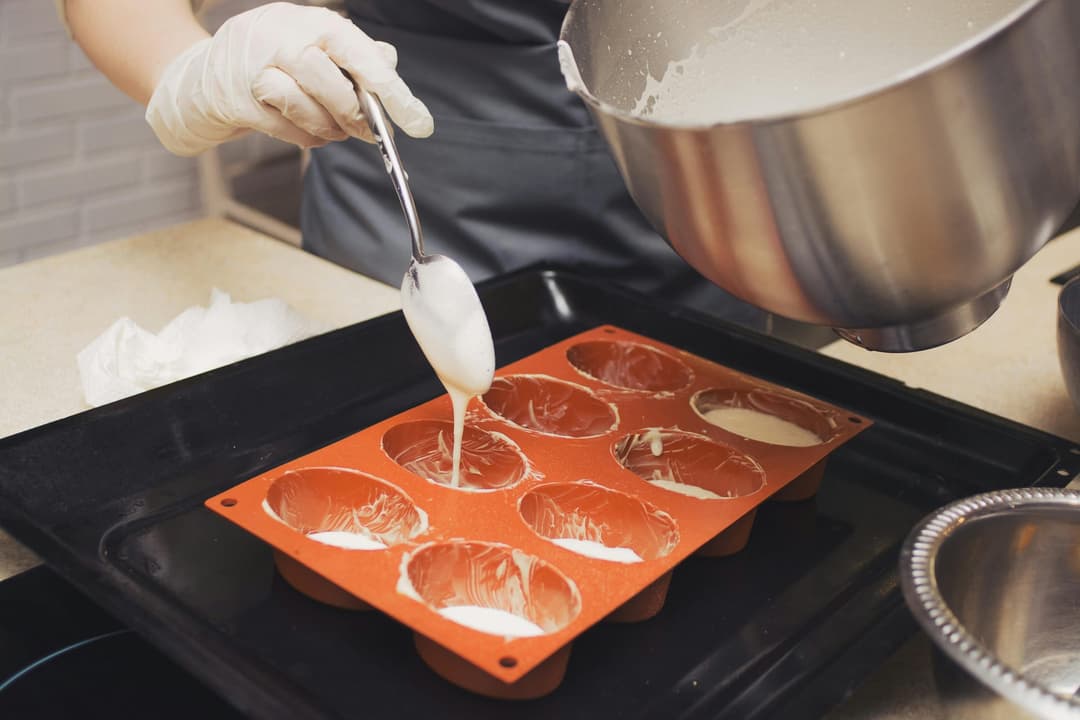
Weigh your cocoa butter and coconut oil into a heat-safe container. Melt them gently using a double boiler or the microwave (30-second bursts, stirring between). Cocoa butter melts at about 93-100°F, so it doesn't take much heat.
Once melted, add your liquid oils (olive, sweet almond, castor) and stir. Let the combined oils cool to around 100-110°F.
Step 3: Mix the Lye Solution
Weigh your distilled water into a separate heat-safe container. Slowly add the lye to the water (never the other way around) while stirring. The solution will heat up fast and release fumes. Stir until the lye is fully dissolved and the solution is clear. Set it aside to cool to 100-110°F.
Step 4: Combine and Blend
When your oils and lye solution are both around 100-110°F, slowly pour the lye solution into the oils. Use your stick blender to mix in short bursts (3-5 seconds on, stir manually, repeat) until you reach light trace. Light trace looks like thin pudding. You should be able to drizzle batter across the surface and see it sit for a moment before sinking back in.
Step 5: Add Fragrance and Pour
Add your essential oil or fragrance oil at light trace and stir well. If you're using kaolin clay, you should have already mixed it into your oils in step 2.
Pour the batter into your prepared mold. Tap the mold on the counter a few times to release air bubbles.
Step 6: Insulate and Wait
Cover the mold with a piece of cardboard, then wrap with a towel. Cocoa butter soaps tend to heat up during saponification, so don't go overboard on insulation. A single towel is plenty. If your room is already warm (75°F+), you can skip insulation entirely.
Let the soap sit for 24-48 hours before unmolding.
Step 7: Cut and Cure
Unmold the soap and cut it into bars. Cocoa butter makes a hard soap, so don't wait too long or it'll be difficult to cut. Cure the bars on a rack with good airflow for 4-6 weeks, turning them every few days.
Chocolate Lover's Cocoa Butter Soap Recipe
This one leans into the chocolate theme. It uses unrefined cocoa butter for that natural chocolate scent and adds cocoa powder for color and exfoliation. It's a great gift soap.
| Ingredient | Percentage | Purpose |
| ------------ | ----------- | --------- |
| Olive Oil | 30% | Conditioning base |
| Coconut Oil (76 degree) | 25% | Lather, hardness |
| Unrefined Cocoa Butter | 15% | Chocolate scent, firmness |
| Shea Butter | 10% | Creaminess |
| Avocado Oil | 10% | Nutrients, gentle feel |
| Castor Oil | 10% | Lather stabilizer |
| Superfat | 6% | |
| Lye Concentration | 33% |
Additives
| Additive | Amount | When to Add |
| ---------- | -------- | ------------- |
| Cocoa Powder (unsweetened) | 1 tbsp per lb oils | Mix into oils |
| Vanilla Essential Oil or FO | 0.3 oz per lb oils | At light trace |
| Coffee Grounds (fine, optional) | 1 tsp per lb oils | At medium trace |
Pop your recipe into the Soaply calculator to get exact lye and water measurements. The higher superfat (6%) gives this bar extra mildness, which balances the cocoa powder's slight drying effect.
Tips for this recipe:
- Mix the cocoa powder into your melted oils before adding lye. This prevents clumps.
- The vanilla fragrance oil will darken your soap over time (most vanilla FOs contain vanillin). Embrace it. It adds to the chocolate look.
- Fine coffee grounds make a gentle exfoliant that pairs perfectly with the chocolate theme.
What Does Cocoa Butter Do to Soap Properties?
Understanding the fatty acid profile helps you predict how cocoa butter will affect your finished bar. Here's the breakdown:
| Fatty Acid | Percentage in Cocoa Butter | What It Does in Soap |
| ----------- | --------------------------- | --------------------- |
| Stearic Acid | 33-35% | Hardness, stable creamy lather |
| Oleic Acid | 33-35% | Conditioning, moisturizing |
| Palmitic Acid | 25-27% | Hardness, creamy lather |
| Linoleic Acid | 2-4% | Lightweight moisture |
That stearic acid content is the key. It's what makes cocoa butter soap so firm and long-lasting. Stearic acid also contributes to a dense, creamy lather rather than big fluffy bubbles. If you want both bubbles and cream, pair cocoa butter with coconut oil (for bubbles) and castor oil (for lather stability).
The high oleic acid makes cocoa butter more conditioning than you'd expect from such a hard fat. It does more than add structure. It's good for your skin too.
SAP Value
Cocoa butter has a saponification value of about 0.137 (NaOH) or 0.194 (KOH). This is lower than coconut oil (0.178) and similar to shea butter (0.128). That means cocoa butter needs less lye per ounce to fully saponify. Always use a lye calculator rather than guessing.
Common Mistakes with Cocoa Butter Soap
Using Too Much
The number one mistake. Going above 15% often leads to cracking, reduced lather, and a waxy texture. If you're new to cocoa butter, start at 10% and adjust from there.
Overheating
Cocoa butter soaps can overheat during saponification, especially in large batches or heavily insulated molds. Overheating causes glycerin rivers (translucent streaks in the bar) and can even lead to partial gel in some areas and none in others, creating an uneven look. To prevent this:
- Don't insulate heavily
- Soap at lower temperatures (95-105°F)
- Consider putting the mold in the fridge for the first few hours if your recipe runs hot
Not Melting It Properly
Cocoa butter is hard and brittle at room temperature. You can't just stir it into your other oils. Melt it completely before combining. Unmelted chunks will cause uneven saponification and hard spots in your finished bar.
Ignoring Acceleration
Cocoa butter can speed up trace, particularly at higher percentages. It's not as aggressive as beeswax or palm kernel oil, but it's noticeably faster than a 100% olive oil soap. Plan your design accordingly. If you're doing a detailed swirl, keep your cocoa butter at 10% or less and soap at a cooler temperature.
Tips for Working with Cocoa Butter
- Chop it first. If you bought a block of cocoa butter, chop it into small pieces before melting. It'll melt faster and more evenly.
- Don't overheat. Melt cocoa butter gently. It melts at 93-100°F, so you don't need a lot of heat. Overheating can cause it to become grainy when it solidifies (a phenomenon called "bloom," like when chocolate turns white).
- Pair it wisely. Cocoa butter and coconut oil together make a very hard bar. Add soft oils like olive, sweet almond, or avocado to balance things out. A good rule: keep your total hard oils (cocoa butter + coconut + palm) at 40-50% of the recipe.
- Use a water discount. Because cocoa butter soaps are already hard, you can use a lower water percentage (35-38% lye concentration) to speed up unmolding time without sacrificing quality.
- Buy in bulk. Cocoa butter is one of the more expensive soap making oils. Buying 5-10 lb blocks instead of small bags cuts the cost significantly. Store it in a cool, dark place and it'll last for years.
- Refrigerate if needed. If your soap is overheating or cracking during the gel phase, pop the mold in the fridge for the first 12 hours. This forces the soap to skip gel phase entirely, which prevents cracking but may result in a slightly more matte finish.
💬 Frequently Asked Questions
Does cocoa butter soap smell like chocolate?
It depends on whether you use refined or unrefined. Unrefined cocoa butter has a noticeable chocolate scent that carries through into the finished soap, though it fades over the 4-6 week cure. Refined cocoa butter is odorless and won't add any scent.
Can you make soap with 100% cocoa butter?
Technically yes, but it's not practical. A 100% cocoa butter soap would be rock hard, brittle, produce very little lather, and take ages to cure. Most soapmakers use it at 5-15% of a balanced recipe to get the benefits without the drawbacks.
Is cocoa butter soap good for dry skin?
Yes. The combination of stearic acid (which forms a protective barrier) and oleic acid (which conditions) makes cocoa butter soap particularly helpful for dry or rough skin. A 6-8% superfat in a cocoa butter recipe gives you an even gentler bar.
Does cocoa butter accelerate trace?
It can, especially at higher percentages (above 10%). The high stearic and palmitic acid content speeds up saponification. If you need more working time for swirls or layers, soap at a cooler temperature (95-100°F) and keep cocoa butter at 10% or below.
What's the difference between cocoa butter and shea butter in soap?
Both add hardness and conditioning, but they behave differently. Cocoa butter produces a firmer bar with a creamier lather and can accelerate trace. Shea butter makes a slightly softer bar with a more slippery feel and is less likely to speed things up. Many soapmakers use both together (5-10% each) to get the benefits of each.
Ready to Try It?
Use our free soap calculator to create your perfect recipe with real-time property predictions.
Open Calculator